Afghanistan
Looking the other way is (not) an option


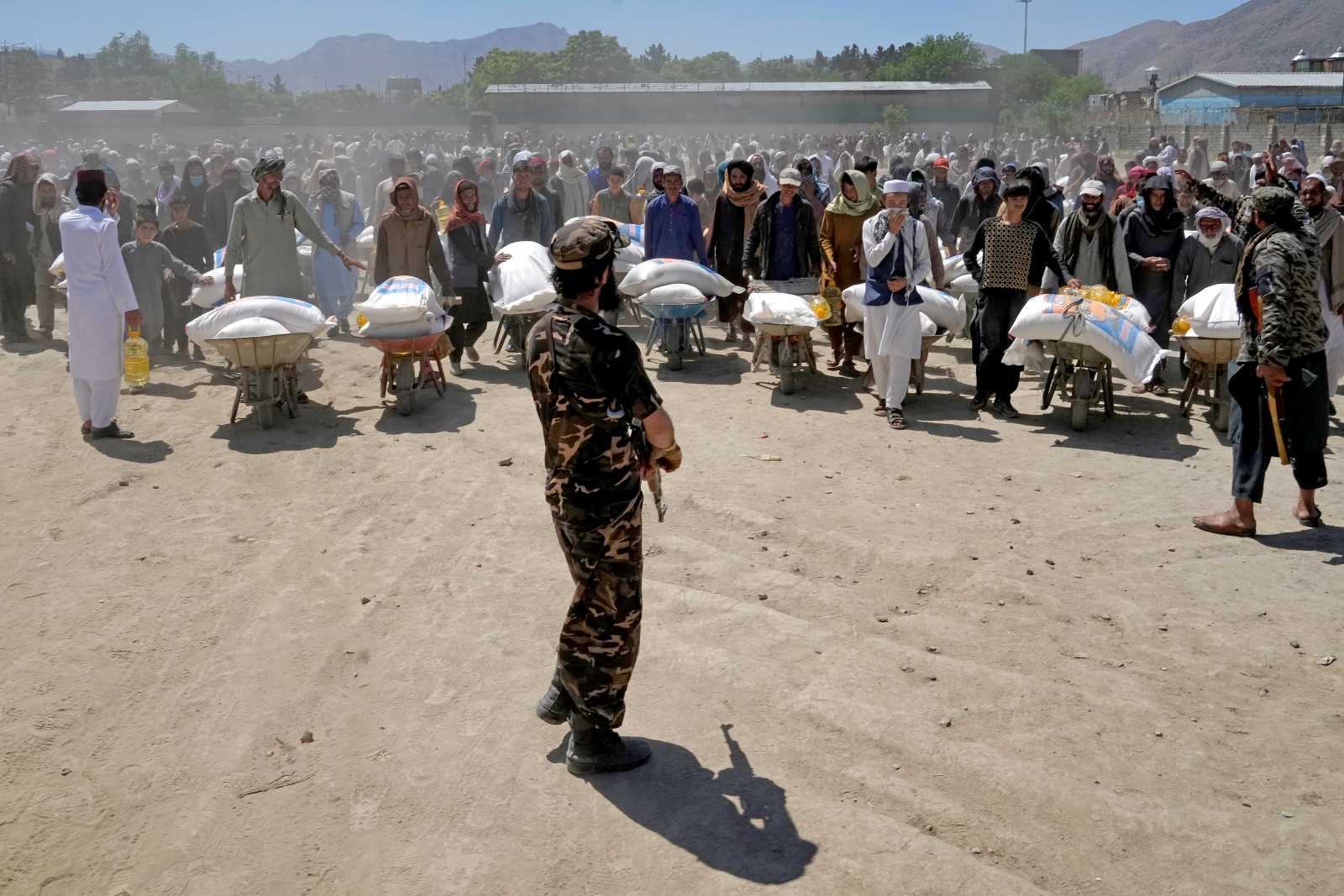
The humanitarian situation in Afghanistan is not an abstract crisis but rather the result of a whole series of international failings. People are living in abject poverty; many do not know whether they will be able to feed their children from one day to the next. Women report that they can no longer access a doctor or midwife – the Taliban regime has even outlawed the use of mobile phones to consult a healthcare professional. Antenatal care has become an alien concept for many pregnant women.
Against this backdrop, the challenge facing the international community is to provide help without legitimising the Taliban regime. Whether such help has the desired effect will depend above all on the commitment shown by individuals on both sides: by international aid workers on the one hand and by local, more moderate members of the Taliban on the other. While the former actually deliver the help, it is up to the latter to allow this help to get through, often under the radar, to women and girls or indeed to at-risk regime opponents. Given the systematic gender apartheid in place in Afghanistan, this requires taking personal risks.
UN organisations, the EU and international NGOs play a crucial role because they have control mechanisms in place and can channel resources directly to those affected. However, to maximise impact, they need to better coordinate their goals and strategies – an all too familiar problem. As aid organisations from Germany and elsewhere report, the Taliban make it difficult for female aid workers in particular to operate in Afghanistan. The Taliban strictly monitor any online healthcare advice services for women, as these could also document the extent of violence against women. At the same time, everyone knows that without women involved, the help will not reach women and girls. This is the bitter reality.
Sanctions harm both regime and aid workers
While international sanctions, such as freezing assets and restricting payment transactions, are designed to exert pressure on the regime, they also make it harder for aid organisations to pay salaries and procure local resources. This shows that Richard Bennett, the UN Special Rapporteur on Afghanistan, is right when he warns against decoupling human-rights policy from humanitarian practice. Humanitarian exceptions, properly functioning financial channels and clear political signals from Berlin and Brussels are vital. Supporting the civilian population makes no concession to the Taliban.
What alarms me particularly are the effects of policies here in Germany. My work with exiled Afghan human-rights defenders makes it quite clear that foreign policy immediately becomes domestic policy when an anti-migration policy renders the democratic and human-rights compass null and void. And this is despite the fact that we are talking about political persecution here – not about migration.
These days, local Afghan staff who could flee to Pakistan are only flown to Germany under considerable public pressure, rather than at the invitation of the German government. Those under threat are being offered money if they renounce their promised entry. Before the Taliban seized power again, these workers had spent years supporting Bundeswehr troops or the Deutsche Gesellschaft für Internationale Zusammenarbeit (GIZ) in Afghanistan. Now they face persecution by the regime.
The fact that the Taliban have taken over the Afghan embassy in Berlin and that Taliban representatives have been invited to help enforce Germany’s deportation policy also raises genuine fears of further persecution by these radical Islamists in Germany. Women and men from Afghanistan now have to apply for passports and birth certificates from precisely those institutions they fled the country to escape.
This turns the worst nightmare of survivors of political persecution into reality: transnational persecution beyond borders – despite their protection status. People from Afghanistan are now experiencing something we are familiar with from Russia and some African countries. Belgium and Austria refuse to accredit Taliban representatives as embassy staff – so why does Germany not?
Gender apartheid as a new crime
At the same time, exiled female campaigners for women’s rights are abandoning neither women and girls nor their country. They negotiate tirelessly with EU member states, calling for gender apartheid to be recognised as a crime by the International Criminal Court (ICC). Their goal is to have the current rulers prosecuted for having stripped women of all their rights. While writing this article, the Taliban have just introduced a new legal regulation that divides society into free and enslaved persons. Women and girls belong to the latter. Defining gender apartheid as a crime against humanity would also make it harder for Western states that recognise the ICC to continue looking the other way. No small number of the women I work with hope they will be able to return to Afghanistan one day and use their expertise to help rebuild their country. Much the same happened following the end of the first period of Taliban rule.
Afghanistan teaches us that help provided in repressive contexts must be steadfast, based on human rights and politically astute. Looking the other way is not an option – but nor is naive normalisation, which also helps the anti-democratic forces here in our country.
Selmin Çalışkan is a human-rights and gender-equality expert, strategy consultant and executive coach. Previously, she was the Director of Institutional Relations at the Berlin office of the Open Society Foundations as well as the Secretary General for Amnesty International Germany. She has also worked for medica mondiale and the Deutsche Gesellschaft für Internationale Zusammenarbeit (GIZ), including in Afghanistan.
selmin.caliskan@posteo.de