Gender roles
Why incomes rise when men carry the baby too


Godfrey Mukalazi, Ugandan society still has very traditional gender roles. How are men’s roles usually understood?
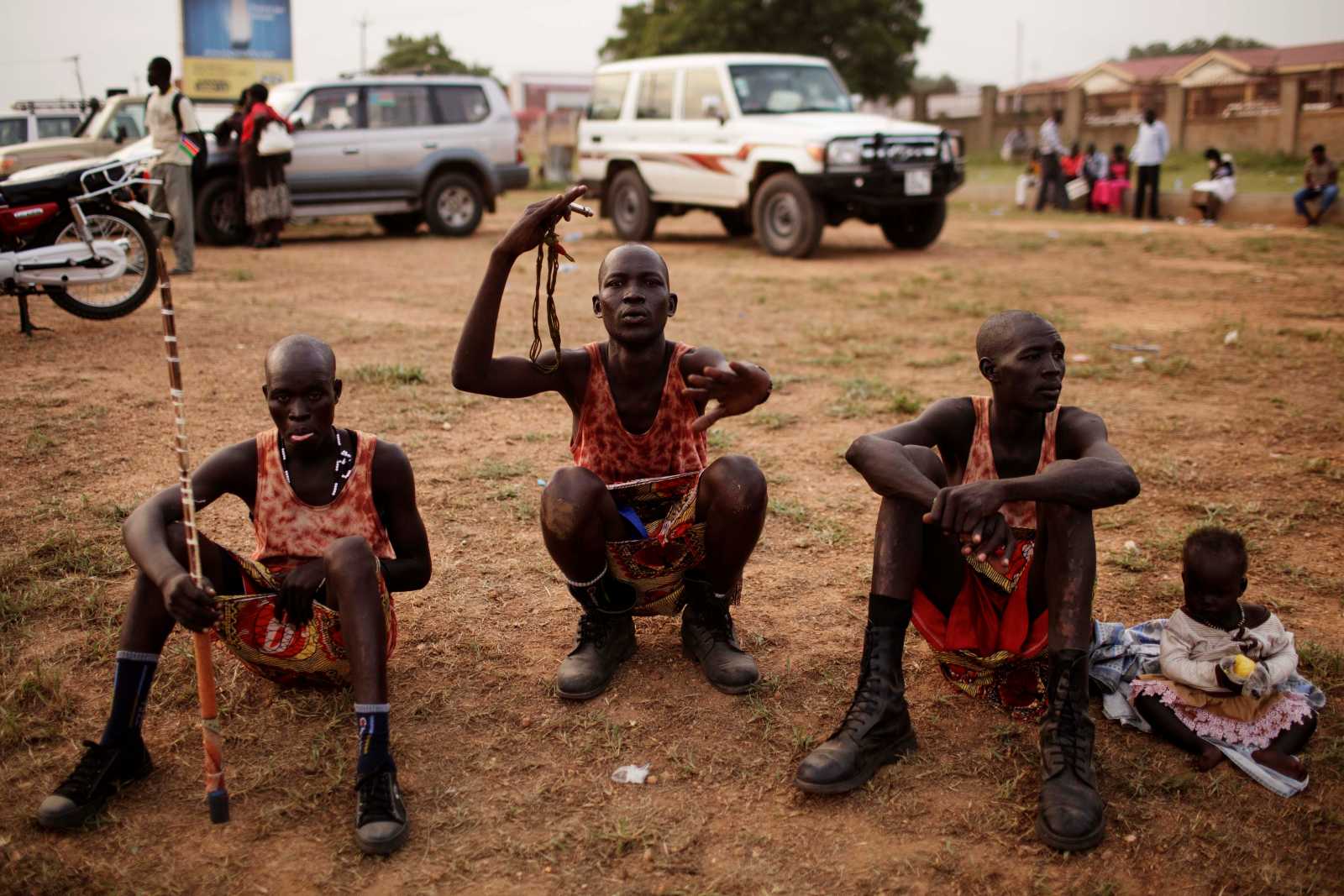
Traditionally, men are the heads of the household and the breadwinners. Village communities tend to be just as patriarchal as families. There are regional differences, but most leadership positions are held by men.
Against this backdrop, your choice of studies was very unusual. You studied social sciences at Makarere University in Kampala with a focus on “Women and Gender Studies”. How did your family and friends react when you told them?
Some were shocked; others laughed at me. “That’s just for women,” they said. And it’s true that all of my classmates at the university were women. In Uganda, most people think that gender is a topic that only concerns women and that men have nothing to do with it. But I didn’t let myself get discouraged because I’m very passionate about the issue of gender.
Where does this passion come from?
I am firmly convinced that cultivating better gender relations would improve life in Uganda in very concrete ways. That’s exactly what I want to communicate. Gender is not a “women’s issue”, but something that affects us all.
You now work as a gender expert for the TeamUp project (see below). TeamUp wants to improve living conditions for Ugandan youth in poorer rural areas, particularly in the coffee-growing regions of central Uganda. What does your work look like?
The first goal is to incorporate the gender perspective into all of TeamUp’s focus areas – whether it’s sustainable agriculture, income generation, reproductive health or water and sanitation. As a trainer, I also educate young men and women using the so-called “household approach”. It teaches partners to communicate better and make decisions about important aspects of their lives together – and no longer stay in fixed roles, like people often do in a traditional marriage. Our training turns participants into “change agents” who can offer advice to others in their village communities in turn.
How exactly do you design training like that?
It’s very important not to assign blame – not even to the men – but to work with understanding. Often married couples think that the other person isn’t doing anything. But when we compare their to-do lists, we see that both people are doing their part – without knowing or noticing what the other is contributing. We have to break this pattern to foster more mutual respect. It also helps to take a humorous approach.
You work with cartoons, funny photos and role plays that turn the tables on both men and women. How is all that received?
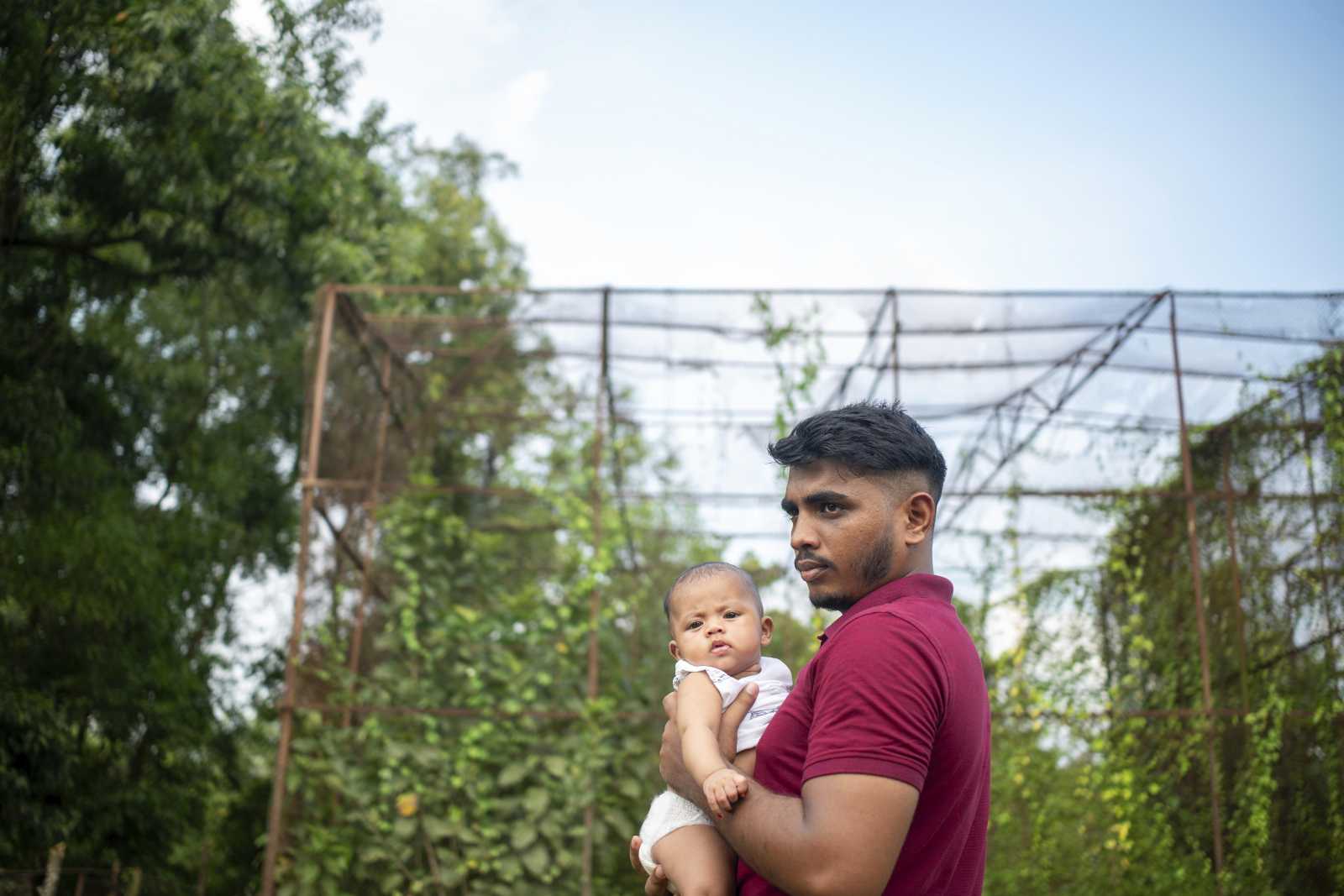
Our participants are very amused at first – like when we encourage men to carry a small child on their backs in a sling, which usually only women do in Uganda. Sometimes the men resist. But I try to make it clear that you can still be a strong man even if you carry your baby and develop a new, more loving relationship with your children.

TeamUp believes that developing a new perspective on gender roles and sharing household responsibilities more equally can do more than revitalise the relationship. The couple’s income can increase too. How?
Traditionally, men are responsible for the family’s income. Women are supposed to stay at home and cannot and should not contribute. But that usually just makes people poorer. I remember that when I was young, my father once got stuck in the jungle for a long time during an excursion. In order to keep us from starving, my mother – bucking tradition – accepted a couple of small jobs. When my father came back, he was impressed by her courage and what she had been able to achieve. He then supported her efforts to open a small shop. From that point on, our family started doing better than it ever had before.
Are the men always so easy to convince, and is it always so easy to dispel cliches about traditional gender roles?
No. We can’t expect change to come quickly here. We have to be patient. Our “change agents”, who have a good understanding of the dynamics in their families, communities and villages, help us move forward carefully.
Do you believe that this approach will succeed and that gender relations will change in Uganda in the long term?
Yes, one hundred percent. By addressing gender issues and advocating for more equality, we are going to the heart of families and communities. That’s how we can develop the social and economic potential of our society for the benefit of us all. But there are still too few training courses and projects on this topic.
You and the other TeamUp gender experts are all men. Why aren’t more women doing this work?
Many of our men who were raised traditionally are still more likely to listen to a man than to a woman. Male participants often approach me after a training course and tell me that they were surprised at first to learn something about gender from a man. But at the same time, they were more willing to accept advice that came from “one of their own”.
We spoke with Godfrey Mukalazi following one of his gender training courses in the village of Bukooki, located in the central Ugandan province of Kassanda, 120 kilometres from Kampala. The “TeamUp” project, which Godfrey Mukalazi works for, is a multi-stakeholder initiative funded by the Hanns R. Neumann Stiftung (HRNS), the Siemens Stiftung and the Deutsche Stiftung Weltbevölkerung (DSW) and supported by Germany’s Federal Ministry for Economic Cooperation and Development.
Godfrey Mukalazi works as a gender expert for the TeamUp project in Uganda.
teamupug.org
Monika Hoegen is a journalist, moderator, media and communication trainer and consultant who specialises in development cooperation.
monika.hoegen@t-online.de
This text is excluded from the general permission to republish D+C content (see Imprint).