Urban traffic
How citizens take action for a cleaner and healthier Lagos


Lagos is notorious for its chronic traffic congestion, commonly referred to by locals as “go-slow”. The city’s high traffic volume, combined with an ageing vehicle fleet, outdated emissions controls and high-sulphur fuels, means that road transport accounts for a significant portion of the city’s PM2.5 air pollution. These emissions contribute to cardiovascular disease, lung cancer and respiratory illness, leading to increased absenteeism and premature deaths. According to the Clean Air Fund, around 24,000 premature deaths were attributable to air pollution in Lagos in 2019. The philanthropic organisation states that the economic cost of air pollution in Lagos – under a business-as-usual scenario – will rise from $ 1.4 billion in 2023 to $ 9.9 billion by 2040.
Around the world, green public transport is becoming increasingly important as a means of reducing emissions and improving urban life. Global electric car sales are breaking records, with China being the largest market. Electric buses have been introduced in cities such as Santiago de Chile, where 40 % of the entire bus fleet is now electric. On the African continent, Ethiopia has attracted attention by expanding its charging infrastructure and deploying locally manufactured electric buses.

Lagos’s ambitions align with these global shifts. The Nigerian state of the same name, in which the metropolis is located, has published an ambitious long-term transport policy. It aims to reduce journeys by car, as a proportion of total trips, from 11 % in 2015 to two percent by 2050 and run 52 % of BRT (bus rapid transit) vehicles on clean energy by 2050.
Progress has already begun. In 2023, the Lagos Metropolitan Area Transport Authority (LAMATA) introduced electric buses on key BRT routes, delivering a reported 13 % reduction in carbon dioxide emissions on some of these routes and improving the commuter experience. In 2025, LAMATA announced that it planned to deploy 10,000 electric buses by 2030, and the Lagos state commissioner for transportation, Oluwaseun Osiyemi, outlined plans to introduce 2000 compressed natural gas (CNG) buses. Alongside investments in electric rail – currently powered largely by electricity generated using diesel and gas – and water transport, these initiatives aim to create a more integrated, multimodal transport system.
Yet electrification alone risks obscuring deeper structural challenges. While cleaner buses reduce emissions, they do little to address congestion, unequal access to mobility or car-centric street design. In Lagos, over 40 % of all trips are already made without motorised vehicles, mostly on foot. Nevertheless, road space is dominated by informal transport and private cars. BRT serves only about three percent of total daily road users in the state. With inadequate pavements, unsafe crossings and limited cycling infrastructure, Lagos continues to prioritise vehicles over people.
Addressing these gaps requires a more holistic approach to urban innovation – one that links mobility, health and public space. Initiatives such as UrbanBetter and the Lagos Urban Development Initiative (LUDI) show how citizen-led data and participatory interventions can complement technological change.
Citizen-led urban innovation
In a city as vast and fast-changing as Lagos, official air-quality data remains inadequate and unevenly distributed, leaving large areas effectively invisible in government records. UrbanBetter’s Cityzens initiative, which is operating in cities such as Accra, Nairobi and Bogotá, helps fill this gap by training residents and equipping them with wearable air-quality monitors. Youth and community groups act as citizen scientists, using low-cost sensors to measure PM2.5 levels while mapping local conditions. The data is uploaded, analysed collaboratively and shared through accessible visualisations with authorities, communities and the public to stimulate dialogue and action.
This approach challenges conventional models of urban governance. Rather than relying solely on distant experts, it empowers citizens, particularly young people, to become producers of knowledge, thereby enhancing transparency and accountability. Publicly shared data broadens the evidence base and urges decision-makers to respond to lived realities, fostering more inclusive debates on transport, health and urban planning.
In early 2025, for example, Cityzens collected air pollution data along the Lagos City Marathon route before and during the event. The findings showed that pollution levels dropped by 60 % during the marathon, largely due to partial road closures, demonstrating how reduced traffic can significantly improve air quality. The initiative presented the data to authorities and used it to advocate for cleaner and healthier urban traffic in Lagos.
UrbanBetter has also advanced the concept of clean air zones, spaces where shaded walkways, cycling lanes and urban greening are tested for their ability to reduce exposure to pollution and heat and promote healthier lifestyles. In April 2025, the Lagos Cityzens Hub convened a workshop to co-design a pilot Clean Air Training Zone, linking air-quality monitoring data with tangible interventions in the urban environment.
Igniting urban change
However, translating evidence into lived experience requires experimentation in public spaces. The Lagos Urban Development Initiative (LUDI) plays a key role at the intersection between data, participation and physical transformation. Over the past five years, LUDI has tested participatory urban interventions throughout Lagos. These range from allotment gardens and parklets to waste-sorting projects and car-free days. By bringing together community members, practitioners and government officials, LUDI aims to challenge car-dominated norms and demonstrate how locally driven projects can catalyse broader urban change. The initiative particularly seeks to amplify the voices of groups often excluded from urban planning processes.
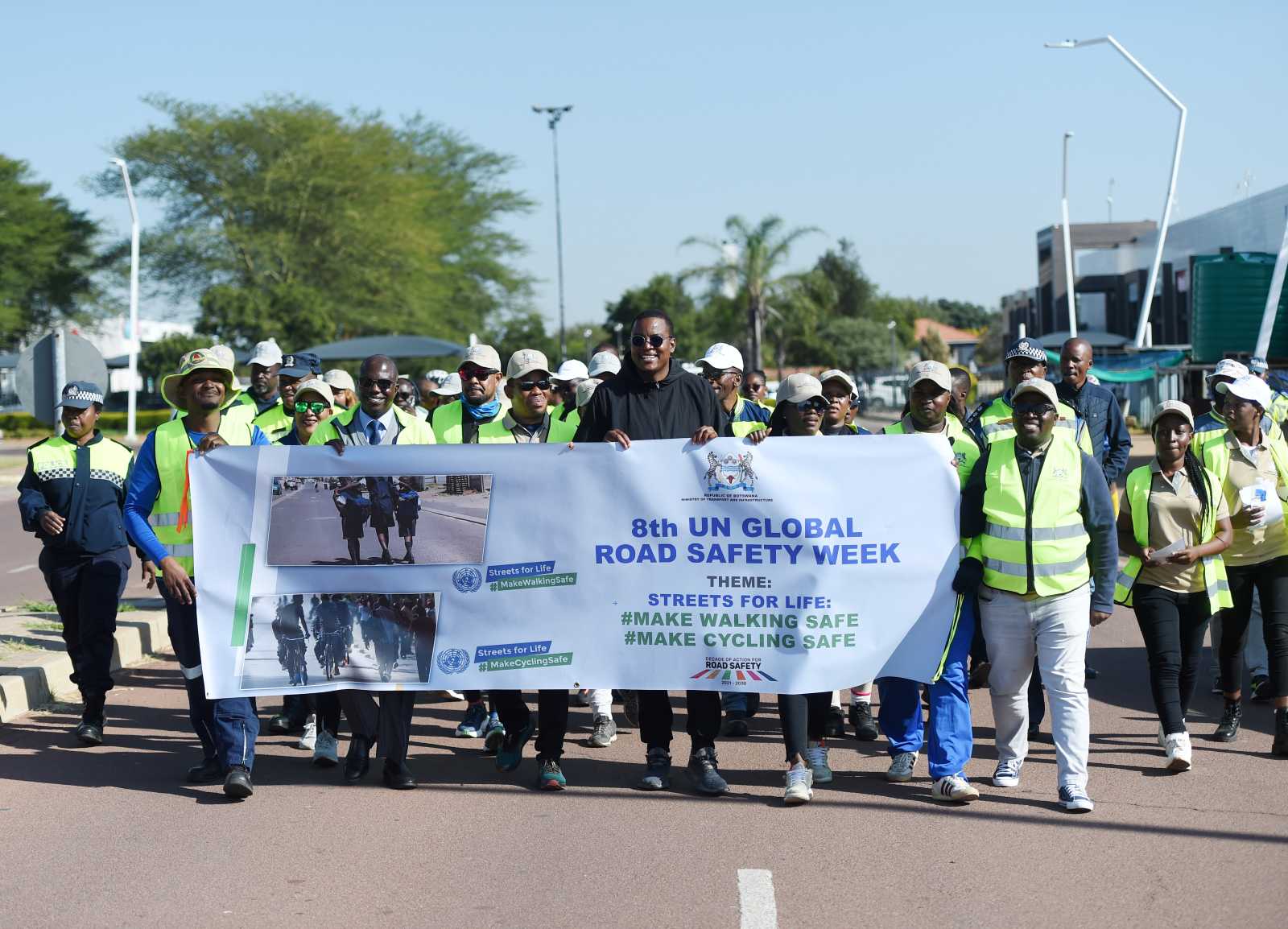
Car-free days have become central to this approach. In Lagos, they encourage communities and policymakers to reconsider how streets are used. These events serve as advocacy tools for pedestrian-priority spaces. They also involve actors typically absent from such debates, including women’s groups and local associations.
While car-free days have a long global history, having emerged in the 1950s and gained momentum after the 1973 oil crisis, LUDI has adapted the concept to Lagos’ context. Since 2022, it has worked with cycling groups, NGOs and government agencies, including LAMATA and the Lagos State Ministry of Transportation, to scale these interventions. In recent years, car-free days have been consolidated into the Sustainable Transport Festival (STF).
In 2025, STF temporarily transformed streets in five Lagos communities into spaces for learning, play and dialogue around clean mobility, engaging more than 1000 residents. The festival concluded with a policy-focused conference, linking community experience with data and decision-making. Together, these initiatives demonstrate how co-produced, street-level experimentation can make non-motorised transport visible, strengthen civic participation and reimagine how Lagos’ public spaces function.
Connecting residents and policymakers
Urban transformation in Lagos depends on linking community-generated insights to the city’s broader goals for climate, mobility, health and resilience. A recent white paper by UrbanBetter highlights how innovations such as citizen science directly support state-level priorities, from the Lagos Climate Action Plan to the Non-Motorised Transport (NMT) Policy and commitments in the Lagos Resilience Strategy. By filling data gaps with hyper-local evidence, citizen scientists help ensure that these frameworks reflect residents’ lived realities, moving beyond abstract goals to more grounded, inclusive policymaking.
Effective transformation also requires governance structures that incorporate citizen input into formal planning. UrbanBetter’s Cityzens work, LUDI’s community walkability assessments and lessons learnt from car-free days are increasingly feeding into Lagos policy forums where decisions are shaped, such as the Lagos State Environmental Protection Agency’s air quality conversations and LAMATA’s mobility and walkability dialogues. Cleaner air or climate-resilient streets won’t come from technology alone; they require governance cultures that value transparency, shared evidence and co-creation.
For Lagos to set a precedent, its future must be collaboratively shaped by its people, alongside policy and technology. The path forward is unambiguous: Lagos must invest in a city where residents can move safely, breathe freely and actively participate in shaping the urban future. This commitment is the authentic measure of progress, and it is entirely within Lagos’ grasp.
Sources
Clean Air Fund: Lagos and air pollution.
UrbanBetter: Cityzens initiative.
UrbanBetter, 2025: Hope infrastructure for healthy, climate-resilient cities.
Lagos Urban Development Initiative
Olaniyi, T. K. and Ajayi, A. J., 2024: Building a sustainable city in Lagos: insight from the transport initiatives from Freiburg and London. International Journal of Innovative Business Strategies (IJIBS), Volume 10, Issue 1.
Olamide Udoma-Ejorh is an urban activist, researcher and consultant and the founding director of the Lagos Urban Development Initiative (LUDI). She focuses on people-centred urban development, public space, transport, informal settlement upgrading and housing equity.
info@ludi.org.ng
Waziri Mainasara is an economist and environmentalist who focuses on air quality, urban mobility and citizen science. He is the coordinator of Urban Better’s Lagos Cityzens Hub.
waziri@urbanbetter.science