Politics
How artificial intelligence is transforming democracy


Katja Muñoz in an interview with Eva-Maria Verfürth
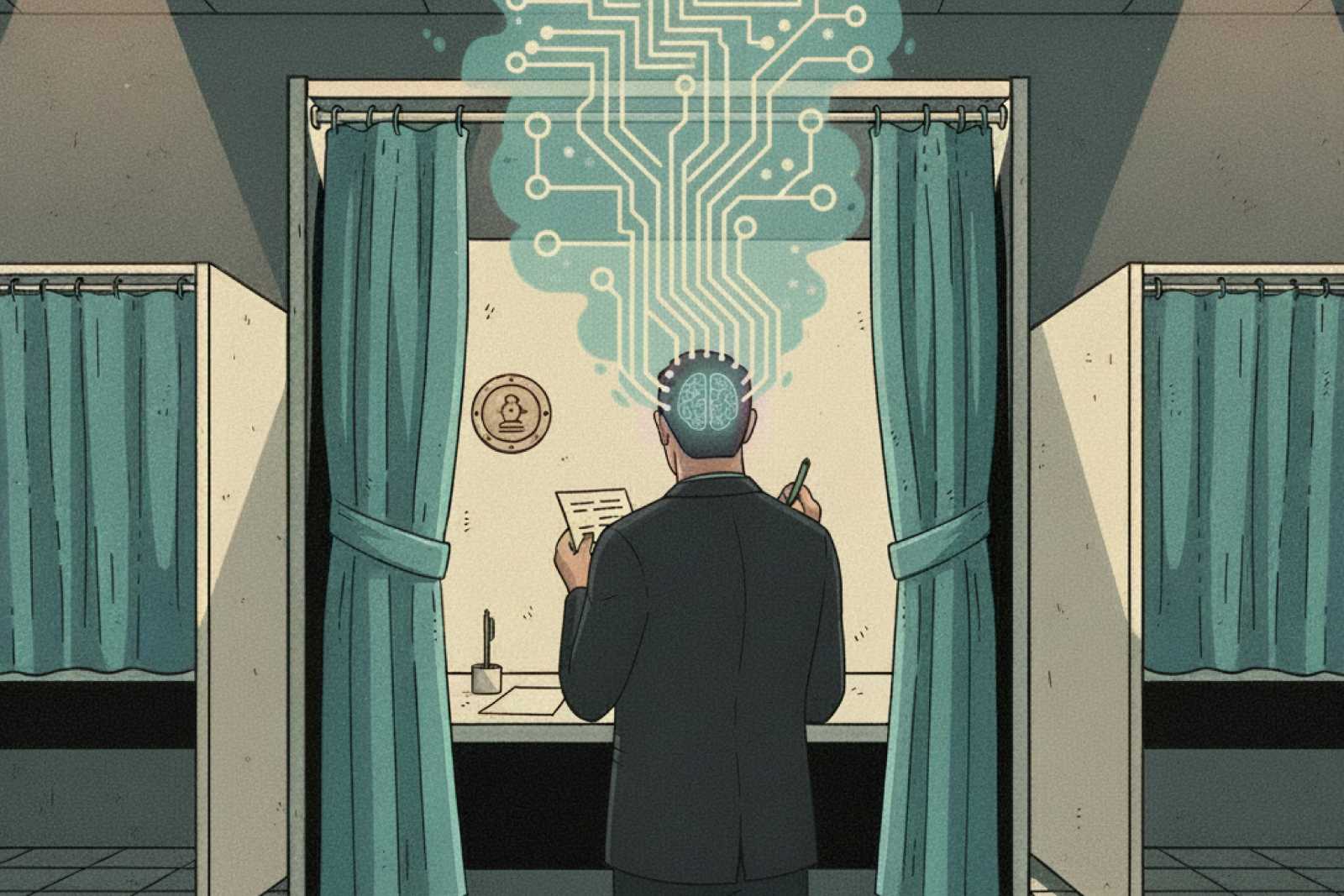
There’s been plenty of discussion about how digital disinformation campaigns, bots and trolls influence elections – the Cambridge Analytica scandal in the wake of the 2016 US elections or Russia’s attempts to manipulate voters immediately spring to mind. These days, the technical possibilities go even further, so how is artificial intelligence (AI) impacting opinion-making and democracy?
AI is a tool that is accelerating all kinds of processes. For instance, it means that hyper-personalised content can be created very quickly and very cheaply. These days, it’s possible to create a ten-second deepfake video for free. Democratic parties wishing to engage in strategic messaging take advantage of this – but so too do actors seeking to manipulate information spaces.
What do political parties in Germany use AI for?
For training purposes, for one thing: the Sahra Wagenknecht Alliance (BSW) has been honing its members’ debating skills using an AI model that plays devil’s advocate. Some members of Germany’s Social Democratic Party (SPD) get AI to summarise texts as podcasts they can listen to as they dash from one meeting to the next. Political parties also use AI to better process data and tailor narratives more specifically to various voter groups. Such strategies were used by the Volt party, for example. The party increased its share of the vote in the European elections from 0.7 % in 2019 to 2.5 % in 2024, which is a remarkable achievement for such a young party.
When does the use of AI become problematic?
Obviously, it becomes a problem when AI is used to deceive or imply that false facts are true or when synthetic images are not marked as such. The latter practice is actually illegal now thanks to the EU’s AI Act. In Germany, the far-right Alternative for Germany (AfD) party used AI to design posters featuring highly emotional imagery, but without making it clear where the images came from. I was particularly fascinated by one such case in Göppingen: the poster depicted a woman, whose name was given as “Dr Stefanie Müller”, along with a quote explaining why she was a member of the AfD. In reality, however, Dr Stefanie Müller doesn’t even exist – a fact which wasn’t disclosed.
You mentioned that AI allows political parties to tailor their content to specific target groups. That’s nothing new, as parties have always been keen to communicate strategically with their electoral groups. But now this can be done so much more precisely. How is this changing debate in society – is it not reinforcing filter bubbles?
Definitely, yes. Using AI, it is possible to draw up very accurate voter profiles – including their interests and motivations – for specific regions. Different messages can then be conveyed in different regions on this basis. In Michigan, for example, the Future Coalition Pac linked to Elon Musk portrayed Kamala Harris as a friend of Israel in one neighbourhood with a large Muslim population – and as a Palestine supporter in a nearby neighbourhood that is home to more Jewish and conservative Christian voters. Such extremely personalised use of highly emotional narratives fosters polarisation and makes it difficult for people to reconcile their differences. In the longer term, this has a detrimental effect on the democratic consensus. Though getting an extra percentage point or two at the ballot box may seem attractive in the short term, it undermines the consensus-building process that serves as the long-term basis for democracy.
Social polarisation has been a growing problem for some time now, especially given the debates on social media. What is new?
AI is accelerating many processes and making it easier – also for non-state actors – to run campaigns even with limited resources. Autonomous bot networks can be used much more easily and cheaply than in the past. No large-scale troll factories are needed these days.
For a 2024 research project, you monitored elections in six countries, including India. How did the political parties there use AI?
First and foremost, AI had an equalising effect there. For the first time, smaller local parties also had access to resources such as graphic design, copywriting and strategic communication. Meanwhile, the major parties took advantage of AI to broaden their traditional campaigning methods. With an electorate of nearly a billion people, hyper-personalised microtargeting is a huge challenge, but AI made it considerably more manageable. For instance, an AI avatar with the voice of a local state governor was created and used to call up or chat with voters on WhatsApp. The message was adapted to the region in question – in areas with a large farming community, the “governor” would talk to voters about subsidies. People didn’t know they were talking to a bot, though. And if you get a call from the governor and have the chance to chat with him for a while, you of course feel rather special and taken very seriously.
How else was AI used?
There was even a deepfake of a politician who had died but still featured in AI videos advising people on who to vote for. In that case, everything had been properly agreed with the late politician’s family beforehand. Not all the applications were so sophisticated, however, with AI also being used a lot just for translations. India has 22 official languages, plus many dialects. Speeches by Prime Minister Narendra Modi were simultaneously interpreted into local languages, with his mimicry also being adapted. This created greater emotional proximity and connectedness, making political content more accessible. Of course, there were also intolerable amounts of disinformation.
Many of these AI applications are a double-edged sword – they can make politics more accessible but deepen rifts at the same time. Can AI also contribute to strengthening democracy?
Absolutely. A fascinating civic conversation took place in Kentucky in the US. The town of Bowling Green asked a Google research group – its Jigsaw team – to develop an AI tool and method by which to gather and analyse local public opinion. The town has a very heterogeneous electorate and was keen to improve the way it communicates with inhabitants. Surveys were conducted offline at neutral places where people go in person, such as libraries and hairdressing salons. People could answer questions there or opt to take an online survey. The whole process was anonymous, but people’s identities were verified to ensure that nobody could take part more than once. The civic conversation was rolled out across the town and roughly ten percent of the population took part, which is an unusually high proportion.
AI was then used to analyse this data, filter out any insulting or abusive remarks and identify matters that people felt genuinely concerned about – and then pass all the information on to the local government. The high level of participation in the survey reveals that people do still want to be part of the political process and have their say, no matter what is claimed in the media about polarisation. When people feel that their voices will be heard, they are willing to get involved.
That’s an interesting example given that the survey was conducted not only online but also offline. What role can AI play here – and where does its role end?
AI is not a panacea. Some problems are better resolved by humans. But AI can help to process mountains of data, filter out hatred and highlight underlying needs or grievances; it can also involve people who might not otherwise express their views. That’s precisely the opposite of what frequently happens online, where people are very deliberately driven apart. It’s hard to counter this, but it is possible. One such example is the election victory of Zohran Mamdani, mayor of New York. He was widely celebrated as an internet sensation, but that isn’t the whole story.
Mamdani’s election campaign team spent the months leading up to the election knocking on doors all over the city and seeking to engage in person-to-person discussions. Mamdani himself was also out and about a lot. Was that the secret to his success?
A combination of online and offline mobilisation was the key factor. Mamdani’s campaign was very successful in mobilising people by encouraging them to participate. And that’s what democracy is all about: increasing participation. Technology can be used to enable more voices to be heard or to ensure that it’s not only the loudest who are able to push themselves to the forefront.

Regulation is important to set boundaries for the use of AI. You mentioned for example the new compulsory marking of AI content in the EU. Such laws are not in place everywhere, however. What’s the situation in the Global South?
Countries in the Global South tend to lack any regulatory framework. Big tech has developed a very thick skin when it comes to regulations even in Europe, and in many cases completely shrugs off matters important to the Global South. On the other hand, people there are often more aware of the manipulative character of social media. Young people mobilise online but then meet in person at a bar. That’s not a deliberate strategy; it’s just the way they communicate. And they use technology to fight for their causes: the government in Nepal attempted to suppress the GenZ protests by shutting down the internet, in a move that backfired spectacularly. The protests grew in size, the government resigned and the interim prime minister was elected on Discord. In this instance, a social platform became an instrument of democracy. Here in the Global North systems are more entrenched and can only respond sluggishly to new challenges, which some actors use to sow the seeds of discord. In the Global South, where the young account for a much larger part of the population, levels of frustration are higher, mobilisation is more dynamic, and people are also more willing to use technology in creative and inclusive ways. Which I find pretty impressive.
Katja Muñoz is a senior research fellow at the Center for Geopolitics, Geoeconomics and Technology of the German Council on Foreign Relations (Deutsche Gesellschaft für Auswärtige Politik – DGAP). She studies the interactions between artificial intelligence, democracy and hybrid threats.
LinkedIn