Bolivia
The untapped treasure of the Andes


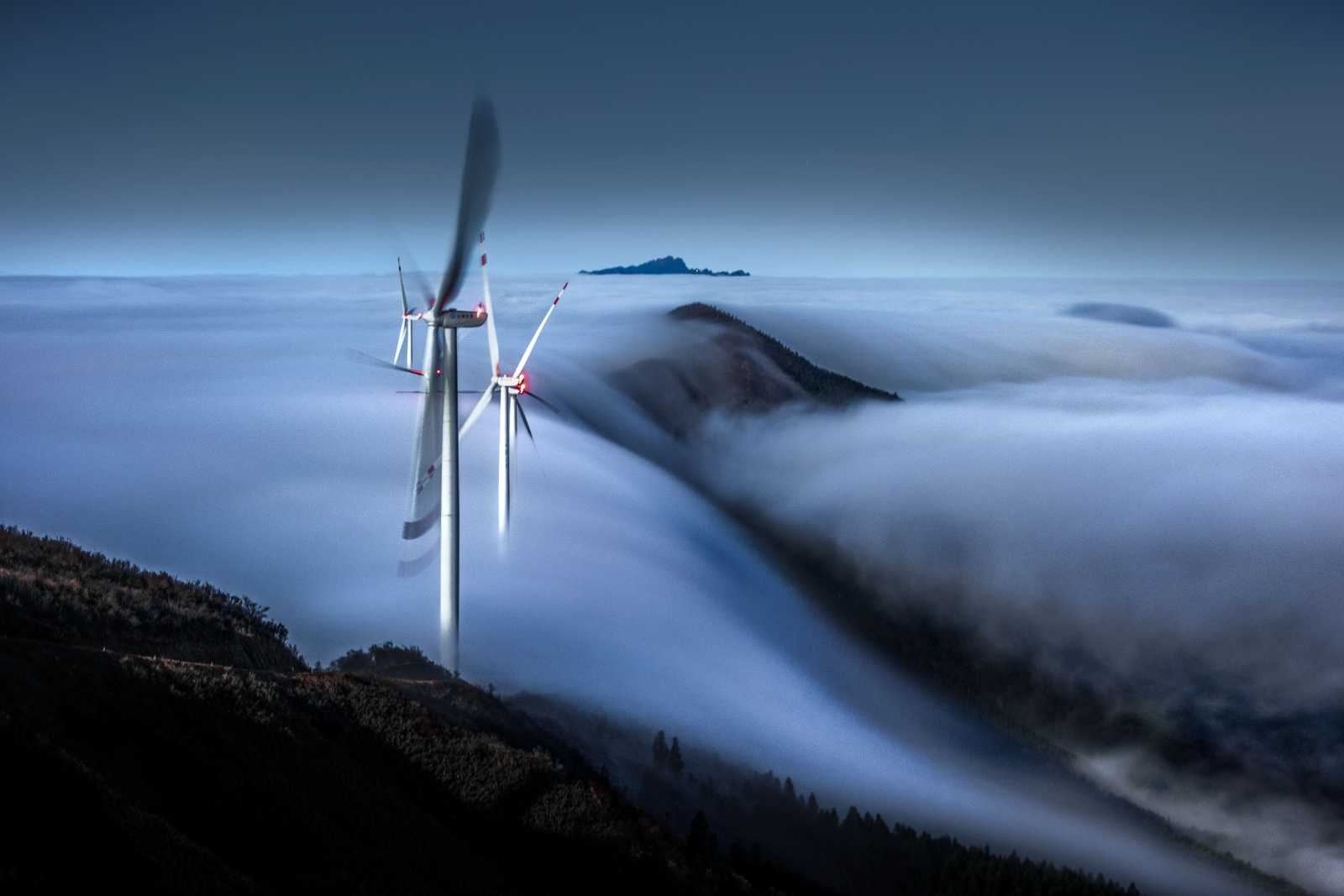
Covering more than 10,000 square kilometres, the Salar de Uyuni is the biggest salt flat in the world, Bolivia’s top tourist attraction and also where some of the planet’s largest known lithium deposits are situated. This highly coveted light metal is needed primarily for rechargeable batteries – in everything from smartphones and electric cars to battery energy storage systems. It plays a vital role in electric vehicles and the transition to renewable energies, and demand is soaring: the International Energy Agency (IEA) estimates that lithium demand will increase five-fold by 2040.
Bolivia is the world’s number two in terms of its lithium deposits. Of the 150 million tonnes of lithium that the U.S. Geological Survey identified in 2026, Bolivia is home to an estimated 23 million – behind Argentina, with deposits of 28 million tonnes, and ahead of Chile, which has 13 million tonnes. Together, the deposits of these three countries in the Andes are known as the Lithium Triangle. For Bolivia, one of South America’s poorest countries, this natural treasure offers a great opportunity to tap into a new source of revenue and to drive economic growth.
The lithium first needs to be extracted from salt water
However, a resource is not yet an extractable reserve, and this is precisely what has proven the stumbling block for Bolivia so far. Although lithium extraction has been talked about for decades and various attempts have been undertaken, little progress beyond pilot facilities has been made to date.
Under Evo Morales, the country’s president from 2006 to 2019, Bolivia’s lithium resources were declared to be the property of the state. However, the country lacks the money, technology and expertise to extract and process them. Though the state-owned company Yacimientos de Litio Bolivianos (YLB) put the first industrial lithium extraction plant into operation at Salar de Uyuni in late 2023, it has experienced various design issues and operational problems and produces only a fraction of the intended quantity.
Bolivia is thus reliant on joint ventures with foreign companies, yet this has borne little fruit so far. In recent years, agreements have been signed with Chinese and Russian firms to build lithium extraction facilities at several Bolivian salt pans. This has led to two contracts so far – with the Russian company Uranium One, which belongs to the state-owned firm Rosatom, and with a Chinese consortium. However, Bolivian law requires such contracts to be greenlighted by parliament, which has not happened as yet due to political disagreement, criticism of the process and certain elements in the contracts – meaning construction of the plants has not even begun.
A new law to lure in investors
A new government has been in power in Bolivia since November 2025. Rodrigo Paz, the conservative president from the Christian Democratic Party PDC, advocates a completely different economic policy from that of his predecessor Luis Arce, who, like Evo Morales, was a member of the Movement for Socialism party MAS. President Paz is also determined to finally start extracting lithium to generate revenue, but he has his sights set on different partners.
The new government is drawing up a new lithium law as part of a package of legislation in the area of energy and critical minerals. The aim, the ministry responsible says, is to demonstrate sustainability and reliability in a bid to lure in international investors.
Whereas the MAS government had turned its back on the West to align itself with the BRICS states – a group of countries keen to position themselves as a counterbalance to the West and to make the global financial system less dependent on the US dollar – the government led by Rodrigo Paz is once again turning more towards Europe. It has even resumed diplomatic ties with the US after two decades of frosty relations. The new government is expressly signalling its openness to cooperate with Western firms, including those in the minerals, energy and technology sectors. Meanwhile, it plans to review the contracts with the Russian and Chinese lithium companies.
One sign of the new and closer relationship with the West was the visit to Bolivia of a European Union (EU) delegation in February. Renewable energies were among the main topics discussed, and the EU delegates also made a trip to Salar de Uyuni.
The EU and Germany are getting involved as partners
The EU has promised the Bolivian government that it will invest € 11 million as part of the Global Gateway initiative – an investment programme for sustainable infrastructural projects in the Global South. In addition, the EU and Germany’s Federal Ministry for Economic Cooperation and Development (BMZ) are jointly funding the EU4ProTransición programme to the tune of € 9 million. This is intended to boost Bolivia’s energy transition by helping to produce green hydrogen and extract lithium.
Shortly after the visit, EAU Lithium, a consortium comprising the Australian mining company EAU Mining and the German-Australian firm Vulcan Energy Resources, signed a negotiation agreement with YLB. This brings Bolivia a step closer to building more industrial lithium extraction plants.
Open to international cooperation – while protecting its own resources
The Paz government has not backtracked from one of its predecessor’s policies, however: the nationalisation of the country’s resources. It is equally determined that as much of the value chain for lithium-ion batteries as possible should be established in Bolivia. Bolivians fear that this valuable resource could be sold to foreign companies that would get rich from the profits without benefiting Bolivia in any significant way. The country experienced similar exploitation in the colonial era, when the Spanish built their wealth on the silver deposits – the world’s largest at the time – of the Cerro Rico in Potosí.
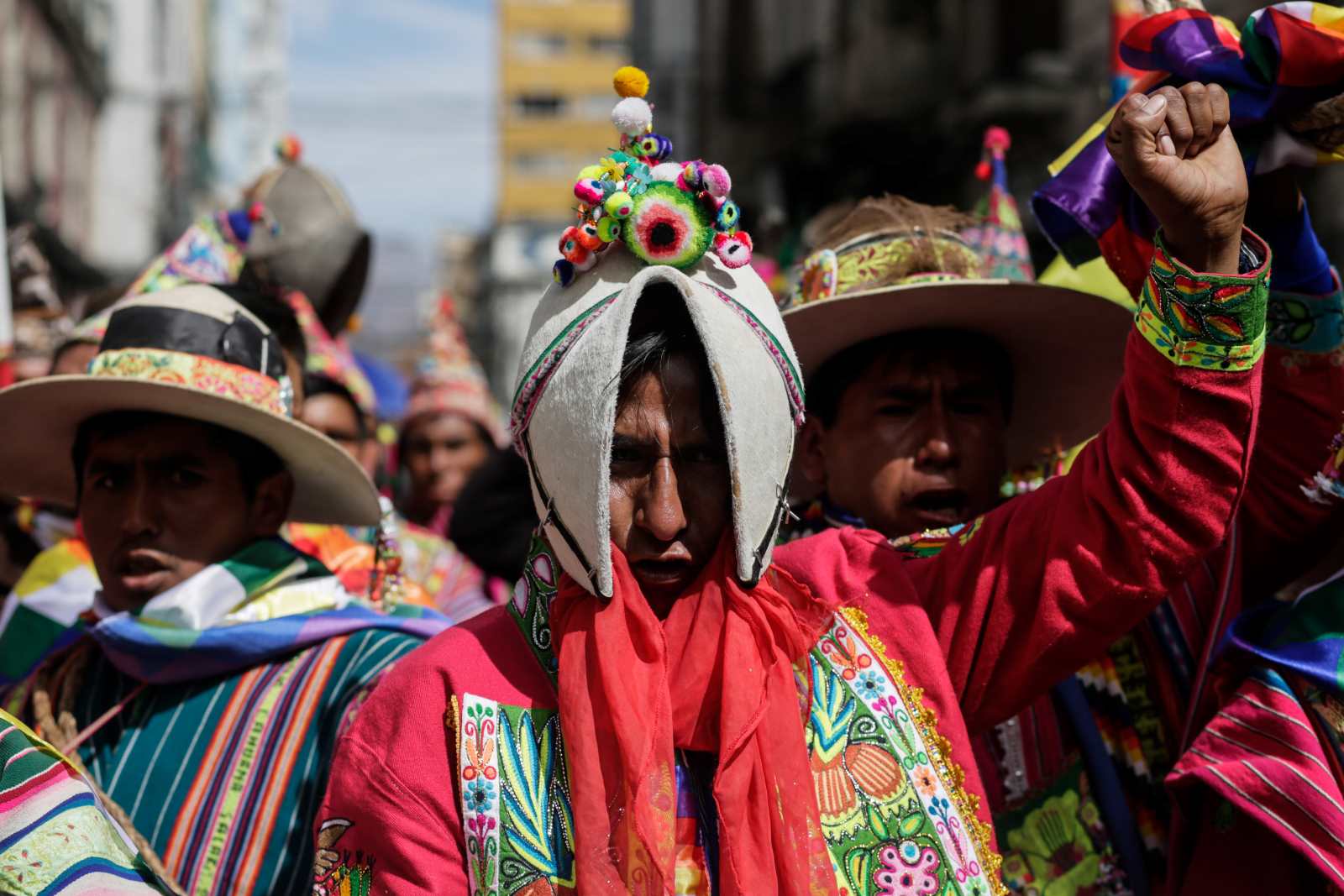
Another sensitive issue concerns the social and ecological consequences of lithium extraction. Many of those who live near the salt flats are opposed to their industrial exploitation. They complain that they are insufficiently involved in decision-making and fear that tourism and the fragile ecosystem will suffer. In the summer of 2025, for example, the body representing the Indigenous Peoples of Nor Lipez province denied the Chinese and Russian companies access to their territory, arguing that the contracts had been signed without the agreement of the Indigenous Peoples.
To date, evaporation has been used to extract lithium at Salar de Uyuni. Not only is this a lengthy process; it also requires vast quantities of water – a scarce resource in the Andean Highlands. A different method is currently being adopted: direct lithium extraction. This involves extracting the raw material directly from the brine and then reusing the water. This method saves water, is more environmentally friendly and far quicker, and it requires less space than the evaporation process. Furthermore, the extracted lithium is very pure. This is also the process that EAU Lithium uses.
The BMZ is committed to ensuring not only that technological progress is made but that people and the environment are respected. According to Bolivian media reports, BMZ Policy Advisor Christina Seeberg-Elverfeldt, who was a member of the EU delegation, stressed: “It is crucial to respect communities and social and environmental standards; this is where we can make a contribution.”
Katja Dombrowski is a journalist specialising in global development and a former member of the editorial team of D+C. She worked for the World Peace Service (WFD) in Bolivia from August 2022 until January 2025.
kd@katja-dombrowski.info
This story is part of The 89 Percent Project, an initiative of the global journalism collaboration Covering Climate Now.