Health
Ebola is not the only emergency


Measles outbreaks, epidemic levels of malaria, lack of access to healthcare for pregnant women – the medical needs in the eastern Congolese province of Ituri, and in the entire Democratic Republic of the Congo (DRC), are enormous, says Maria Mashako, a medical coordinator for Doctors Without Borders. “These are urgent medical needs that existed even before the arrival of Ebola.”
“And all of this has been put more or less on hold. Even routine immunisations for children are not running. This is a ticking time bomb that will expose us to even more public health challenges in the future,” Mashako continues.
With the majority of all confirmed cases of Ebola fever caused by the Bundibugyo virus, Ituri Province remains the epicentre of the outbreak. This 17th outbreak of Ebola fever in the DRC was declared by the World Health Organization (WHO) in mid-May 2026 and continues to spread at an unprecedented rate. By early July, over 1700 infections had been confirmed and hundreds of deaths registered. Extremely limited diagnostic and laboratory capacities are making effective testing and tracing very difficult.
Conflict and disinformation
In the midst of this deadly epidemic, the years-long intense conflict between state and non-state actors continues to rage. International humanitarian law is being disregarded by all sides and egregious acts of violence, including sexualised violence, are being perpetrated against the civilian population. At the moment, no serious political efforts are being made to implement a peace agreement. Even medical facilities are not safe from the violence. Healthcare workers have repeatedly been the victims of deadly attacks.
Moreover, many people lack trust in a healthcare system that was weak to begin with. Poverty in the region is extreme, but patients nevertheless often have to pay for treatment out of pocket. Communities have lived through frightening Ebola outbreaks before – and have often experienced the trauma of losing loved ones without being able to properly say goodbye. They also frequently lacked information about the exact progression of the disease. Such memories are shaping their perception of current measures. A response focused solely on Ebola risks reinforcing people’s impression that their other healthcare needs matter less.
An approach driven by economic and security interests would be disastrous in the current situation too. All too frequently, interests in mineral resources guide the decisions of powerful – and often external – actors in the DRC, instead of the priorities and needs of the Congolese people. What is needed is a cooperative and good-faith approach that takes the concerns and needs of those affected seriously and breaks down barriers and stigmas. That includes making people feel safe, for instance by allowing them to have contact with their families despite being in isolation, which would encourage them to come to health centres earlier.
Research on rare Ebola viruses is not profitable enough
Although Ebola Bundibugyo virus disease has been known since 2007, to date there is neither an approved vaccine nor medication to treat it. Effective diagnostic tools are also difficult to access. These research gaps are not primarily a scientific problem, but rather a political and economic one: pharmaceutical companies do not consider research on rare Ebola viruses profitable. This leaves medical teams on site with little remedies of supportive care such as administering fluids and controlling symptoms. But when it comes to containing epidemics, one thing is crucial above all else: speed.
Negligence on this scale should not happen again. Following the large outbreak in West Africa in 2014, it took until 2020 for the first effective treatment against the Ebola virus that was circulating at that time to be available on the market. Whereas countries like the USA stockpiled large supplies, affected countries still lack fast, reliable and, above all, affordable access to medical treatments. For that reason, public research funds should be tied to binding access requirements from the start so that new products can be made available where they are needed most.
$ 518 million needed
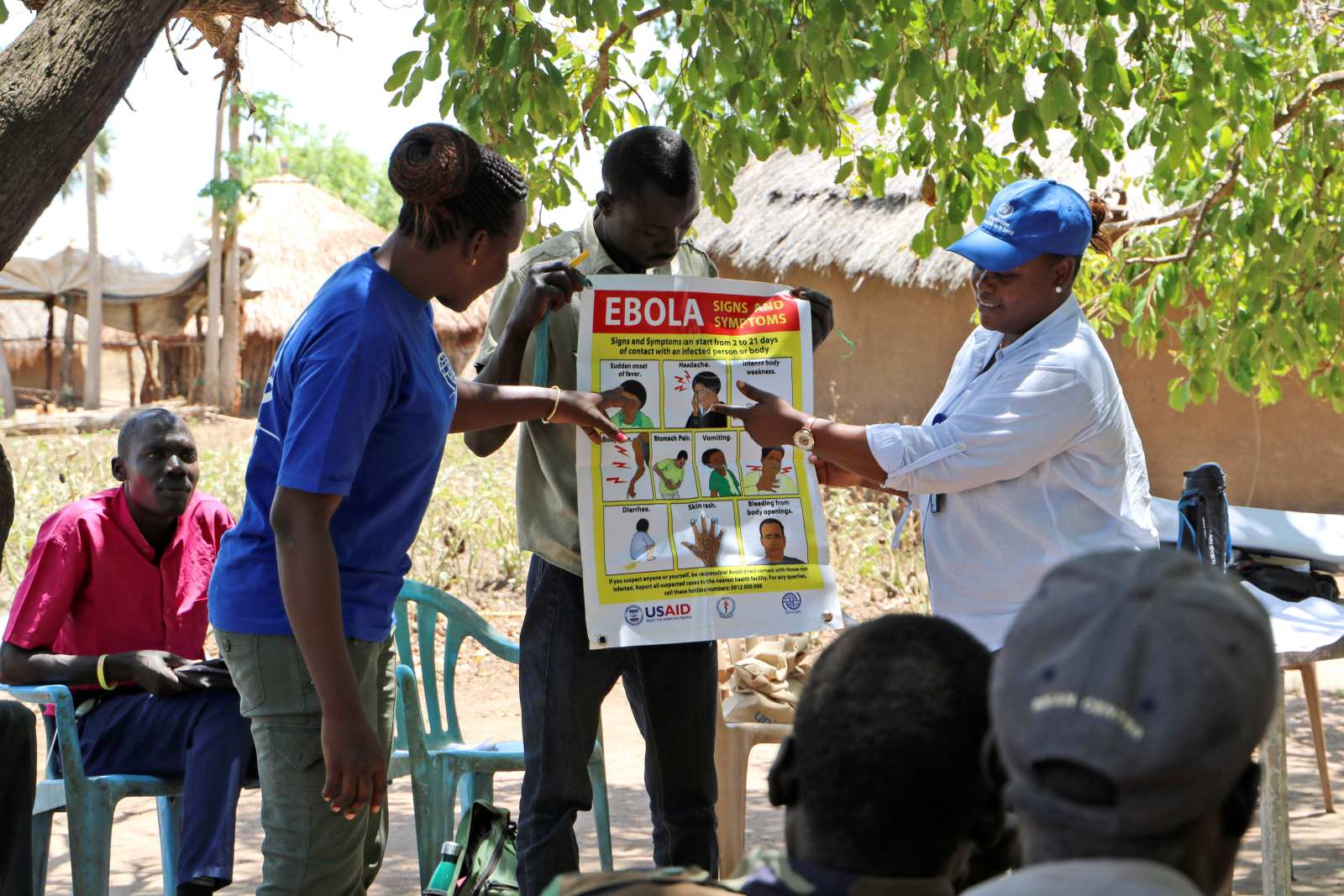
The WHO and the Africa Centres for Disease Control and Prevention (Africa CDC) have proposed a regional plan to contain the outbreak. A total of $ 518 million is needed to support Africa’s affected countries.
Countries like Germany have significant political, scientific and medical capacities to contribute to stopping the outbreak. The additional € 13 million recently pledged by German Development Minister Reem Alabali Radovan therefore sends an important signal. It is essential that this assistance translates into long-term political responsibility.
Germany can now show that its claim to be a reliable partner in global health also holds true during times of crisis. Three factors are key:
- Coordinated political leadership across all agencies is needed. In light of the recent restructurings in the relevant ministries, clear divisions of responsibility and close coordination between the Foreign Office, the Federal Ministry for Economic Cooperation and Development (BMZ) and the Ministry of Health are essential. As was the case in 2014, coordination mechanisms such as a special representative could be helpful.
- Germany must further strengthen its support for humanitarian aid and the development of resilient healthcare systems. That includes, in particular, investments in diagnostic, laboratory and surveillance capacities, as well as in the treatment of the affected population on site.
- Germany needs to create dependable evacuation and treatment options for humanitarian aid workers. Anyone who is deployed in an outbreak must be able to rely on quick and safe medical care. Germany has the expertise and treatment capacities to support this safety.
The Ebola outbreak demonstrates once again that epidemics cannot be stopped in laboratories or hospitals alone. Instead, they can only be overcome in places where healthcare systems have been strengthened, research has been publicly funded – and people trust the medical care they are offered. Anyone who is only responding to the current outbreak will be caught off guard by the next one. If the global community makes sustainable investments now, it will also protect people in future epidemics.
Doctors Without Borders has been operating in the DRC for many years and works closely with local health authorities. In response to the Ebola outbreak, the organisation significantly expanded its emergency measures: over 1400 personnel have been deployed specifically to contain the virus. The teams now operate seven Ebola treatment centres and over 15 observation centres in the affected regions of Ituri and North and South Kivu, support local healthcare facilities, train medical personnel and supply personal protective equipment.
Jasmin Behrends works as an Advocacy Officer for Global Health in the Advocacy Unit of Doctors Without Borders Germany (Médecins Sans Frontières).
jasmin.behrends@berlin.msf.org
Stephanie Johanssen works as an Advocacy Officer for Humanitarian Aid in the Advocacy Unit of Doctors Without Borders Germany (Médecins Sans Frontières).
stephanie.johanssen@berlin.msf.org