Development regime
China’s rise from a very poor to a higher-middle income country


Stefan Dercon in an interview with Hans Dembowski
China’s Communist Party likes to explain its spectacular economic success with its determined leadership and long-term thinking. Is dictatorship really the clue?
No, it is not. Things are far more nuanced. The growth rates of countries under democratic and authoritarian rule are basically the same on average over time, as research has shown. The big difference is that dictatorships often deviate from the average in much greater swings. Their success can thus be more spectacular, but catastrophes are often far worse too.
Does that apply to the People’s Republic?
Yes, its recent history offers examples of both. In the first 30 years after the Communist revolution in 1948, China suffered desperate poverty. The so-called great leap forward was supposed to industrialise villages in the years 1958 to 1961, but the neglect of agriculture caused a devastating famine, in which 20 million to 30 million people lost their lives. In the mid-1960s, Mao Zedong, the country’s first Communist leader, launched a Cultural Revolution that resulted in further turmoil and stagnation. For decades under Mao, China’s standard of living remained comparable to that of poor sub-Saharan countries. Things only began to change when Deng Xiaoping rose to power in 1978 after prevailing in the inner-party power struggles that followed Mao’s death in 1976.
So, when Deng got his chance, he started liberalising the economy?
Well, that is what it looks like in retrospect. Chinese experts tell a different story. Deng initially focused on a reform of governance, not market-oriented reforms. A key aspect was his devolution of central power. Under him, Communist leaders at the provincial levels were given the authority to make and implement policies. At the same time, the Central Committee held them responsible for results. Deng understood that a huge country like China cannot be run effectively by a small group of people residing in the capital city. While the Central Committee could command a quite effective state apparatus, it would never be able to respond to specific local needs and opportunities in such a huge and diverse country.
Delegating real authority to lower levels, however, is not typical of authoritarian rule. It means admitting that the top leader does not always know best. It will also only work in a fact-based policy environment. In a typical dictatorship, underlings will tell the „dear leader“ only what they think he wants to hear. Otherwise, they might put themselves at risk. Did China’s Communist Party really deviate from that pattern under Deng?
Yes, it did. An important reason was that Deng did not want to repeat mistakes. He was eager to learn from them. His famous metaphor of “crossing the river by feeling the stones” expresses this desire. He and the group of reformers in the Party that he represented had an idea of where he wanted to take the country, but it was not obvious how that was possible. His solution was to test different approaches – and that proves that he was not simply enforcing brilliant long-term policies. In order to learn from mistakes, of course, one must admit that they happen. Rather than pretending to always know best, Deng and others in the Party leadership paid attention to facts.
Were mistakes made?
Yes, lots of them. Here is an example: everybody knows that the special economic zone of Shenzhen was an amazing success and became a model for other special economic zones. What most people do not know, is that when the experiment started, Shenzhen was only one of four special zones. The other three failed and haven’t been heard of since. We can assume that many other policy measures flopped, but did not become part of public memory.
In today’s language, we might say that Deng refused to micromanage things. Did he lead by creating the vision of a prosperous China that would rise to its rightful place as the world’s most important country, which it had been for millennia? The Party seems committed to that vision.
Once more, that is what things look like in hindsight. Deng’s primary concern was not some global ambition. He wanted to perpetuate his Party’s rule at home, so he wanted it to be legitimate in people’s eyes. That could be achieved by economic growth, food security and alleviating poverty. After the many crises that had rocked the country under Mao, he saw how dangerous it was to rely only on violent oppression. Economic modernisation looked safer. The vision of progress that Deng established in the Party hierarchy was actually quite self-serving. It was also spectacularly successful in terms of both reducing poverty and creating legitimacy.
Many dictatorships are basically kleptocracies with no concern for any common purpose. That is different in China. Is that connected to Confucian philosophy? After all, Chinese emperors wielded immense and inscrutable powers, but, according to Confucian thinking, they were supposed to ensure harmony in society. In China’s collective memory, moreover, failure of the central power means civil war and hardship, whereas imperial rule means peace.
I would not romanticise Communist rule in China. Confucian tradition may play a role, but it does not shape the regime’s decision-making. The Party is normally quite pragmatic. Its underlying motivation is to stay in control with as little opposition as possible. The leadership likes problems to be solved before they become intractable. What is striking is that it normally does not crush protests against grievances such as air pollution, for example. Instead, it looks for ways to reduce them. In late 2022, masses of people rallied peacefully against the Covid-19 lockdown in many cities. The regime did not suppress them with force. It ended the lockdown. What it will not accept is criticism of its leading role in society, but even public discussions about poorly performing officers occur.
Is economic policymaking basically pragmatic too?
Yes, the regime is not enforcing some kind of premeditated free-market programme. It is grasping opportunities as they arise. If liberal orthodoxy were driving the Party, it would have privatised the huge loss-making state-owned enterprises a long time ago. It probably does not want to confront the vested interests involved. Masses of workers, as well as the careers of some officials, depend on those companies.
Some European environmentalists say that, thanks to long-term thinking, China has become a strong proponent of climate action. It is indeed focusing on renewable energy and e-mobility. What do you say?
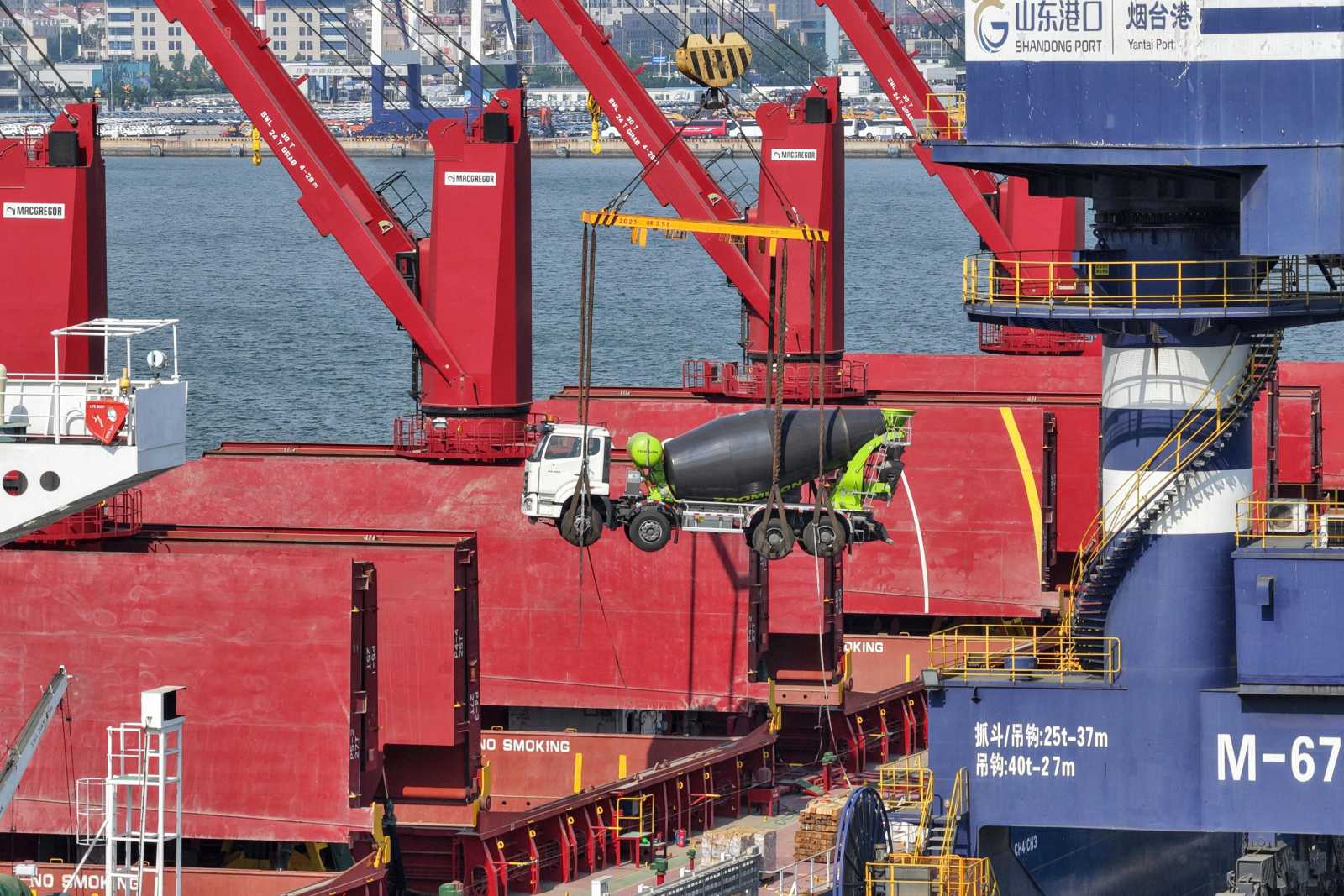
Most of all, I see short-term pragmatism. China is not endowed with fossil resources, so relying on renewable energy makes a lot of sense. Once you generate a lot of electric power, e-mobility becomes the obvious choice. The regime, moreover, is trying to export as many goods as possible. It tries to anticipate what will be in strong global demand next. Paying attention to the international climate debate, it has decided to maximise its global market share in relevant technologies. I would not legitimise dictatorship by somehow arguing it serves long-term interests when the short-term benefits are so obvious.
Is any fundamental guiding idea driving the Party’s economic policies?
For a long time, it was to move workers, gradually and in a controlled way, from agriculture, in which they laboured away in desperate poverty, to more productive jobs in manufacturing. That was comparatively easy, not only because of the huge rural population, but also because the new industries did not threaten existing businesses. Things are more difficult now, not least because of demographic change. It was easier, moreover, to reap the rewards of high growth when China was still a low-income country. When someone gets a first pair of shoes, that is a big deal. The second means twice as much. The fifth or sixth pair, however, does not make a big difference anymore. Once people’s fundamental needs – food, clothing and shelter – are satisfied, they begin to take interest in other things and start to consider their longer-term outlook. They become more demanding. My impression is that the nationalistic rhetoric Xi Jinping uses is meant to divert attention from related problems.
Do you see a willingness to learn from mistakes in China’s Belt and Road Initiative, which China uses to fund infrastructure projects in developing countries? Sovereign debt has become a serious issue once more, not only in Africa.
Chinese lending has become much more cautious. Officials do not want to lose face, so they will not admit in public that something went wrong. Nonetheless, their action shows that they have become more risk-aware. The credit flow peaked nine years ago. Initially, policymakers believed they could rise to several challenges by letting Chinese companies implement foreign projects on the basis of government loans. They wanted to improve trade opportunities, manage domestic employment problems and raise China’s international profile that way. They have obviously learned that things can go wrong, and that corruption often compounds that kind of problem.
What about corruption in China itself?
It will always be an issue because the country has few checks and balances. Research has shown, however, that the Party is serious about getting a grip on it. In a dictatorship, one always suspects that an anti-corruption purge basically serves to eradicate opponents of the leadership from positions of influence. By contrast, China’s regime seems to be trying to limit officials’ illegitimate self-enrichment as best it can.
What can developing countries learn from China’s example?
Not that state-led development will always lead to success. Instead, that it is essential to pay attention to factual reality and to learn from mistakes. Moreover, the central importance of common purpose: a shared commitment of those with power to foster growth and development. While it is clear that the Chinese regime has been willing to resort to repression if it feels threatened, it has done an effective job of gaining legitimacy in the eyes of most of its population by improving people’s standard of living. By the way, that kind of legitimacy matters in Western countries too. In spite of their democratic constitutions, widespread economic and social discontent is fostering support for right-wing authoritarianism, questioning legitimacy of the existing leadership that only can be resolved through delivering on people’s needs and expectations.
Stefan Dercon teaches development economics at Oxford University. He dedicated a chapter to China in his book “Gambling on development – Why some countries win and others lose” (London, 2023; Hurst & Company).
stefan.dercon@economics.ox.ac.uk