Urban innovation
The miracle of Medellín


Medellín’s Comuna 13 was once considered one of the world’s most dangerous neighbourhoods. The informal settlement, perched on the steep hillsides on the outskirts of the city, was under the control of drug cartels, guerrilla groups and paramilitaries for years. A massive military “recapture” operation in 2002 initially made matters worse. Comuna 13 remained a classic no-go area: no one ventured there unless they lived there.
Today, the picture has changed significantly. Not only has Comuna 13 become safer, it is even attracting tourists who want to explore its vibrant graffiti and cultural scene. This transformation is the result of a series of urban investments: the city expanded social infrastructure such as schools and hospitals as well as physical infrastructure by building, for example, outdoor escalators. Since 2011, they have bridged a height difference equivalent to around 28 storeys, reconnecting the neighbourhood with the city centre. The world’s longest outdoor escalator takes six minutes to ride – and has made a tangible difference to the daily lives of Comuna 13’s roughly 12,000 residents.
Medellín, Colombia’s second-largest metropolitan area with several million inhabitants, has established itself as a laboratory for urban innovation over the past two decades. The acclaimed “most innovative city” is widely regarded as a model for sustainable urban development in Latin America. Projects such as the metro system with its cable-car extensions, green corridors and urban nature reserves on the hillsides are designed to make Medellín more socially inclusive and environmentally friendly. Yet despite the success of these projects, a key question remains: have these transformations truly been sustainable and do they address the city’s historical inequalities?
Mobility: the rise of a metro culture
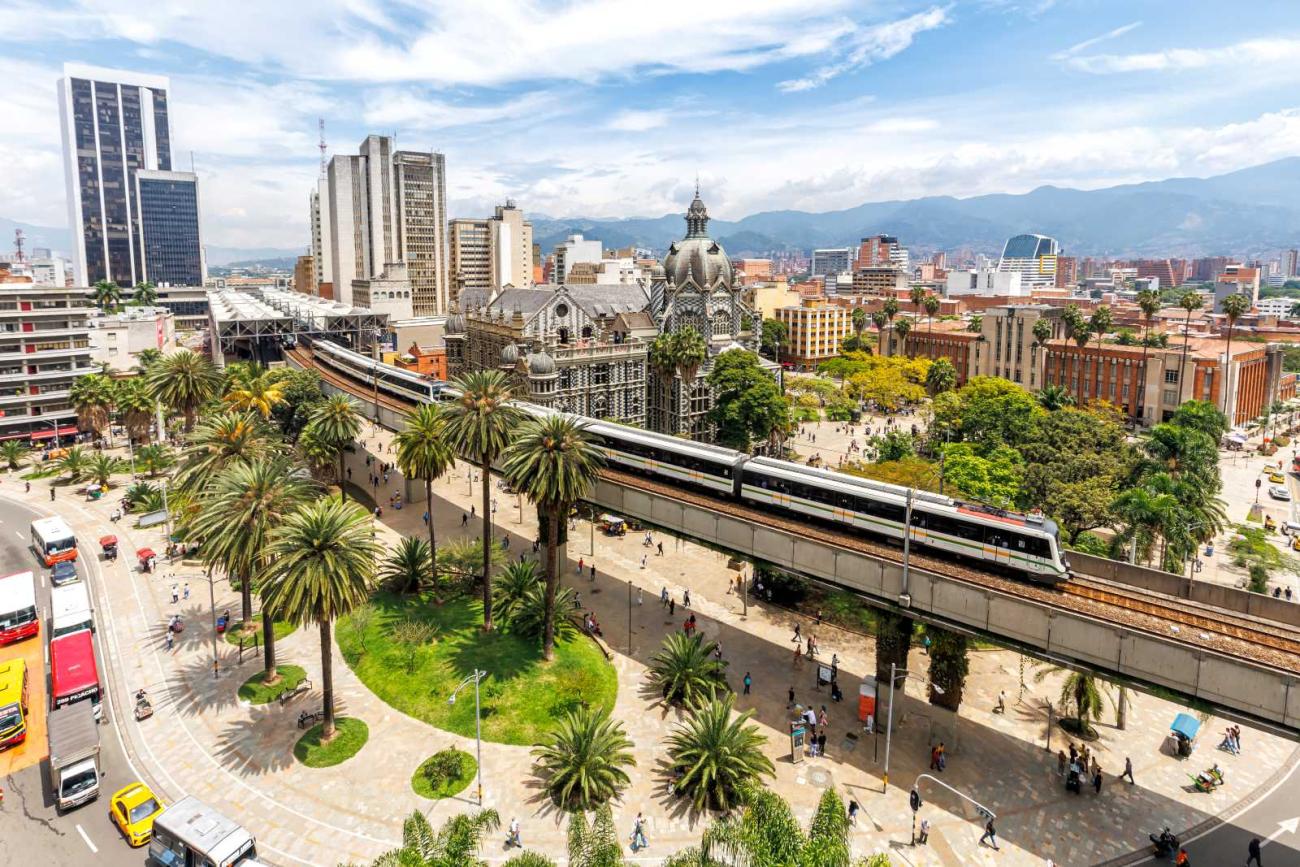
The escalators of Comuna 13 are just one example of how infrastructure projects in Medellín have contributed to greater territorial equity. Since its inauguration in 1995, the metro system has significantly improved mobility for people living in the city’s peripheral neighbourhoods. Due to the city’s location in the Aburrá Valley in the Andes, the network was expanded to include the Metrocable, a system of urban cable cars linking settlements on the surrounding hillsides with the city centre. Travel times have been sharply reduced, improving the quality of life for thousands of residents. The system has also had environmental benefits, partly replacing diesel-powered bus services.
At the same time, the metro has strengthened a sense of community across the city. There is even talk of a distinct “metro culture”. Yet it remains unclear how sustainable these changes are. The system is financed largely through ticket revenues rather than public subsidies. It is uncertain whether this model will remain viable once the trains require extensive modernisation and the network is expanded further.
Moreover, areas around metro stations have experienced gentrification. Rising property prices in connected neighbourhoods risk displacing the very residents that the system was originally intended to serve. For example, several families were forcibly resettled for the construction of the Metrocable Picacho line. Whether such social costs are justified requires careful consideration.
Environment: cooling the city through green corridors
Medellín has also made notable progress on environmental issues, particularly through renaturation projects. A total of 18 roads and 12 waterways have been transformed into Corredores Verdes, or green corridors. Along major traffic arteries such as Avenida Oriental, they have reduced ambient temperatures by up to two degrees Celsius, countering the urban heat island effect. The city has also planted over 8800 trees and 90,000 other plants to boost biodiversity, earning international recognition in the process.
Even so, the city’s ecological resilience remains fragile. Air pollution, in particular, continues to pose a serious challenge. While the green corridors improve the microclimate, they are insufficient to offset the poor air quality caused by heavy traffic and the city’s location in the enclosed Aburrá Valley.
Pressure is also mounting on the Cerros Tutelares – the seven hills surrounding the city that function as its green lungs. Progress has been made here, too: thanks to broad public participation in conservation efforts, forest fires were reduced by 75 % between 2021 and 2022. Nevertheless, the hills remain under threat from land occupation. There is a risk that informal settlements will once again spread across the slopes – endangering not only ecosystems and biodiversity but also human lives, as these areas are prone to landslides. This highlights a key point: ecological sustainability and social security are inextricably linked.
Tasks for a model city
Medellín has shown an exceptional ability to use urban planning as a means of driving social and environmental innovation. The metro system and green corridors have improved quality of life and climate resilience. Yet the image of a “successful model city” that Medellín is keen to project must not obscure the city’s ongoing challenges, such as social inequality, insufficient funding for public transport and growing pressure on vital ecosystems.
The real task is not building more infrastructure. It is ensuring that urban transformation brings more social equity, environmental protection and resilience in the long term. After all, sustainability means more than international acclaim – it must be felt in everyday life. Only then can the so-called “miracle of Medellín” truly become a reality.
Camilo Andrés Carvajal Guerra is an environmental engineer and sustainability professional.
ccarvajalguerra@gmail.com
This story is part of The 89 Percent Project, an initiative of the global journalism collaboration Covering Climate Now.