Novel
How brave women fight back against oppression


This is the third item in our 2026 culture special with reviews of artists' works with developmental relevance.
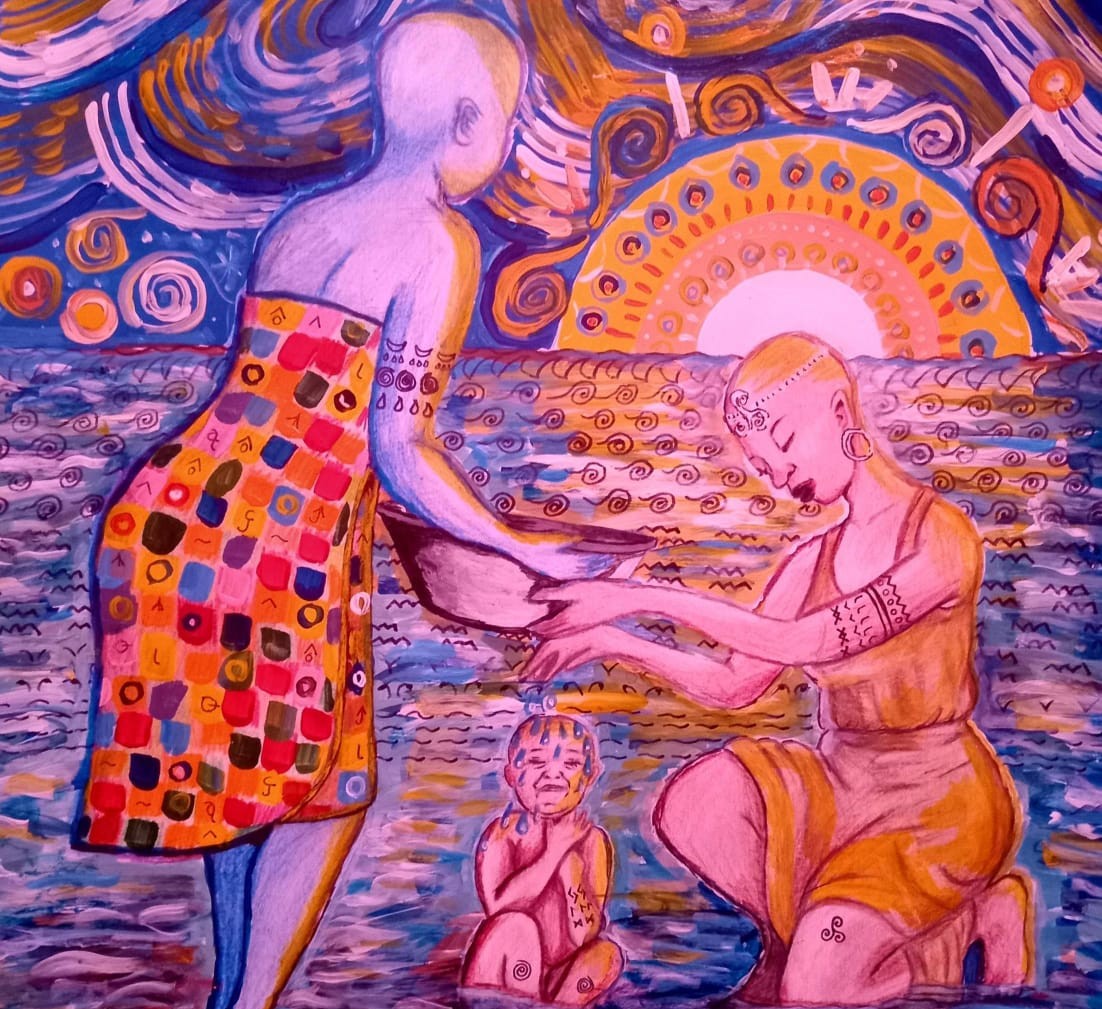
Dry earth, mud huts, barefoot children – life on the fictional estate Água Negra in northeastern Brazil is characterised by hard physical labour, structural oppression and the fight for survival. This is where Itamar Vieira Junior’s debut novel, “Crooked Plow”, takes place. The geographer and ethnographer was born in Salvador de Bahia in 1979. The book won multiple awards in Brazil and Portugal and was on the shortlist for the 2024 International Booker Prize.
As children, sisters Bibiana and Belonísia discover a knife under their grandmother’s bed. They take turns putting it in their mouths, and Belonísia accidentally cuts off her tongue. The first part of the novel is told from Bibiana’s perspective, who speaks for her younger sister from that point forward. She learns to read Belonísia’s body language and translate it for others.
The girls’ uncle also moves with his family to Água Negra. Bibiana is attracted to her cousin Severo and jealous of her sister, who is close to him. This situation leads to a breach of trust, which puts a lasting strain on the sisters’ relationship. At 16, Bibiana becomes pregnant with Severo’s child, and the young couple leaves Água Negra in search of a better life.
The second part is written from Belonísia’s perspective. Tobias, a farm labourer, successfully lobbies Belonísia’s father for her hand. But Tobias has a drinking problem and abuses Belonísia psychologically. When he is found dead on the side of the road, she feels relieved. She resolves to live on her own from now on and only returns to her parents’ house when her father dies. For Bibiana, too, this provides an opportunity to return to Água Negra with Severo and their son Inácio.
Spirituality plays a major role in the communal lives of the labourers and is presented in the novel as the bearer of their collective memory. An immortal saint named Santa Rita is the narrator of the third and final section. The land has been sold, and the new owner wants to get rid of the farm labourers. Severo and Bibiana encourage the others to fight back. Violent clashes ensue between them and the estate owner.
Colonial power relations cast a long shadow
Packaged as a family narrative, “Crooked Plow” tells the story of entire generations of Afro-Brazilian farm labourers. In 1888, Brazil became the last country in the western hemisphere to abolish slavery. The former slaves were never properly integrated into society, however, which is still causing inequality in the country to this day. The novel uses individual life stories to show how colonial power structures continued to have an impact throughout the 20th century and into the present.
The sisters embody two different forms of resistance. Bibiana pursues an education and becomes the voice of the community. Belonísia stays behind and endures violence and injustice. Her strength lies in her perseverance. Their grandmother, Donana, serves as an important role model for her granddaughters, who experience patriarchal violence in interpersonal relationships and working conditions as the norm. Her calloused hands are a symbol of the work that the community’s women perform, which is essential to survival. Her knife, which various women use as a weapon against violent men, represents another form of resistance and power that the women seize after a lifetime of oppression.
“Crooked Plow” is a novel that deftly uses the individual life experiences of its characters to paint a larger picture and draw attention to social injustices. It is worth reading both from a literary and political perspective. Itamar Vieira Junior makes tangible the everyday impact of colonial continuities and opens up new perspectives through his unusual narrators. At the same time, he doesn’t point the moralising finger but instead makes oppression visible through powerful imagery and gives the people who suffer under it a voice.
Novel
Vieira Junior, I., 2023: Crooked Plow. London and New York City, Verso. Translated by Johnny Lorenz. The original appeared in 2018 under the title “Torto Arado”.
Sinikka Soriya Dombrowski has studied at the Deutsches Literaturinstitut Leipzig since 2025.
sinikka.soriya.dombrowski@protonmail.com