International law
Iran war: Call out violations of international law, push for reform


The prohibition on the use of force enshrined in the UN Charter (Article 2(4)) is not a mere formalism; it is a fundamental principle of the post-war international legal order and a true civilizational achievement. Renowned international law scholar Hans Kelsen called it a cornerstone of the international order. According to Kelsen, international law cannot be regarded as a “legal order” unless it bans the use of force for reasons of principle. If any state were permitted to deploy military force against another state at its own discretion, no sphere of state protection would be left to exist and international relations could not be described as a “legal state”.
The prohibition on the use of force doesn’t express a romanticised idealism or pacifism; rather it rests on the historical conviction – as a consequence of the brutality and inhumanity experienced during two world wars – that the use of military force is not a sustainable means of resolving interstate conflicts and, because of the costs it entails, can only be viewed as a last resort. The architects of the UN Charter, and especially US President Franklin D. Roosevelt, were deeply convinced that the ban on the use of force and the multilateral and institutionalised peacekeeping system introduced by the Charter to enforce it were necessary to prevent future wars.
Today we know that using military force as a problem-solving prima ratio is dysfunctional and that diplomatic-multilateral conflict resolution proves to be more sustainable than military force, which at best produces short-term success. This is why the UN Charter permits military force only in exceptional cases, namely to defend against an armed attack and when authorised by the UN Security Council.
The “inherent” right of individual or collective self-defence (Article 51 of the UN Charter) permits preventive self-defence in situations where an attack is imminent and cannot be averted by any other means (“window of last opportunity”) – despite the Charter’s stricter wording (“if an armed attack occurs”). Even then, however, the state seeking to defend itself is not supposed to act outside the scope of the multilateral Charter system. According to Article 51 of the Charter, it is required to “report” measures taken in the exercise of this right of self-defence to the UN Security Council and provide a justification for such measures, particularly in the case of preventive self-defense in response to an imminent danger that cannot be averted otherwise. The Security Council itself is then supposed to take “such action as it deems necessary in order to maintain or restore international peace and security”. In other words, even when it comes to self-defence, the Charter reaffirms the firm belief that preserving and securing peace is best done multilaterally.
Many civilians killed or displaced by Iran war
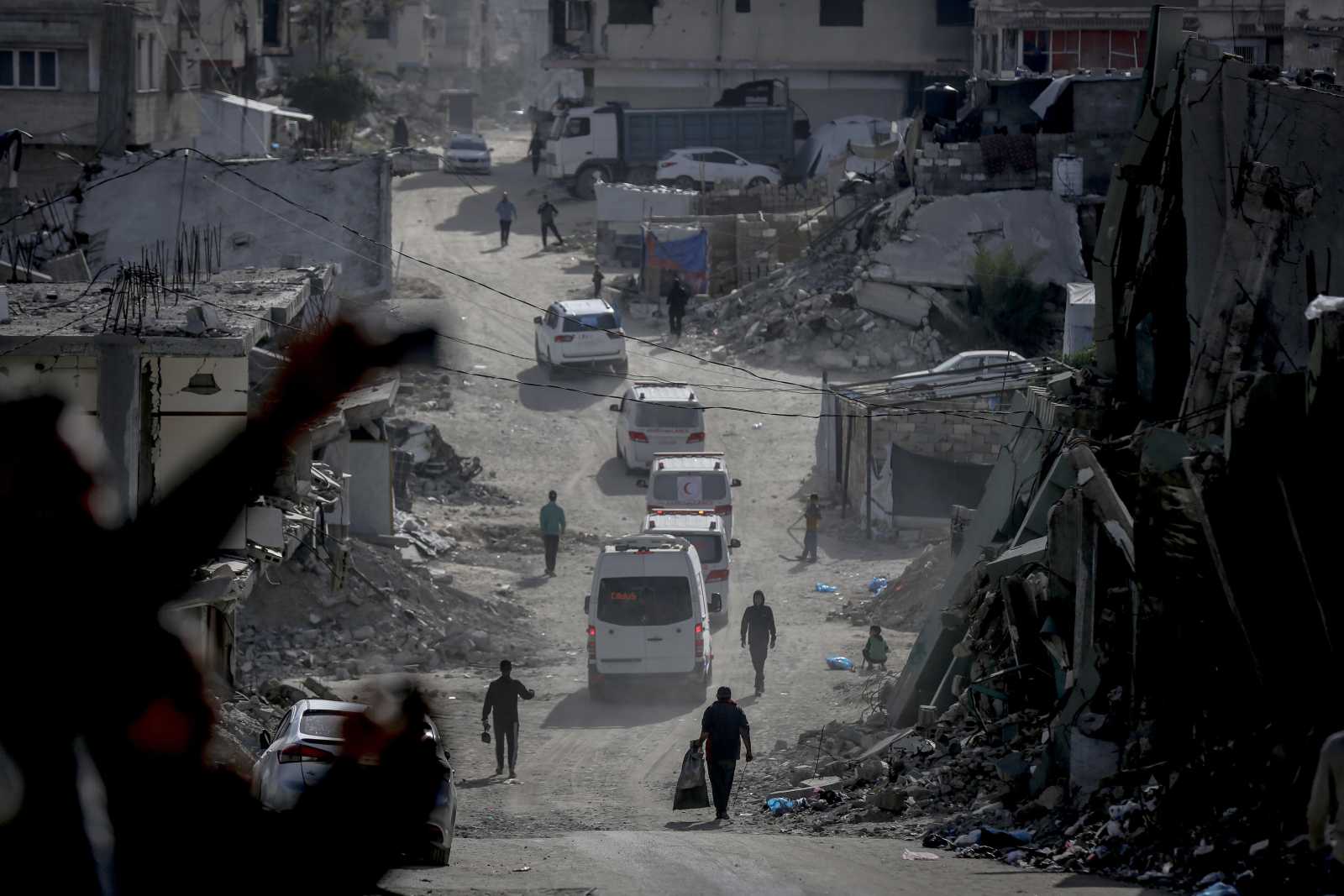
The ongoing Iran war demonstrates by the day, and increasingly so, the validity of such a critical approach to the use of force: well in excess of 1000 civilians have already been killed in various countries, including at least 168 – for the most part children – in a primary school in Iran that was hit by a US cruise missile. More and more civilian objects, including cultural heritage, are being destroyed. Millions of people from Iran, Lebanon and the Gulf states are fleeing. The global economic ramifications can also be felt in Germany in the form of massive energy price rises. The higher oil and gas prices – and the easing of US sanctions – are helping Russia fund its war of aggression against Ukraine.
And not even the vague war aims seem to be currently achievable: The Iranian uranium stored in deep bunkers can only be secured militarily through a special operation involving ground troops. Just as the Twelve-Day War did not, this air war will not decisively weaken Iran’s nuclear capabilities. Nor can the overthrow of the Iranian regime – and thus an improvement in the situation of the Iranian people – be achieved without the deployment of ground troops and/or an armed opposition. On the contrary: there is a risk that both repression within Iran and the country’s nuclear ambitions will intensify even further after the war ends.
At the same time, however, it needs to be stressed that modern international law is not blind to the brutal repression practised by a murderous regime. Indeed, already the Charter is committed to the universal protection of human rights and does by no means permit a rights violating regime to massacre its own population in the name of state sovereignty. The importance of human rights has been confirmed in numerous post-Charter developments, beginning just three years after the UN was founded through the Universal Declaration of Human Rights (1948), and, more recently, through the “Responsibility to Protect” principle adopted by the UN General Assembly in 2005. This principle resolves the conflict between state sovereignty and human rights protection as follows: in the event that a state commits serious international crimes against its own people, the “international community” is allowed to intervene to protect this people. However, this intervention must take place within the framework of the multilateral UN system, specifically by referring the matter to the UN Security Council, which may then also authorise the use of military force.
As to the current Iran war this means that the US and Israel should have first exhausted all means of diplomacy and non-military sanctions before using military force. They should have seized the UN Security Council of the matter and then, as a subsidiary course of action, the UN General Assembly. They could have submitted a resolution to the latter threatening concrete measures, including military action, against the Iranian regime. Even if the Security Council alone has the power within the Charter system to authorise military force, a General Assembly resolution certainly lends legitimacy to the exercise of it. At the very least, the US and Israel could have first attempted to involve other states in a “coalition of the willing”. As parallel steps, non-military pressure on Iran could have been intensified and the Iranian protest movement given greater and more targeted support. All in all, the course of the war makes it clearer every day that the aforementioned war aims could rather have been achieved through negotiation than through waging a war – and without the many negative consequences.
Reform of the UN Security Council is long overdue
The Iran war is the latest example of how countries continue in the 21st century to bypass the UN Security Council and use military force to assert their interests. However, this does not mean we should start lamenting the death of international law, or, more exactly, the international law of peacekeeping. The priority now is to soberly analyse the strengths and weaknesses of this law so as to then undertake the necessary reforms – of the UN Security Council in particular.
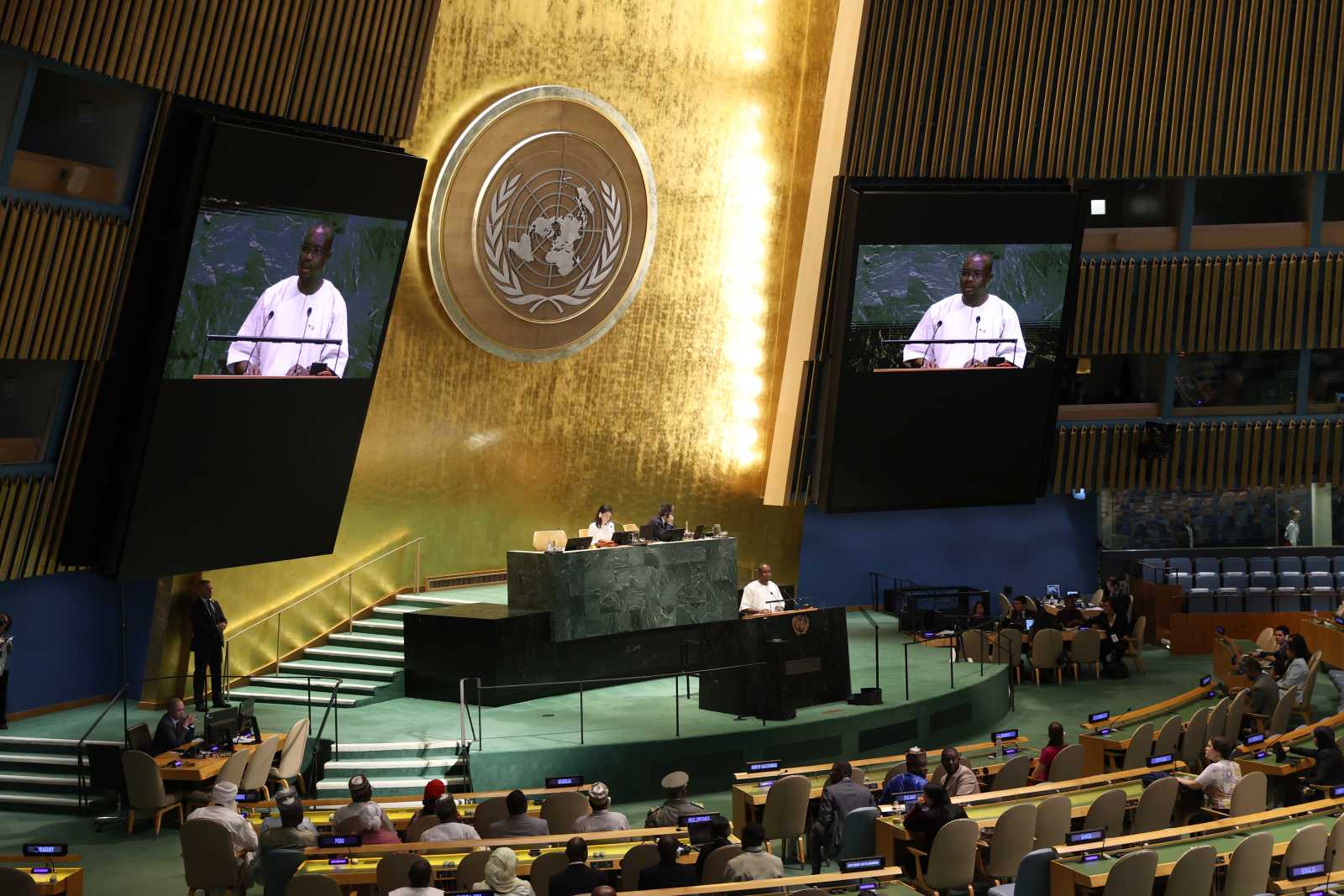
Europe could play a lead role in this context if France and the United Kingdom were to give up their permanent seats on the UN Security Council in return for one European seat. By working with civil society movements and like-minded states, in the Global South and beyond, this could ratchet up the pressure on the three other permanent members (China, Russia and the US) to facilitate Security Council reforms. Though their permanent membership is most probably not up for debate, the possibility of increasing the number of permanent members could be discussed with a view to achieving genuine global representation and, in particular, overcoming the rigidity of the current veto system.
This, after all, is the main reason for the Security Council’s dysfunctionality in the area of peacekeeping: if, as is the case under the current system, a single permanent member did not have the power to prevent the Security Council from authorizing military action, a majority of the 15 Security Council members might conceivably have authorised military measures against Iran as a last resort.
Kai Ambos is Chair of Criminal Law, Criminal Procedure, Comparative Law, International Crimi-nal Law and Public International Law at Georg-August University of Göttingen, as well as a judge at the Kosovo Specialist Chambers in The Hague.
kambos@gwdg.de