Mining economy
Burundi’s struggle for mining justice


Burundi possesses considerable mineral resources, including gold, tin, tungsten and tantalum, as well as lithium, rare-earth elements, vanadium, titanium and nickel. But despite its mineral-rich soil, the country does not generate sufficient export revenue to significantly boost its gross domestic product. In the annual national budget, revenue from mining is often negligibly small; for the current financial year, the Burundian Ministry of Finance reported revenue from this sector of around $ 2.6 million. For years, the authorities have also complained that mining operators are selling minerals fraudulently and outside official channels.
In February 2023, the Council of Ministers stated: “Since 2013, Burundi’s mining and quarrying sector has adopted new legislation designed to attract both domestic and foreign investors, but over time, shortcomings have become apparent in these laws. To address these shortcomings, the Ministry has begun the process of revising Burundi’s Mining Code and its implementing regulations to bring them into line with the reality on the ground.” Five months later, the country introduced the new Mining Code intended to foster “win-win” partnerships between the state and the sector.
Politicians, economists and civil-society organisations argue, however, that significant grey areas remain. For Olivier Nkurunziza, leader of the opposition party “Union for National Progress” (Union pour le Progrès national, UPRONA), the shortcomings cited by the Council of Ministers are more than just technical details. He says that mining contracts are never published and that corruption is rife. In his view, production figures are underreported and there is a lack of transparency in contract negotiations.
Nkurunziza also argues that communities in mining areas derive no tangible benefits from the sector, such as the construction of infrastructure. Another point of criticism is that Burundi exports minerals in their raw form rather than processing them locally. As a result, according to Nkurunziza, the country will never reap the true value of the resources leaving its territory.
Suspended contracts, halted operations
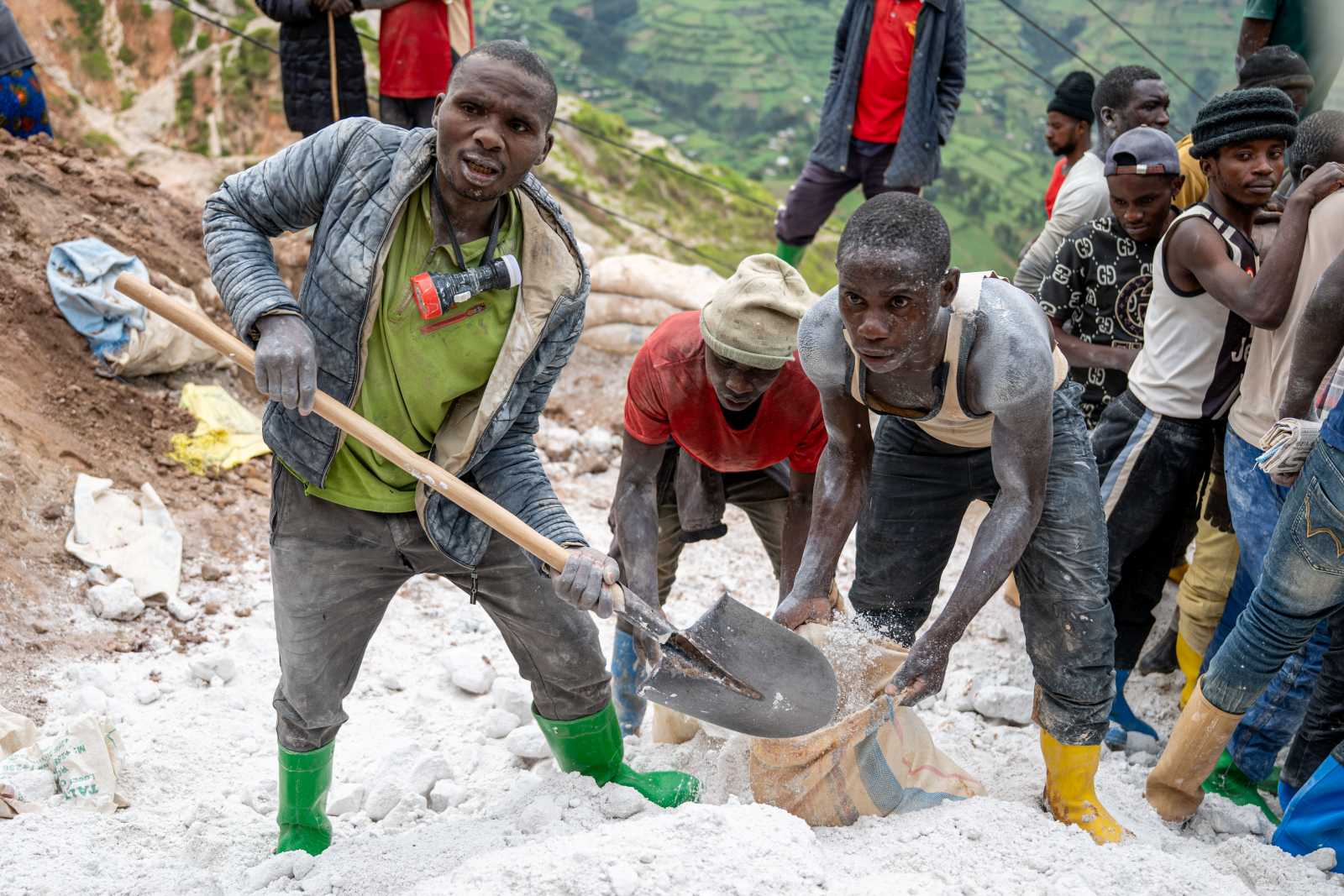
The new Mining Act came into force two years after Burundi took a bold step. In July 2021, Bujumbura suspended several major mining companies, including the British firms Rainbow Rare Earths and African Mining Limited as well as the Russian-linked company Tanganyika Mining.
At the time, Minister Ibrahim Uwizeye told company representatives that the contracts would need to be revised. “The agreements between these companies and the Burundian government were characterised by a significant imbalance that risked causing major losses for the country,” he was quoted as saying during a meeting with mining company officials. Uwizeye explained that a review was necessary to establish a partnership that was beneficial to all parties but assured the representatives that this did not mean that operating licences would be revoked.
Pamphile Malayika, a former MP with a focus on the mining sector, agrees that renegotiation made sense. He notes, however, that the aim was a fairer distribution of profits and a higher state stake of at least 16 % – yet the state currently still holds a stake of only 15 % in all mining projects. He also emphasises that the abrupt suspensions had immediate consequences: companies halted work, the state lost foreign exchange earnings, jobs were lost and cases of fraud in small-scale mining increased.
Official exports – and the transparency question
The decline in foreign exchange earnings resulting from Burundi’s radical measures took a particularly heavy toll on the country. Economic realities eventually caught up, and on 7 October last year, Burundian President Évariste Ndayishimiye officially launched the export of green quartz and amethyst to China. This move was presented as a new chapter and formed part of a 100-day export campaign that had already begun at the end of July 2025.
At the end of February 2026, the Governor of the Central Bank, Edouard Normand Bigendako, stated that just over 200 kilogrammes of gold had been exported in the fourth quarter of 2025, generating revenue of over $ 27 million. For other minerals, he reported official exports of more than 950 tonnes worth over $ 7 million, with more than $ 1 million already repatriated.
Despite these positive economic trends, Burundian civil-society organisations and politicians, including the Observatory for the Fight against Corruption and Economic Misconduct (Observatoire de Lutte contre la Corruption et les Malversations Économiques – OLUCOME), stress that sustainable structural change requires transparency. They argue that Burundi should join the Extractive Industries Transparency Initiative (EITI) and point out that the Burundian Government formally committed to implementing the EITI standard 11 years ago. Furthermore, they argue that the mineral trade should be centralised through the Burundian Mining and Quarrying Office (Office Burundais des Mines et Carrières, OBM).
The potential of nickel and new doubts
Of all Burundi’s mineral resources, nickel is one of the key commodities for the country’s long-term prospects. The country has oxidised nickel deposits estimated at around 285 million tonnes. Burundi’s nickel reserves are estimated to account for around six percent of global reserves.
In March, Burundi signed a 14-month exclusive contract with the US company Lifezone Metals for the development of the Musongati nickel project in the south-east of the country. The deposit is estimated to contain 150 million tonnes of nickel alone.
However, concerns arose almost immediately. MP Malayika described it as regrettable that the Public Procurement Act had apparently not been complied with in connection with the tender. He acknowledges that Lifezone operates in Tanzania and possesses strong technical and financial capabilities. Nevertheless, he argues that such a strategic investment should have been made through an international tender process, particularly as the exclusivity prevents other potential partners from evaluating the project.
Setting aside the economic back-and-forth between business and politics, the fundamental question remains: how does this benefit the people? Like many African countries, Burundi needs a sustainable solution that ensures its immense mineral wealth is serving the well-being of the Burundian people – and not merely fill the coffers of foreign investors and a small local elite. Only transparent governance, fair contracts and genuine public participation can transform Burundi’s mineral resources into a foundation for inclusive development.
Mireille Kanyange is a journalist and reporter at Radio Isanganiro in Burundi.
mika.kanyange@gmail.com