Feminism
Is prostitution work or exploitation?


For radical feminists, prostitution occupies the lowest rung on the ladder of male hegemony. Their central objection is the inescapable harm of commodification itself. When sex is bought and sold like any other good on the market, a woman’s body becomes the product, and commodification in itself is harmful, regardless of the conditions under which it takes place. Violence, they argue, is not incidental to prostitution, but integral. They describe two types:
- Paid-for violence: the everyday violence of unwanted, often painful penetration.
- Unpaid-for violence: rape, beatings, harassment, murder, torture and the host of physical and psychological consequences – STDs, injuries and post-traumatic stress – that follow.
The radical feminist position is that prostitution as a social practice perpetuates inequality and that the damage it causes is irreparable. Legalisation and decriminalisation, far from healing the damage, merely render it invisible.
At the core of this critique lies scepticism about consent. Radical feminist legal scholars such as Catharine MacKinnon argue that consent in prostitution cannot be understood as freely given, since economic compulsion fundamentally shapes the exchange. From this perspective, payment does not neutralise coercion but instead operates as a mechanism through which inequality is enforced, rendering consent structurally compromised rather than genuinely voluntary.
Andrea Dworkin describes the prostitute as treated as “vaginal slime,” a body rendered disposable and contaminated through repeated sexual use, marked by injury, degradation and the normalisation of violation. Other feminists argue that while such treatment could be directed at any woman, the commodification of prostitutes’ bodies legitimises subordination and degradation, reinforcing men’s sexual entitlement through market exchange. Thus, for radical feminists, sex work cannot be considered “work” at all but rather is paradigmatic violence, a form of slavery masquerading as a contract. From this, three claims follow:
- That what men purchase is not just sexual access but the prostitute’s degradation itself.
- That prostitution thrives on inequalities of power – economic, social and gendered.
- That prostitution reproduces these very inequalities, publicly affirming men’s sex-right over women.
Radical feminists also critique the liberal notion of sex work as “work” by arguing that the idea that one can sell services without selling oneself is a myth – one that disguises oppression as freedom. For them, sex work is the most pernicious form of contract, transforming women’s bodies into commodities under the guise of choice, while leaving untouched the deeper reality of patriarchal domination.

Prostitution as freedom and autonomy
Liberal feminists do not deny the harms that prostitution can cause. They too acknowledge women’s poverty, powerlessness and histories of abuse. But the two positions part ways when it comes to the question of what should be done. For liberals, abolition is not only unworkable but also unjust because it would deny women whatever autonomy and benefits they may gain from sex work.
Liberals argue that under less-than-ideal conditions, prostitution may still represent a woman’s occupational choice. It can afford her freedom, financial autonomy and a form of sexual self-determination. If society accepts women selling their mental and manual labour – often under exploitative conditions – why should the sale of sexual services be uniquely disqualified? For some women, they argue, it is the best available option. The liberal case for decriminalisation rests on several pillars:
- It recognises prostitution as work, not a crime.
- It allows for unionisation, giving prostitutes the means to resist brothel managers, pimps and police.
- It opens access to welfare measures like healthcare, childcare, education and social security.
- It helps erase the stigma of immorality and criminality.

Liberals respond directly to radical claims: Yes, prostitution as it exists is degrading. Yes, it reflects and reproduces inequality. But prohibition does not solve these problems. At best, it drives the trade underground, worsening the very harms radicals want to eradicate. At worst, it strips women of the limited autonomy and livelihood that sex work provides.
To the liberal eye, what matters is how to regulate prostitution under real-world conditions. The hope is to reform circumstances – to regulate the industry, reduce harm and shift society’s attitudes toward sex workers themselves.
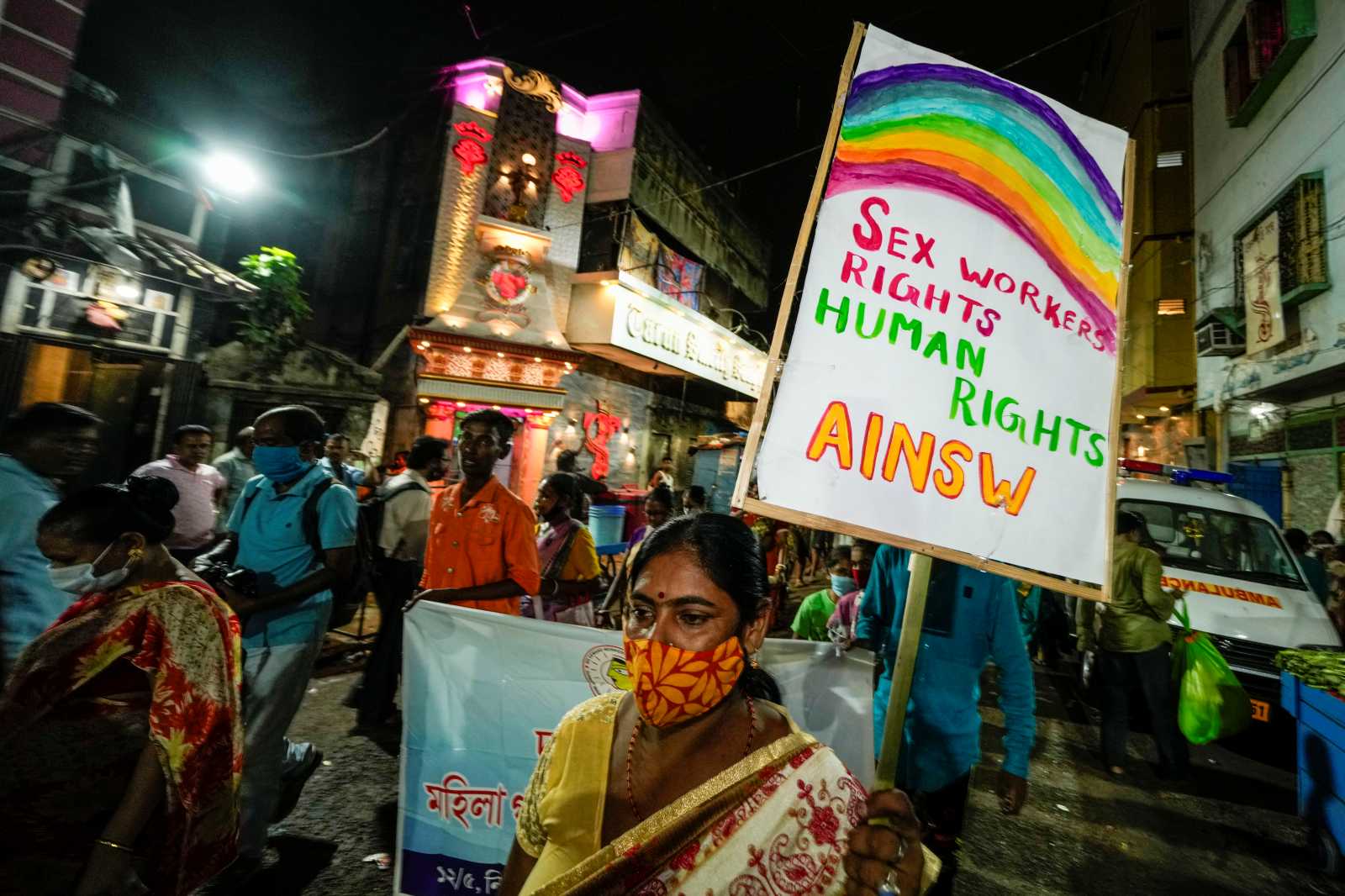
In the end, the divide between radicals and liberals is not about whether prostitution is harmful – both camps agree it often is. The difference lies in whether this damage is unavoidable and irreparable or conditional and remediable. What remains unresolved is whose voices should carry the most weight. Radicals speak of systemic injustice, liberals of individual autonomy. But somewhere between these polarised positions stand the sex workers themselves, whose daily lives are shaped less by theory and more by the struggle to survive.
Khushboo Srivastava is a political scientist and works at the intersection of gender and politics.
krsrivastava29@gmail.com