Iran
How Iranians try to get by every day amid war


After three weeks of war, Armin, a 28-year-old graphic designer in Tehran, could no longer bear being trapped at home. Feeling increasingly depressed, he and his wife decided to drive across town to see friends.
When they stopped for coffee at a café, they suddenly heard the ominous roar of a low-flying jet. Then, a thunderous explosion followed.
“Everyone was terrified,” Armin says. “My wife ran into the café out of fear.” The staff quickly slammed metal shutters over the windows and locked the doors, sealing everyone inside. The sound of bombs crashing echoed off the walls. All they could do was wait. Ten minutes later, the strikes were over. So, too, was any pretence of a night out.
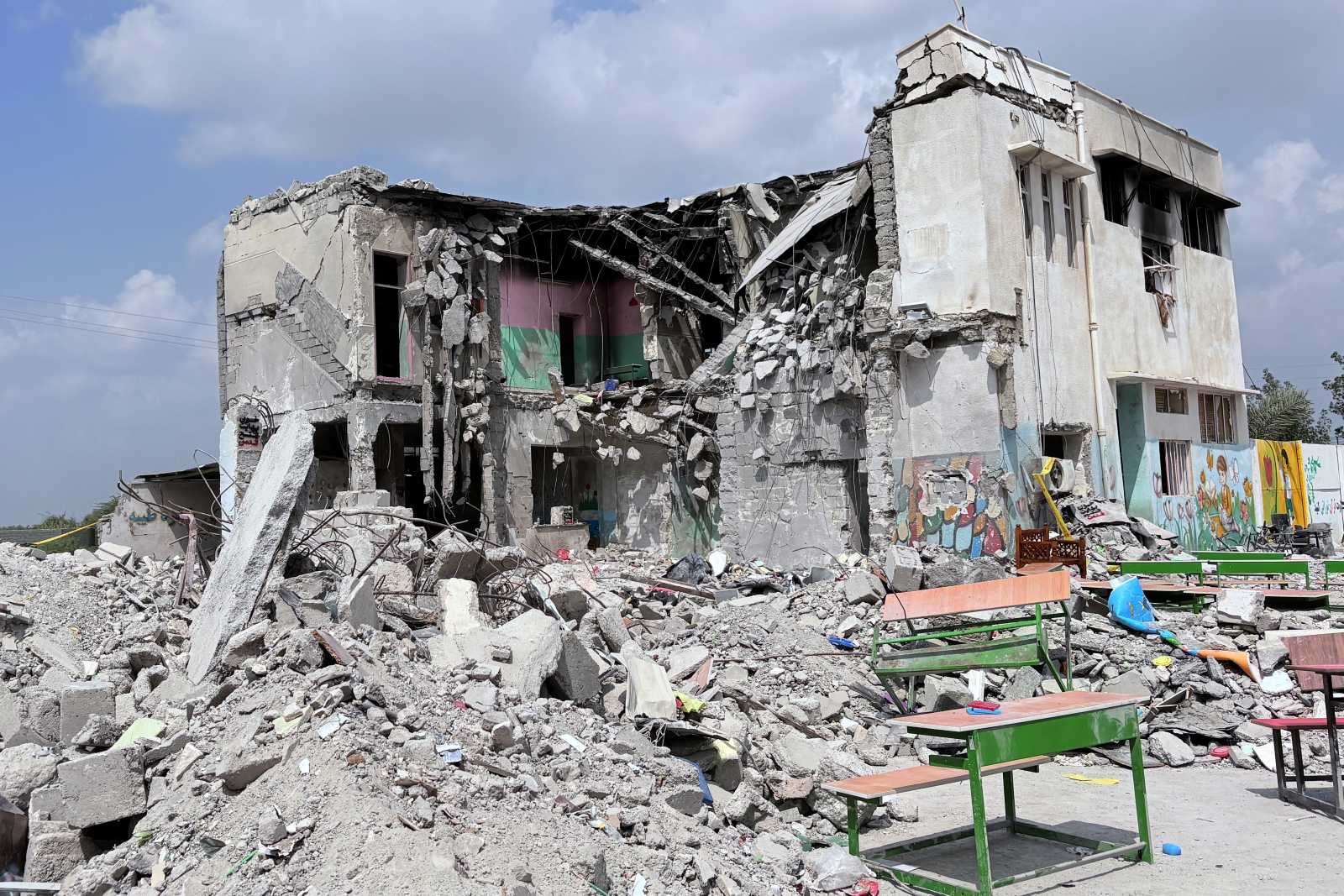
Just over a month into the war between the US and Israel against Iran, such scenes have become common. According to the US-based human-rights organisation “Human Rights Activists in Iran” (HRANA), over 1500 Iranian civilians have been killed. Tehran, the capital city with a population of over 9 million, has been hit especially hard, accounting for approximately 70 % of the recorded attacks.
Healthcare collapse
The bombing campaigns are collapsing the healthcare system, even as a growing number of Iranians require medical treatment.
According to the Iranian Health Ministry, strikes have already put 12 hospitals out of service, killed at least 23 healthcare workers and wounded more than 100. The World Health Organization has verified attacks on hospitals and other healthcare facilities. It reports that several hospitals have been evacuated. Emergency vehicles have been destroyed or badly damaged, and the remaining medical facilities are buckling under the pressure of a constant inflow of wounded patients.
This is disrupting access to critical care for everyone else. Maliheh, a 73-year-old retired teacher from eastern Tehran, said that her knee surgery had been postponed indefinitely. She is left in debilitating pain.
“Both of my knees are causing me severe problems,” she says. “I endure a lot of pain, and I have lost the ability to walk.” Her only option is to visit the emergency room every two weeks, where doctors inject her with a potent painkiller to make life bearable.
Outside the capital, years of sanctions have created medical shortages that further complicate access to life-saving treatment.
Javid, 43, lives in Babolsar, a coastal city in northern Iran. To treat his leukaemia (blood cancer), he needs to travel regularly to Tehran. Before the war, specialised doctors and chemotherapy equipment were more readily available there than in the provinces.
Javid says the threat of strikes and the ongoing communications blackout have made securing treatment nearly impossible. He worries that a prolonged war will destroy his chances of making a full recovery. “Travelling to Tehran under these conditions, when specialists aren’t taking appointments and medicine cannot be found, is simply not possible,” he says.
Terrifying air strikes
In Tehran, constant strikes have left the population shell-shocked. Pardis, a 19-year-old architecture student, says that rainstorms now fill her with dread. During a recent storm, the crackle of thunder was indistinguishable from the sound of bombs crashing into nearby buildings.
“They bombed an area near our house so hard that I felt the walls were going to collapse on our heads right then and there,” says Pardis. “Every time thunder struck, we thought it was another bomb and took shelter. Now, whenever I hear thunder, I am terrified it might be a bomb.”
No internet, no work
The internet blackout is also wreaking havoc on businesses and workers, many of whom rely on the internet for their income.
Mahnaz, a 30-year-old journalist living in western Tehran, lost her job in March after the news site she worked for lost its advertising revenue. Companies had pulled out after the internet cuts.
Mahnaz and her husband must now search for a cheaper flat. Rental prices are soaring amid a general cost-of-living crisis that predates the war. According to data from the International Monetary Fund, Iran’s annual GDP is projected to decline over six percent in 2026, while Iran’s official statistics agency cited inflation of over 50 % as of mid-March.
Yasmin, 36, left her job last year to start an online clothing store. The war has knocked it offline, leaving her without an income. “Right now, there is no prospect of the internet returning or the war ending. It is not even clear if we will still have electricity,” she says.
Farokh, 56, works in human resources at a food factory in Tehran. This month, his company laid off 10 % of the workforce due to a dip in sales. He’s worried he’s next. “It is difficult enough to make ends meet even with the salaries we receive now, let alone if I am laid off,” he says.
As the United States ponders a possible ground invasion, Iranians like Farokh fear that the worst is yet to come. “The main problem is the darkening horizon of our future,” says Farokh.
This article was published in collaboration with Egab.
Ariya Farahmand is the pseudonym of an Iran-based journalist.
euz.editor@dandc.eu