Humanitarian aid
Mines: a lethal obstacle to Syria’s reconstruction


A former front line close to Khan Shaykhun, a town in Syria’s north-western province of Idlib: where not so long ago troops of the Assad regime battled against the Islamist militant group Hayat Tahrir al-Sham (HTS), a tractor now trundles its way laboriously through the churned-up brown earth. Equipped with heavy rotating metal blades at the front, it lifts and sifts the soil. Though every possible precaution is taken, the operation is fraught with risk every inch of the way for the HALO team driving the tractor, as the blades regularly unearth all manner of hidden explosive devices that could go off at any time.
“Besides the mines that the regime installed for defensive purposes, a large amount of unexploded ordnance also remains in the fields here,” explains Bara al-Mustafa. He is a team leader with The HALO Trust, one of the world’s largest humanitarian mine clearance organisations. Founded in Afghanistan in 1988, it now operates in more than 30 countries and territories in Africa, Asia, Europe, Latin America and the Middle East. As well as removing landmines and unexploded ordnance, it educates people about the dangers, maps contaminated areas and trains local experts. Its goal is to make land safe so it can be used again – for example for housing, agriculture, infrastructure and economic development.
HALO teams have been hard at work mapping and clearing the former front line in Idlib since February 2025. So far, they have secured around 60 % of the land by detonating, defusing or otherwise making safe 21 anti-personnel mines, nine anti-tank mines and 16 unexploded devices. Day in, day out, 36 experts go about their extremely hazardous business here, covering roughly 1500 square metres per day.
Their work is made more complicated by a main road that runs directly through the mined area. “We can’t close the road completely,” says Bara al-Mustafa. Civilians cross the contaminated land from time to time and can’t always keep 100 metres away from the mine clearance operations – the required safety distance. Though no accidents involving humans have occurred so far, four sheep have reportedly trodden on mines. “Once the land here has been cleared, it is to be used for farming purposes again,” explains Bara al-Mustafa. Until then, however, every step remains a carefully calculated risk.
Minefields delay reconstruction
Many people in Syria are still struggling with the economic consequences of the civil war. According to the German Red Cross (GRC), around 90 % of Syrians are living in poverty, while two thirds of the population – some 16 million people – are reliant on humanitarian aid.
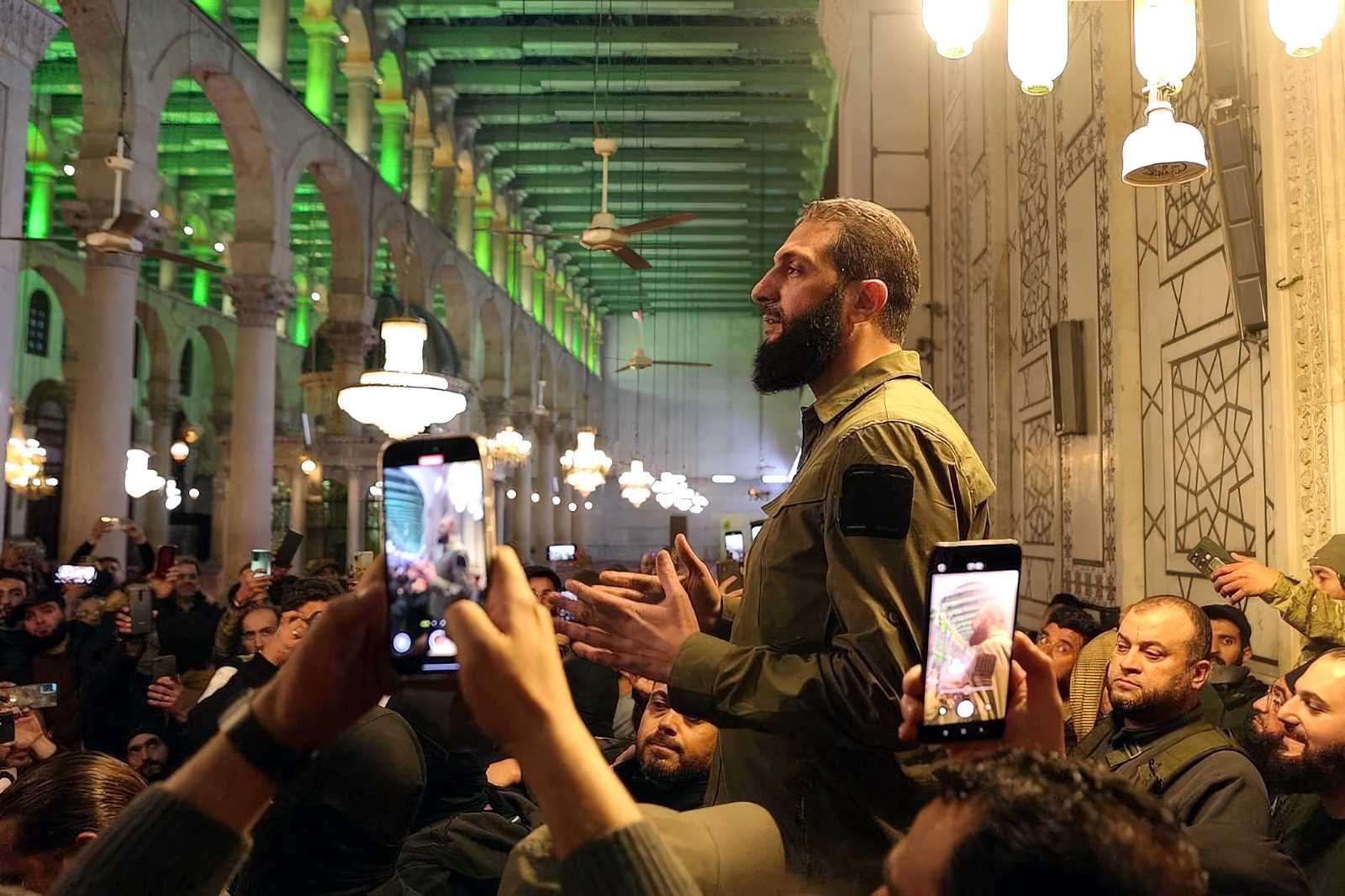
Minefields like those in Idlib are to be found across much of Syria. “The degree of contamination is enormous. We receive several reports each day about explosive remnants of war and minefields,” says Farouk al-Mustafa, who runs HALO’s operations in Syria. The organisation has stepped up its activities in the country since the Assad regime was ousted in late 2024 and maintains several offices in different regions.
The work being done by The HALO Trust is a race against time. More than 1.2 million people went back to Syria in the first year after Assad was overthrown; for many of them, it was the first time they had returned to fields, roads and ruined buildings that had long been situated at or close to the front line. “Now that people can move around freely again, they are at greater risk of accident and injury,” says Seba Abdulkareen, who is responsible for non-technical surveys (NTS) at The HALO Trust. Her teams survey local residents, casualties and stakeholders, document information about minefields and pass this potentially lifesaving information on to the mine clearance teams – which have meanwhile removed explosive remnants from more than 330,000 square metres of Syrian land.
Hundreds killed by landmines and unexploded ordnance
This help has come too late for many, however. According to The HALO Trust, at least 585 people, including 165 children, were killed by mines and unexploded ordnance in the first eleven months after Assad was ousted. Over 1000 others were injured. The actual number is likely to be significantly higher given that no central database or nationwide coordinating authority exists. Alongside Myanmar, Syria is currently among the countries with the most landmine casualties.
The remnants of the war not only continue to claim lives; they are also putting the brakes on Syria’s development. Idlib province, for instance, was once the country’s bread basket. Now, however, many farmers are afraid to till their fields for fear of encountering landmines or unexploded ordnance. Rebuilding of key infrastructure is also being hampered or delayed for the same reason.
As important as the work of organisations such as The HALO Trust is, the extent to which they will be able to help in future is uncertain. Cuts to humanitarian funding are also putting massive pressure on mine clearance operations. “We are taking advantage of all available resources,” says Farouk al-Mustafa. “But Syria needs more support to make life safe and sustainable for everyone.”
Link
The HALO Trust
Kim Berg is an editor at the communications agency Fazit and specialises in political communication. She visited The HALO Trust during a trip to Syria in November 2025.
kim.berg@fazit.de