International relations
Africa and Europe should put trade at the centre of their relations


At a time when the European Union is negotiating wide-ranging trade agreements with Mercosur and India, the absence of a similarly bold, future-oriented framework with Africa is striking. Africa is home to the world’s youngest population, some of the fastest-growing markets, holds vast deposits of critical minerals, possesses enormous agricultural potential and has a booming agri-tech ecosystem. Yet, it remains largely locked into a pattern of exporting raw commodities and importing processed foods and inputs. This imbalance, which exacerbates water and food insecurity, is not inevitable. It is an outcome that can be changed.
And the stakes are high. Africa’s agricultural exports have tripled over the past two decades to $ 90 billion in 2023, while imports have grown even faster, reaching almost $ 120 billion in 2023, thus leaving the continent a net food importer and highly vulnerable to global price shocks. And while intra-African agricultural trade more than tripled to $ 20 billion between 2003 and 2023, it still accounts for less than one fifth of total trade, far below levels seen in Europe or Asia.
A forward-looking Africa-Germany trade partnership that is nested within a broader Africa-EU vision could help close these gaps. While trade between Africa and Germany has remained modest thus far, the complementarities are clear: Africa’s growing food markets and Germany’s interest in sustainable, reliable value chains. This will require a deliberate shift from a donor-recipient mindset to a co-investment model that builds productive capacity, strengthens regional markets and aligns trade with food security, climate goals and job creation among member states in both unions.
When paired with investments in rural infrastructure, social protection, equitable land tenure, education and processing capacities, trade can significantly bolster food security and drive the transformation of agrifood systems. It can also facilitate the implementation of the Comprehensive Africa Agriculture Development Programme (CAADP). This is critical, as sub-Saharan Africa continues to record the highest hunger levels globally.
Building on AfCFTA
The African Continental Free Trade Area (AfCFTA) is the foundation for such a shift. With 54 countries having signed the AfCFTA Agreement, it is already the largest free trade area in the world by membership. Its promise is immense: removing tariffs and non-tariff barriers, harmonising standards and stimulating regional value chains that make African producers more competitive at home and abroad. Its implementation must be accelerated, however. Too few countries are trading under AfCFTA preferences, and bottlenecks in infrastructure, customs procedures and sanitary and phytosanitary systems continue to hold back cross-border commerce. The institutional capacity of regional economic communities and the AfCFTA Secretariat also needs sustained support so that reforms are coordinated, monitored and enforced effectively.
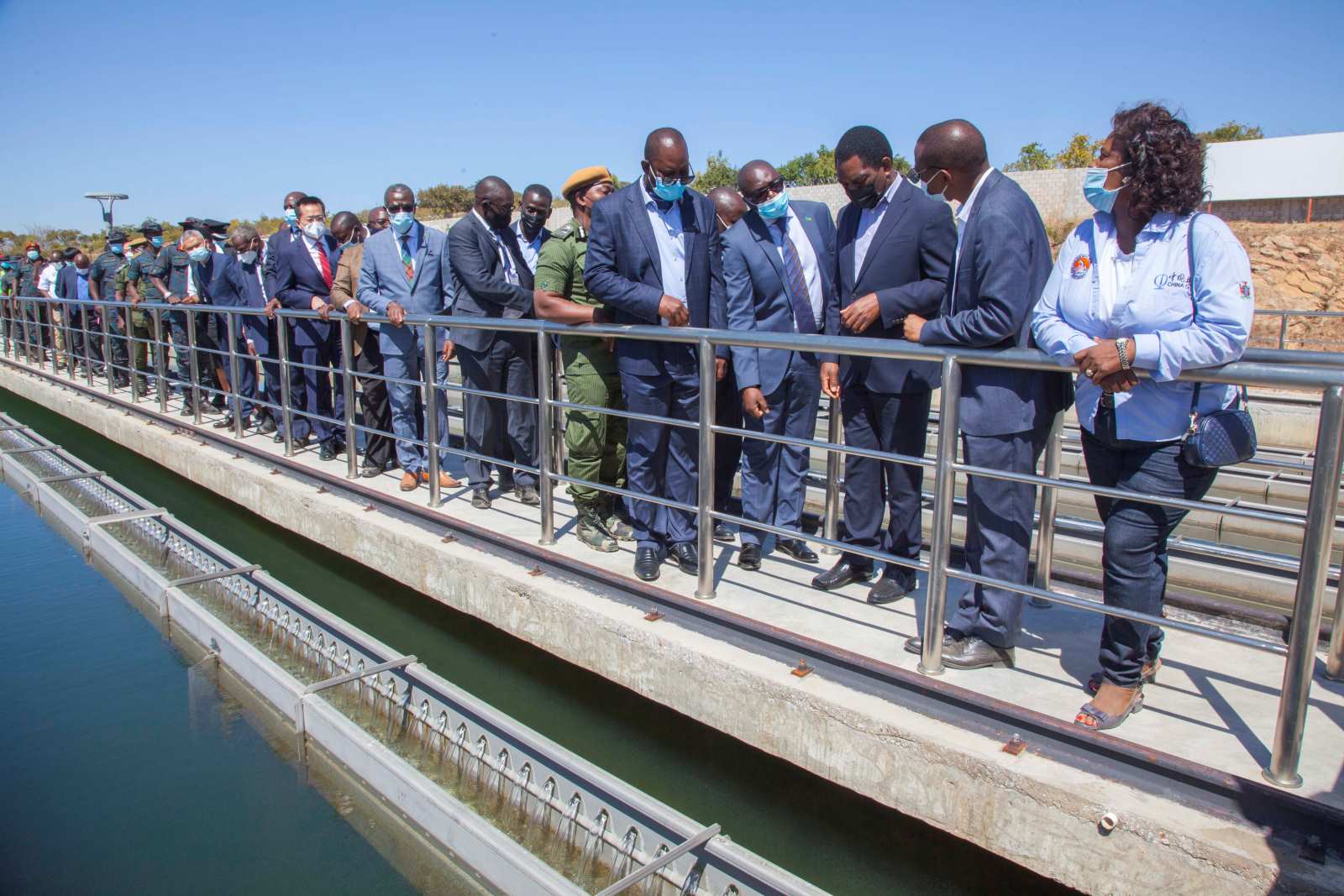
Strengthening AfCFTA is not only in Africa’s interest. A more integrated African market would make Africa a stronger, more reliable trading partner for Germany and Europe. It would also create the scale and predictability that European investors and manufacturers need to engage more deeply in African value chains.
The examples are already there. In West Africa, the ECOWAS “Milk Offensive” shows how coordinated regional policy, blended finance and investment in cold chains and standards can stimulate demand for advanced technologies. The initiative also reduces dependence on imported milk powder while raising incomes for pastoralists and processors. In East Africa, targeted upgrades of border laboratories have slashed clearance times for food imports and exports, protecting food security while reducing non-tariff barriers. In Uganda, sustained public-private investment in the coffee sector, combined with early action on traceability and sustainability standards, has boosted export value and deepened mutually beneficial trade with Europe.

The AgriBridge Network
A powerful illustration of Africa-Europe collaboration is the AgriBridge Network, an African-German “network of networks” connecting research institutions, private-sector actors, farmer organisations and civil society. By creating structured spaces for dialogue, AgriBridge fosters the mutual understanding and trust essential for enduring partnerships and informed exchange with policymakers.
Its recent Policy Note on trade provides clear, actionable recommendations to strengthen agricultural value chains, accelerate AfCFTA implementation, expand inclusive financing and support women, youth and SMEs, demonstrating how evidence-based, multi-stakeholder collaboration can deliver tangible trade outcomes.
These experiences point to a clear agenda for action. First, Africa and Germany should scale up partnership-based investments that prioritise local value addition. This means supporting agro-processing zones, renewable energy for agribusiness, climate-smart technologies and skills development. Blended finance can de-risk early-stage investments and crowd in long-term, patient funding. Second, crucially, all such partnerships must adhere to strong environmental and social safeguards, ensuring that trade contributes to the right to food, decent work and green growth.Third, any deeper Africa-Europe trade agenda must be inclusive by design.
Smallholder farmers, women, youth and small and medium-sized enterprises are the backbone of Africa’s agrifood economy, yet they are often excluded from formal trade opportunities. Expanding access to affordable finance, technologies, tailored skills development and digital tools can help these groups participate more fully in regional and international value chains. For Germany, this means aligning catalytic development finance, private-sector engagement and technical cooperation to deliberately prioritise those who are most often left behind.
In this context, the new reform plan of the German Ministry for Economic Cooperation and Development, which emphasises economic collaboration, presents an opportunity. Sustainable economic development can form the foundation for thriving economies, eradicating poverty, creating much-needed employment opportunities and ensuring long-term food and nutrition security. For this to happen, economic cooperation must not be driven solely by export or investment interests but rather be accompanied by robust corporate due diligence obligations and be firmly anchored in the progressive realisation of the human right to adequate food.
Finally, Europe must think bigger. The EU’s negotiations with Mercosur and India demonstrate that European countries are willing to pursue comprehensive trade frameworks that go beyond tariffs to cover standards, services, investment, innovation and sustainability. Africa deserves a similarly ambitious approach that recognises the AfCFTA as the continental anchor and builds towards a wide-ranging Africa-EU trade partnership over time.
This is the right moment to set this vision in motion. Leaders on both sides should commit to a new trade narrative with Africa not as a source of raw materials, but as a partner in value creation, not as a recipient of aid, but as a co-investor in shared growth and prosperity.
From Addis Ababa to Berlin, the message should be clear: the future of Africa-Europe relations is witnessing a renewed momentum. What is needed now is the political will to seize it.
Links
Welthungerhilfe: AgriBridge Network
AgriBridge Policy Note #1 (2026)
Moses Vilakati is African Union Commissioner for Agriculture, Rural Development, Blue Economy and Sustainable Environment (ARBE).
euz.editor@dandc.eu
Mathias Mogge is Secretary General and Chief Executive Officer of Welthungerhilfe (WHH), one of the largest private aid organisations in Germany.
Debisi Araba is Managing Director of the pan-African non-profit research organisation AKADEMIYA2063.