Mobility
How delivery services are reshaping cities


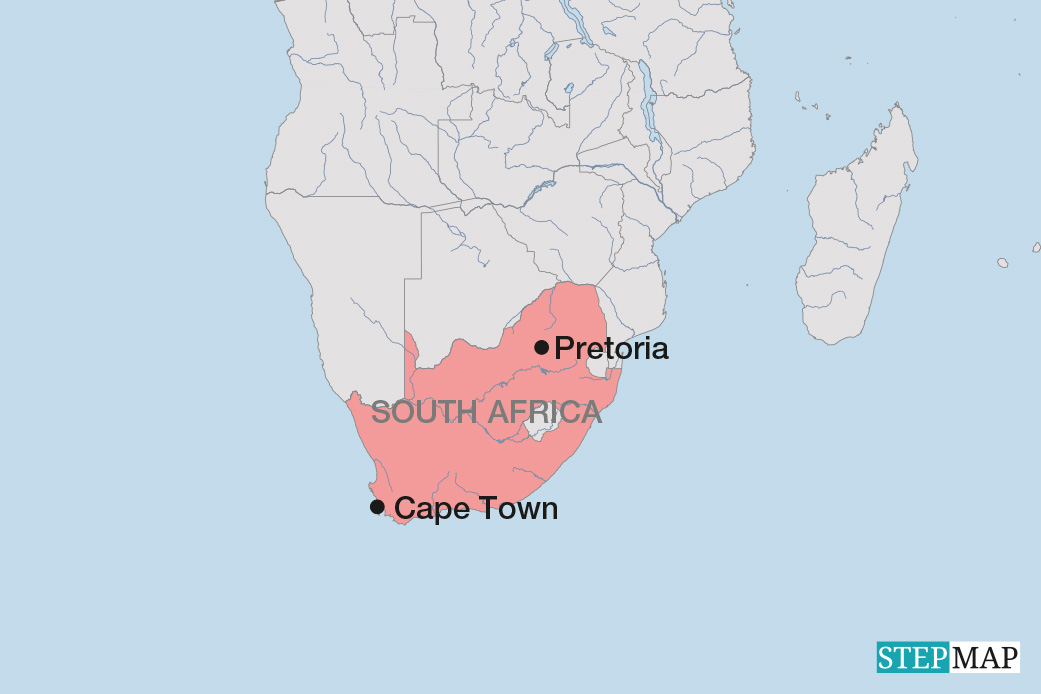
Since the Covid-19 pandemic, the number of deliveries using so-called micro-mobility services has increased significantly in Cape Town, particularly in the retail and food sectors. A popular delivery service called Checkers Sixty60, operated by a major supermarket chain, was launched shortly before the pandemic, just as demand for home deliveries skyrocketed due to lockdown restrictions. Previously, the market had been mainly focused on restaurant deliveries. In just a few years, all the major retailers followed suit in micro-delivery. What was once a fringe phenomenon is now central to the functioning of the city.
Cape Town’s city centre offers a clear view of how these dynamics have evolved. Delivery riders gather in various locations to rest or wait for orders, all while striving to meet customer expectations for speed and efficiency.
In early 2025, we began mapping rider clusters to better understand their locations and movement patterns. Not surprisingly, proximity to delivery origin points plays a key role. Riders tend to group according to the company they work for. Their specific locations are also influenced by practical needs such as shelter, seating, Wi-Fi access, electricity and sanitation facilities.
Informal clusters of delivery riders can be found throughout Cape Town’s city centre. These range from small groups to larger gatherings, often dominated by riders working for a single retailer. They are typically located on sidewalks or other pedestrianised areas just off the main roads.
Micro-deliveries and public space
The growth of on-demand delivery services has changed how public space is used. Delivery vehicles – mainly motorcycles but also bicycles and e-bikes – now occupy areas because their riders rest, wait or collect orders. This can restrict pedestrian movement, contribute to congestion and create tensions with nearby businesses and residents.
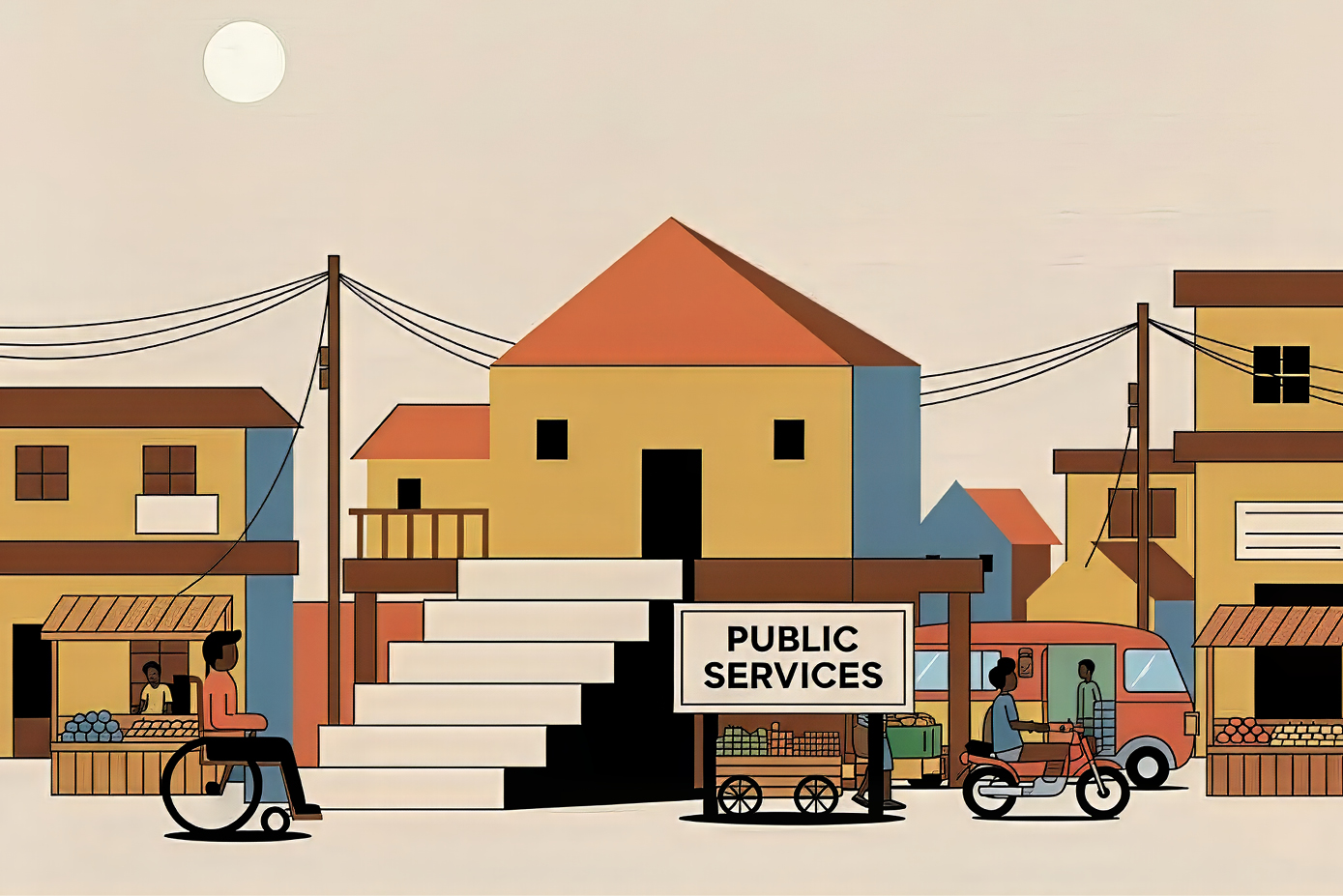
This is what happens when a sector grows faster than public infrastructure can accommodate. As demand rises, so does pressure on shared spaces: pavements become waiting zones, kerbsides serve as loading areas, and pedestrians are forced to navigate increasingly crowded walkways. Beyond the visible impacts, there are less obvious but equally significant effects – such as exhaust fumes from idling engines, noise pollution and the build-up of litter. Yet with limited dedicated infrastructure, delivery riders have few, if any, alternatives.
Because the sector is still relatively new, responsibility for managing its impacts does not fall clearly within any existing public or private mandate. Retailers, platforms, riders, residents, City Improvement Districts (designated urban areas where property owners pay extra fees to fund supplementary services and which operate as public-private partnerships) and the municipal government all have different interests and face distinct pressures. No single actor can resolve the challenges alone.
Over 100 deliveries per week per driver
As a research topic, micro-deliveries are still relatively new. The Centre for Transport Studies at the University of Cape Town (UCT) has only recently begun to explore this area, and there is not yet much research available to draw upon. From understanding the composition of the workforce to ownership models to behavioural changes, this is a new sector that has yet to be discovered.
Preliminary research by students at the Centre for Transport Studies is beginning to shed light on rider profiles and demographic trends. This research within three Cape Town neighbourhoods – Observatory, Rondebosch and Woodstock – reveals several common patterns. Most riders are young, with an average age of around 29, and have been working in the sector for approximately two years. They typically work more than six days a week, complete over 100 deliveries weekly and earn around $ 890 per month. The vast majority use petrol-powered motorcycles.
Safety is becoming an increasing concern. Delivery riders are more frequently involved in road crashes. This not only poses risks to all road users, but it also highlights the vulnerability of riders themselves – both in traffic and in public spaces, where tensions with pedestrians, businesses and law enforcement are likely to intensify.
Those early research findings confirm what is already visible on the ground: micro-mobility delivery is a fast-evolving ecosystem with spatial and social impacts that are deeply embedded in the way Cape Town operates.
Efforts underway
Despite the challenges, various stakeholders are starting to explore ways to address the issue. Some retailers have introduced small shaded waiting areas at select locations. Others are reconsidering the delivery model itself, exploring more centralised systems to ease pressure on individual storefronts.
The City of Cape Town, in collaboration with non-profit organisations, is also testing small-scale interventions. These include painting demarcated bays, installing bollards and engaging with local businesses to identify context-specific solutions.
Private actors are also stepping in, designing new types of rest stops and micro-hubs – from simple shelters to more advanced modular units. These could form the foundation of a future network of infrastructure that better supports delivery riders across the city.
Social questions
Addressing the challenges posed by micro-mobility deliveries requires more than just physical infrastructure or updated regulations; it also demands inclusive dialogue and collaboration across sectors. As in many cities around the world, a large share of delivery riders in Cape Town are immigrants – adding another layer of social complexity to an already challenging system. Building trust among all stakeholders is therefore essential.
The way we interact with each other in public spaces says a lot about our cities, and xenophobia remains a real source of tension in Cape Town. The approach taken by law enforcement and the general fear associated with migration and the labour market shape this environment. This dynamic has implications for driver safety, but it also represents a missed opportunity: without a foundation of trust, it becomes more difficult to train, communicate with or support drivers in ways that improve both their working conditions and the overall use of public space. Part of the work therefore involves raising awareness among all users of public space – residents, businesses, city officials and the drivers themselves – and recognising that micro-deliveries are a shared urban challenge that requires shared responsibility.

The challenge lies in designing spaces and systems that acknowledge competing needs without sidelining any group – and that is precisely where the opportunity emerges. Cape Town now has a chance to reimagine the intersection of logistics, public space and social equity.
In 2026, our initiative Local South will launch a micro-mobility hub pilot in partnership with the UCT and with support from the UK Foreign, Commonwealth & Development Office (FCDO). The pilot will test a small-scale model in collaboration with small businesses, local government and resident associations. The idea is to explore certain assumptions, challenge perceptions by collecting data and contribute to the growing body of publications and practices that can help shape the industry not only in Cape Town but also in other cities in the Global South.
Marcela Guerrero Casas is a public policy and urban development practitioner with experience across Southern Africa and Latin America.
marcela@thelocalsouth.com
Dustin Kramer is a public interest and urban policy practitioner with a focus on strategy, advocacy and design.
dustin@thelocalsouth.com