Governance
Driving force or hindrance? Germany and the SDGs


Germany regularly takes one of the top spots in the UN’s annual report on progress towards the 17 Sustainable Development Goals – coming fourth out of the 167 countries assessed last year, for example. Yet this is no reason for complacency: Germany may have achieved some progress, but scoring well by international standards also disguises serious shortcomings – and many of the country’s successes are now looking somewhat precarious again.
Germany shows some worrying trends in several key areas of sustainable development. Indicators for SDG1 “No Poverty”, SDG4 “Quality Education”, SDG5 “Gender Equality” and SDG10 “Reduced Inequalities” have regressed, for instance. And there is certainly room for improvement on SDG17 “Partnerships for the Goals”.
Germany is one of the world’s most prosperous countries and the third-largest economy by GDP (gross domestic product) after the US and China. By no means everyone benefits from this economic wealth, however. As far as SDG1 “No Poverty” is concerned, the increase in the poverty rate after taxes and transfers – i.e. the proportion of the population that has to make do with less than half of the average income level – is particularly alarming. According to the UN, the figure in Germany is 11.6 % – the highest it has been since records began in 2008. The goal of lowering the poverty rate to 6.1 % thus appears an ever more distant prospect.”.

Glaring social inequalities
SDG10 “Reduced Inequalities” is another goal that is a long way from being achieved. Growing poverty among the elderly is especially problematic. 14.1 % of people aged 66 or above survive on less than half the median household income – likewise a new record. The long-term goal for this indicator is 3.2 %. The two leading indicators of income inequality, the Gini coefficient and the Palma ratio, also show a negative trend for Germany and are inching towards new heights.
On SDG4 “Quality Education”, hardly a year goes by when the OECD (Organisation for Economic Co-operation and Development) does not reprimand Germany for the fact that educational opportunities in the country still depend heavily on parents’ income and educational levels. Admittedly, the proportion of young adults with a university degree has risen sharply and more rapidly than in many other industrialised countries in recent years, from 33 % in 2019 to 40 % in 2024. At the same time, the number of young people without upper secondary qualification (university entrance or vocational training qualification) is increasing – now at 15 %, it puts Germany in the lower third Europe-wide.
This gap between highly and poorly qualified young people is particularly concerning because it further entrenches social differences. Those in Germany whose parents have not completed upper secondary education are still much less likely to graduate from university themselves. Only around a fifth attain a tertiary qualification, compared to three fifths of young adults who have at least one tertiary-educated parent.
Playing catch-up on gender equality
By global standards, Germany has already made reasonable headway on gender equality. However, it is still a long way from fully achieving SDG5 “Gender Equality”. Although it is good to see progress in education or on women’s employment, too many key areas continue to show a significant need for action. The gender pay gap is one particularly drastic example: falling far short of the European average in this respect, Germany ranks fifth last in the EU.
Parity hasn’t been achieved in terms of political representation, either. Currently only 32.4 % of members of the Bundestag, Germany’s parliament, are women – a lower proportion than in the previous legislative period. And policy measures are being discussed that could negatively impact female employment rates and therefore exacerbate the gender pay gap, such as limiting access to support services provided by care insurance.
Germany’s role as an international donor and global player also presents a somewhat mixed picture, with significant challenges still remaining when it comes to SDG17 “Partnerships for the Goals”. On the upside:
- the German government played an important part in getting the World Bank to focus more on tackling inequality;
- from 2020 to 2023, Germany fulfilled its international commitment to spend at least 0.7 % of its gross national income on official development assistance (ODA) and
- in 2024 made good on its promise to provide six billion euros a year to support developing countries and emerging economies in their efforts to implement climate change mitigation and adaptation measures.
However, the German government looks unlikely to meet these and other pledges in future. The dramatic cuts to Germany’s development and humanitarian assistance spending in the federal budget already led to the 0.7 % target being missed in 2024. Given the cuts planned in the next few years, this dip can be expected to grow sharply – sending a disastrous signal at times of growing global need and instability. Germany would then no longer be a reliable partner, undermining the guiding SDG principle of “leave no one behind
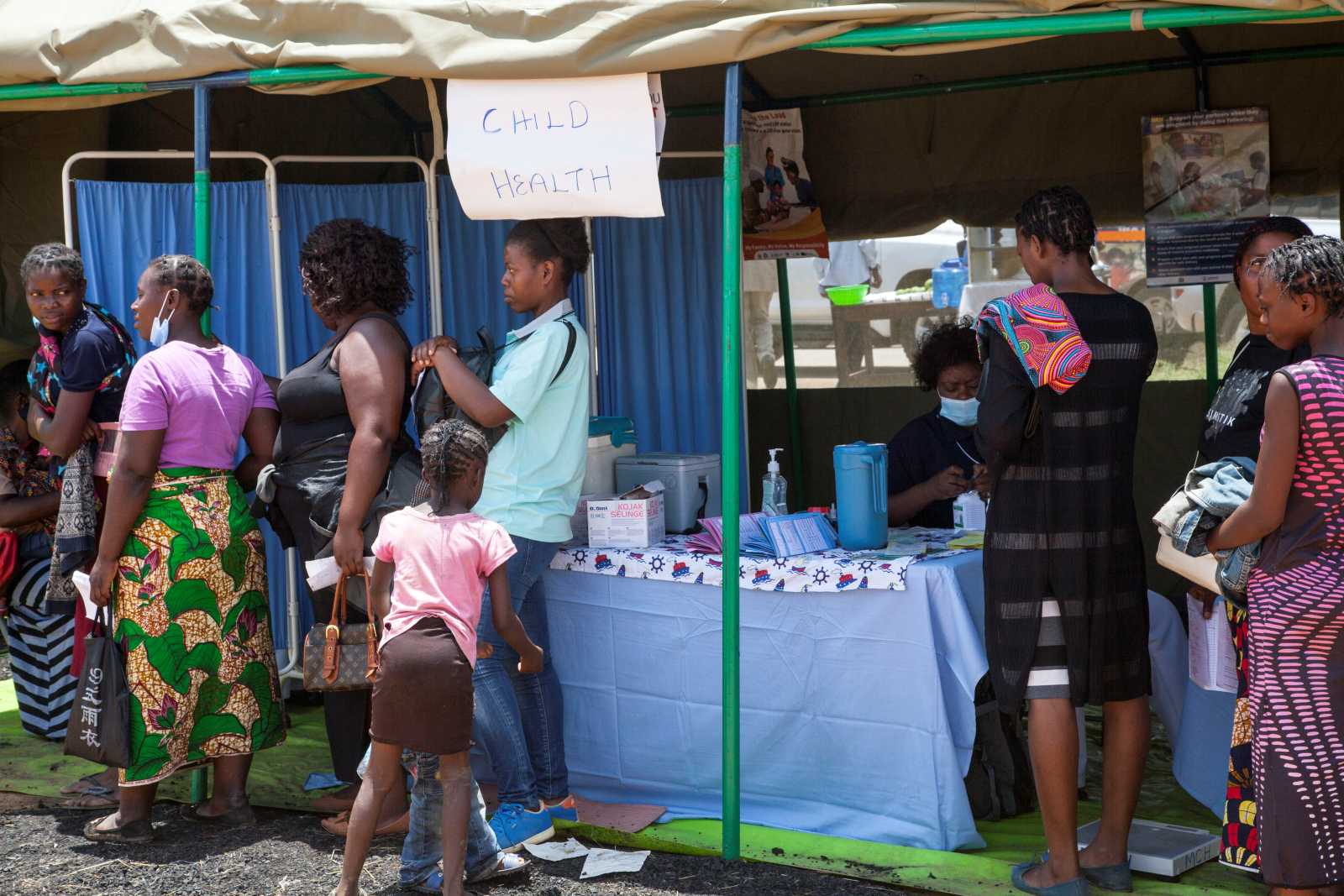
Though Germany scores well on the SDGs by international standards, it hasn’t actually met a single one of them yet. Achieving the 2030 Agenda will become less and less likely if the current trend persists. The German government really needs to take resolute action now to counter it. Instead, recent budget cuts and insufficient political will are making matters worse – slowing Germany’s progress toward achieving the SDGs.
Oxfam Germany and other civil-society organisations are therefore urging for policies in which the need to achieve the goals guides political action. This would include taxing the super-rich and targeting investments towards basic social services, gender equality, development cooperation and climate action. Only then could Germany credibly become a driving force for sustainable development again.
Link
Sustainable Development Report
Tobias Hauschild is head of Social Justice at Oxfam Germany.
thauschild@oxfam.de