Gen Z
“Hospitals before stadiums”: Morocco’s youth protests over football


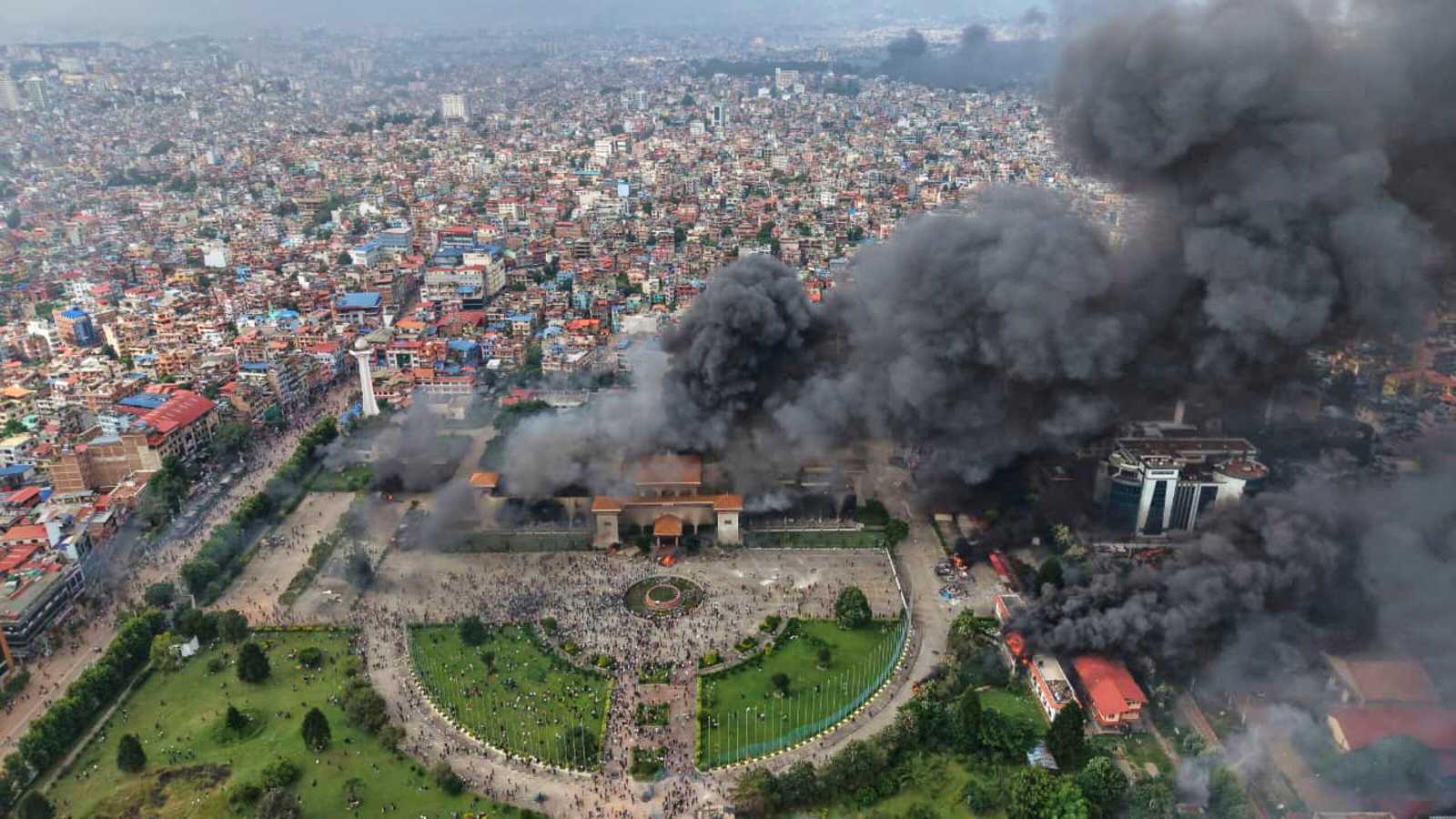
What began as anonymous online discussions escalated in September 2025 into fierce political protests in several cities across the country. The “GenZ 212” movement, named after Morocco’s country code +212, is driven by fundamental social issues: inequality, public services and what “national progress” actually means for Morocco.
The young demonstrators are particularly frustrated by the gap between Morocco’s international ambitions and the often harsh realities of everyday social life. They are questioning the priorities according to which state funds are spent.
Their criticism focuses on investment in major football events: the Africa Cup of Nations (AFCON), hosted by Morocco between December 2025 and January 2026, and the 2030 FIFA World Cup, where Morocco will act as a co-host alongside Portugal and Spain. At the same time, Morocco’s education and healthcare systems are underfunded. There is a shortage of medical equipment and healthcare professionals. When eight women died following caesarean sections at a hospital in Agadir in September, a wave of anger erupted.
Organised on online platforms
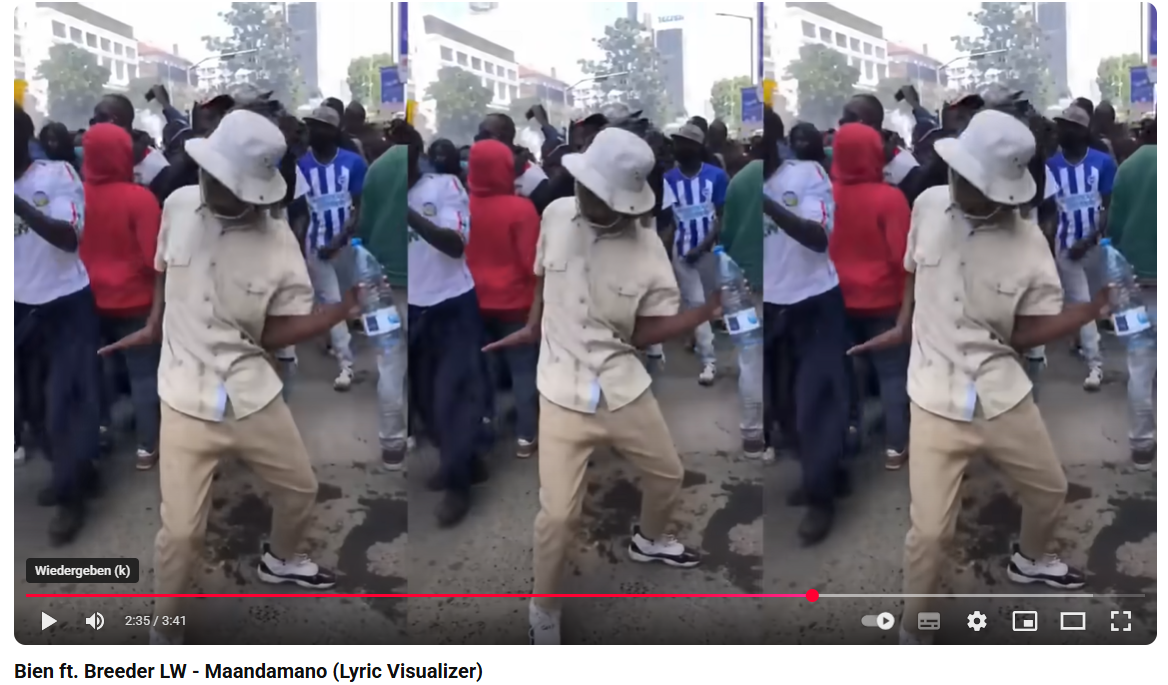
Like many other Gen Z movements, GenZ 212 is loosely organised in the digital space. Hundreds of thousands of users soon gathered on the platform Discord. A new generation articulated their political and social demands there – and brought them to the public’s attention. Slogans such as “hospitals before stadiums, health before sport” echoed through Morocco’s streets.
The government, however, had already presented the AFCON 2025 in the run-up to the event as a success story: a symbol of Morocco’s rising regional influence. According to the government, the competition generated the equivalent of 1.5 billion euros and tis already covers 80 % of the infrastructure costs for the 2030 World Cup.
High youth unemployment in Morocco
But what message do massive investments in sports infrastructure send to young people, many of whom describe their future as increasingly uncertain? According to the Moroccan authority HCP (Haut Commissariat au Plan), 2.9 million Moroccans aged between 15 and 29 are neither in work nor in education or training. Youth unemployment varies regionally between 28 % and 40 %. This generation – frustrated and under severe economic pressure – saw the AFCON 2025 less as a cause for celebration than as an expression of a distorted reality.
“We are not troublemakers,” says 22-year-old Achraf (name changed), an engineering student in Rabat. “We just wanted to ask for basic rights. We are not against football or big events, but not when women are still dying in hospitals, not when the health system is chaotic and not when education is deteriorating.”
Achraf cites the imbalance in society as the source of his frustration. “We only asked for dignity, for a Morocco where people are equal,” he says. “It is strange that in 2026 we are still asking for these things, while billions are being spent on international events.”
Achraf points out that many young people were arrested and sentenced in connection with the protests. “For what? For asking questions about our own country.” He also criticises the demolition of homes in Rabat and Casablanca in the run-up to the AFCON 2025 and the World Cup.
Criticism of Morocco’s healthcare system
From Casablanca, 25-year-old Asmae (name changed) describes a similar sense of disconnection between Morocco’s international ambitions and everyday reality. “What we are asking for is balance,” she says. “The same determination that builds stadiums should also build hospitals, schools and local infrastructure.”
For her, the issue is not only economic but also geographical. “Everything is concentrated in a few big cities,” she says. “If you need a medical procedure, you often have to go to Rabat or Casablanca. In emergencies, that is not always possible.”
For Asmae, GenZ 212 does not reject development or major national projects but is trying to redefine what belonging means. “We are asking for fairness, transparency and dignity,” she says. “Education, healthcare and opportunity should not be luxuries – they are rights.”
Shrinking public space
For lawyer and human rights advocate Sara Soujar, the current wave of Gen Z protests is part of a long-term development in the struggle for public freedoms in Morocco – from the pro-democracy “February 20 Movement” during the Arab Spring of 2011, through protests in the Rif region in 2016-2017, to other regional mobilisations. Soujar argues that the underlying dynamics have remained largely unchanged. She views the Gen Z movement as a “natural continuation of Morocco’s history of protest.”
In Soujar’s view, years of officially announced reforms have not led to an expansion of public space. Instead, she describes a persistent pattern of restrictions on freedom of expression, organisation and peaceful assembly. “Both the public space and civil society space remain subject to various forms of restriction,” she criticises.
Soujar argues that the Gen Z protests fall within the scope of the constitutionally guaranteed freedoms of expression and assembly. “The debate should focus on ensuring respect for fundamental rights and restoring trust between the state and society,” she says.
Thousands of arrests
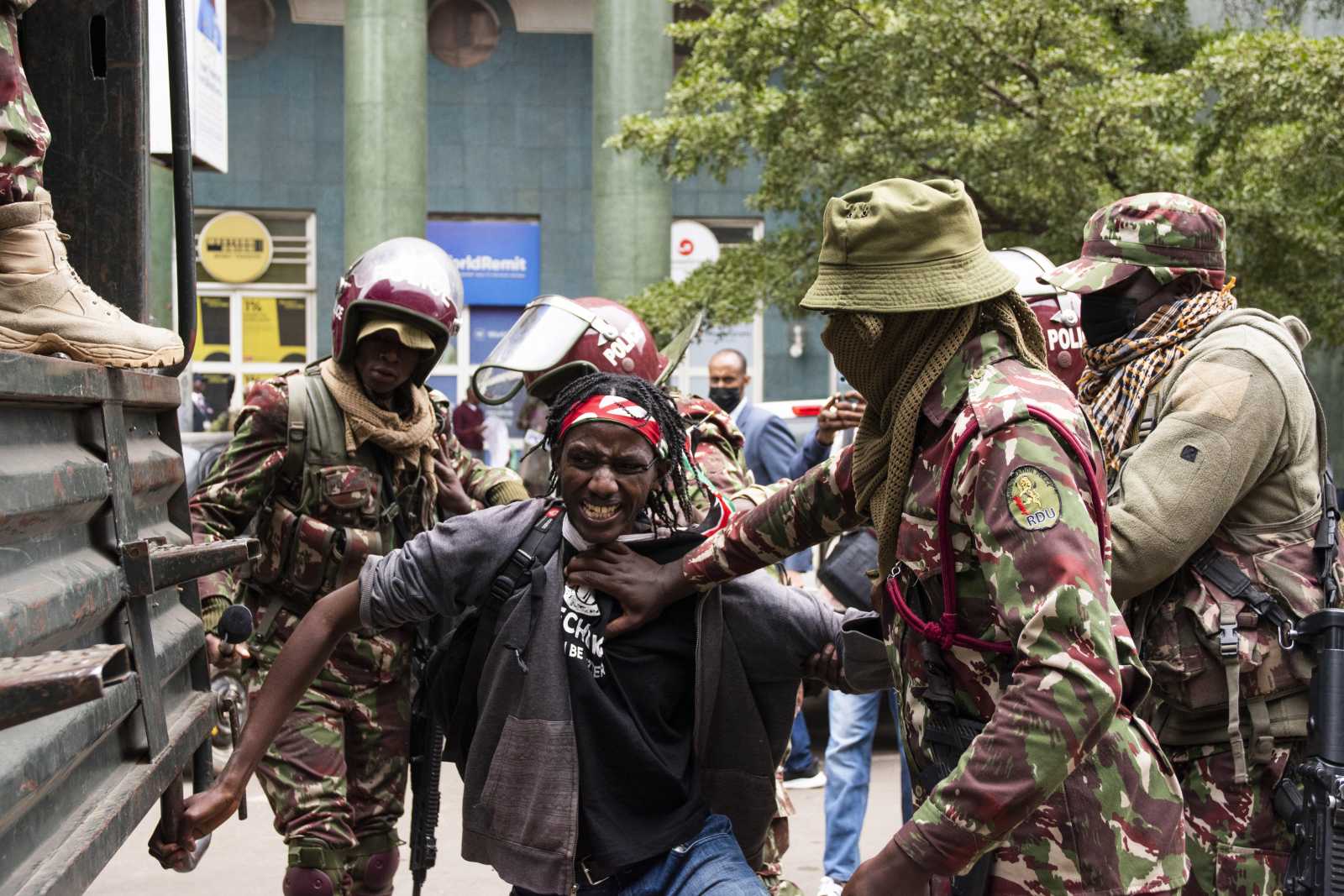
The Moroccan Association for Human Rights (AMDH) has documented numerous human rights violations in connection with the GenZ 212 protests. According to the association, more than 2000 young people, including minors, were arrested – in some cases arbitrarily. Criminal proceedings have been initiated against more than 1400 individuals.
According to AMDH president and lawyer Souad Brahma, the documented violations include excessive repression, arbitrary arrests and restrictions on freedom of expression and peaceful assembly. She says testimonies collected by the association refer to serious psychological violence during detention. Journalistic coverage of the protests has also been restricted, according to the AMDH. Overall, the association criticises that the Moroccan authorities tend to prioritise containment and control when dealing with public dissent, rather than addressing the social demands.
“A predictable explosion”
For economist Najib Akesbi, the wave of protests is the result of decades of accumulated imbalance, following persistent economic and social distortions, as he explained during a conference meeting last year. Seventy years after Morocco’s independence in 1956, per capita GDP stands at around $ 4000 – an insufficient level, according to Akesbi. Morocco currently ranks 120th out of 192 on the Human Development Index.
According to Akesbi, the current wave of protests is characterised by its generational consciousness and digital identity, with young people speaking as an entire generation with its own vision of the future, rather than as isolated social groups.
Far-reaching reforms are lacking
“Each time, the same pattern repeats,” explains Akesbi, referring to protests in Morocco since the 1960s. “Social frustration builds, people protest, and the response returns to control rather than reform.”
According to Akesbi, at the heart of the matter lies a “crisis of trust”. Successive governments, he says, have repeatedly promised reform in education, healthcare and governance – without, however, delivering structural change. The system has not evolved significantly, he states.
Akesbi describes Morocco’s economic model as fragile. “We depend on things we do not control – rain, tourism, foreign investment,” he explains. “That is not sovereignty.” With regard to young people, Akesbi is particularly critical of the fact that the economy is not creating enough jobs. “So you have a generation that is educated but excluded,” he says.
The 2030 World Cup is just around the corner
The protests of autumn 2025 showed where this lack of prospects can lead. Now that the AFCON 2025 is over, Morocco is preparing for the 2030 World Cup. For the Moroccan Institute for Policy Analysis (MIPA), this is a “monumental financial undertaking and an equally significant opportunity for economic advancement”. It remains to be seen just how strong the upturn will actually be. The costs for Morocco are estimated at between $ 5 and 6 billion.
Whilst football infrastructure in Morocco continues to improve, the younger generation’s fundamental demands for improvements in education and healthcare remain unmet. Where will this development lead? One thing is certain: young Moroccans still yearn not so much for sporting spectacle as for dignity, equality and a future worth living.
Salma Mansouri is the pseudonym of a Moroccan journalist who wishes to remain anonymous for obvious reasons.
euz.editor@dandc.eu
This story was published in collaboration with Egab.