Conflict and resources
Minerals for peace – or war over minerals in the DR Congo?


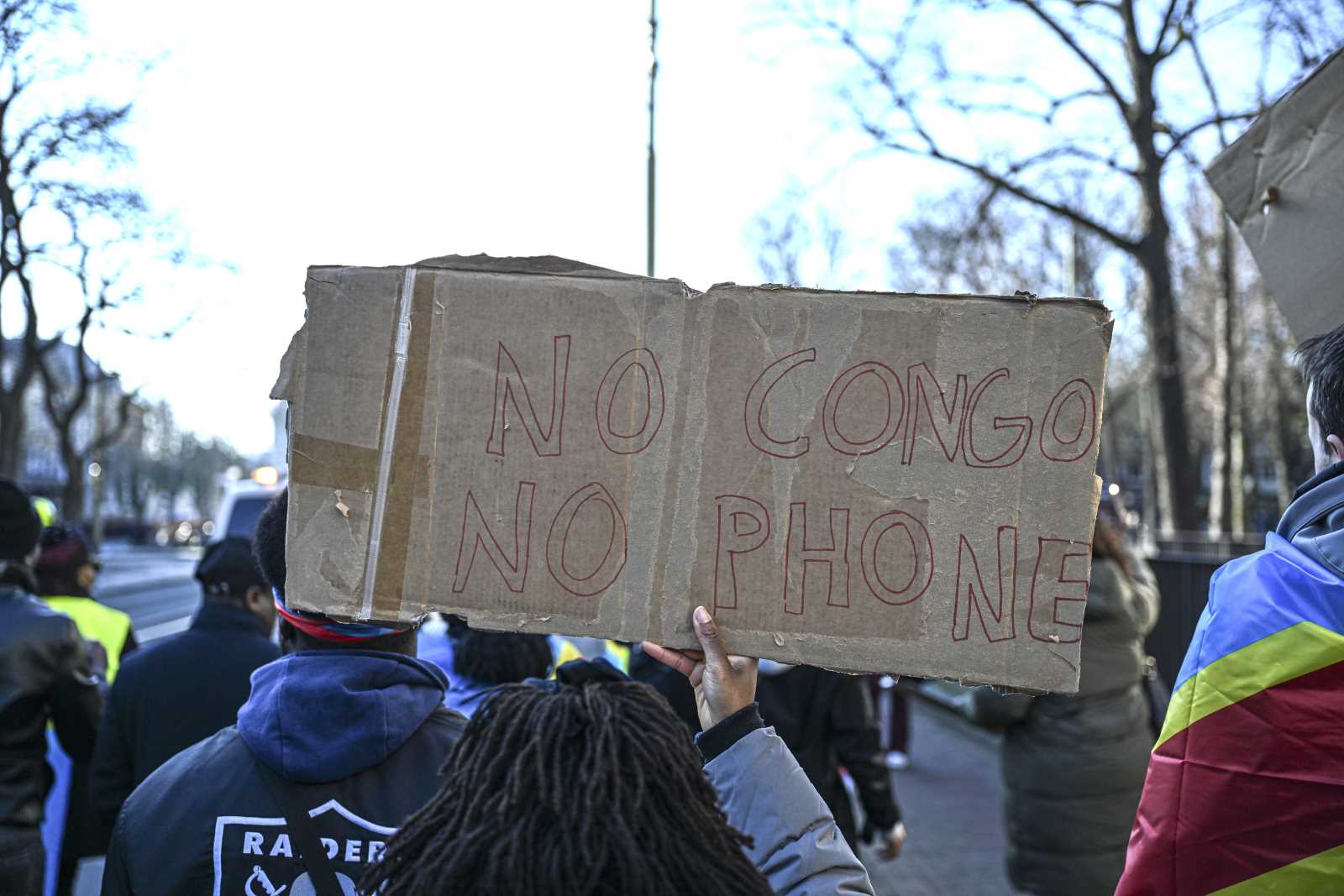
Two things happened in January 2025. Donald Trump was sworn in as the 47th president of the United States and promised peace for everyone – whilst putting “America first”. Three days later, on 23 January, the M23, an armed rebel group supported by Rwanda, launched one of its most intense offensives in over a decade in eastern DRC.
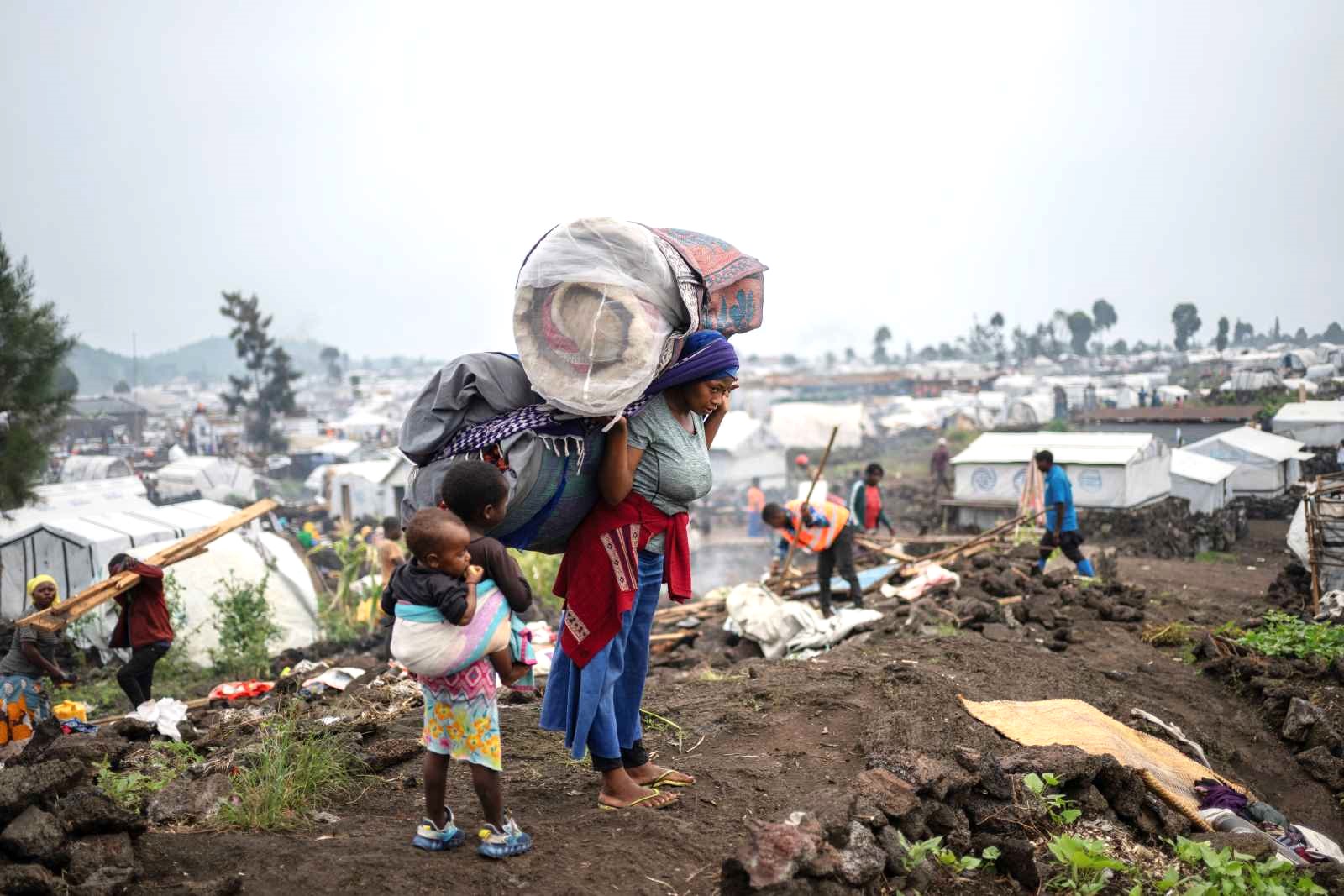
Within a few weeks, the M23 had captured Goma and Bukavu. Each of these cities has a population of over one million. However, international attention remained focused on Trump’s return to the White House.
A few months later, on his way to achieving world peace and receiving the Nobel Peace Prize, Trump claimed he had brought an end to a so-called “machete war” after the DRC and Rwanda signed the US-brokered “Critical Minerals for Security and Peace” agreement in Washington in June 2025.
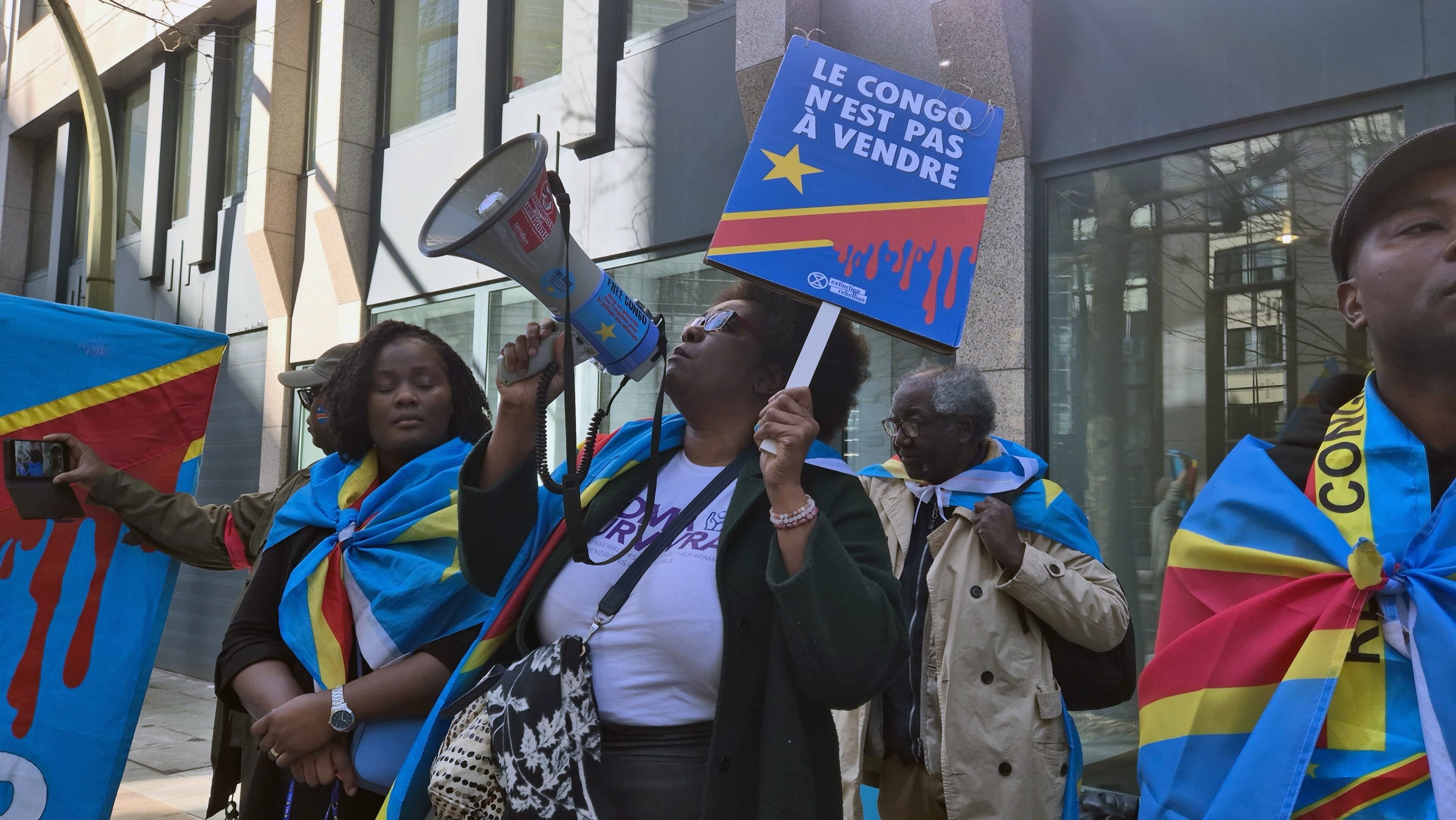
Central to the agreement is a commitment by both countries to develop a framework for regional economic integration. This is meant to expand cooperation between the two states, the US government and American investors with a view to establishing “transparent, formalised, end-to-end mineral supply chains”. In return, Washington made powerful – albeit vaguely worded – security promises for the region.
Trump and Leopold II – echoes of the past?
In 1884 85, King Leopold II of Belgium secured private ownership of the Congo Free State at the infamous Berlin conference. Competing European superpowers granted him a territory larger than Western Europe. His justification: combating the Arab slave trade and “civilising” the Congolese.
What he built instead was a machine of exploitation. The road and river network of the Congo Free State established under his rule served not to connect communities but to transport resources such as rubber and minerals to the coast as efficiently as possible.
The pressure on the Congolese people was crushing. Historians estimate that the Congolese population halved between 1880 and 1920 – a demographic collapse caused by forced labour, famine and violence. The systematic amputation of hands as a punishment for failing to meet rubber quotas is particularly notorious.
Leopold and the Belgian colonial rulers who followed him built infrastructure to extract raw materials, not to develop the country. Where mining was no longer profitable, the infrastructure came to an end. Today, in Lualaba province and in the remote forest areas in the south and east of the DRC, many communities are only accessible because artisanal mining has created trading posts, informal paths and motorbike tracks that pass for roads. It was not the mines that followed the roads; the roads followed the mines. As a result, the entire country became dependent on mining as its sole economic lifeline.
When the DRC gained independence in 1960, mining increasingly became a breeding ground for many conflicts in the region, such as the secessionist attempt in Katanga in the 1960s. Since the 1990s, “blood minerals” – primarily coltan, tin and gold – have fuelled repeated violent conflicts, especially in the east of the DRC. Rebel groups, foreign troops and other militias have used artisanal mines to fund arms purchases, thereby exploiting the local population; the M23 offensive is nothing more than the latest development in these conflicts.
What has changed over the decades between Leopold and Trump is the wording (and, fortunately, the methods of coercion): the “fight against the slave trade” has become the need to “stop a machete war”. What remains unchanged is the question of who will control the resources once the dust has settled.
Dependence on mining prevents a way out
One might wonder why Congolese communities and grassroots movements do not unanimously reject the lies of the extractive industry and those in power who have caused them so much suffering over the decades. In fact, 150 years of exploitative colonialism, followed by decades of predatory governance, have left communities across large parts of the DRC in a structural trap. Mining is not an option they – or their parents or grandparents – have chosen. For many, it is the only thing that protects them from complete isolation and, in the most remote communities, from starvation.
The question that preoccupies these communities – and us as researchers – is whether a future without mining is even possible. Not because mining is a good source of income, but because for many people the alternative is not a diversified economy with a variety of income opportunities: it is hunger and invisibility.
Resource extraction is not synonymous with development. What has happened in the DRC is that around 150 years of deliberate underdevelopment have rendered any alternative structurally inaccessible to millions of people who had no say in shaping the system on which they now depend. This dependence is infrastructural, historical and political in nature. Mining companies and armed groups fill the governance vacuum created by an absent state in different ways: companies build roads on their own terms; armed groups secure loyalty through taxation and protection. Neither serves the communities in the first instance. Both ensure that the communities remain dependent on external actors for access to the most basic necessities of modern life.
Nothing new under the Congolese sun
For the Congolese government, the current instability in the DRC and the motives for signing the “Critical Minerals for Security and Peace’’ agreement brokered by the US go beyond the conflict with the M23. In a regional context marked by a series of coups d’état, fears are growing that a similar situation could be unfolding in the DRC. These concerns are being fuelled by internal protests, territorial battles in the east and an army widely perceived as ineffective. This concern is compounded by the fact that, although the mining sector accounts for more than 95 % of the country’s exports and is estimated to have generated around 30 % of budget revenue last year, the state’s ability to convert this wealth into political stability remains extremely limited.
In this light, the offer to grant the US privileged access to minerals in exchange for diplomatic and security guarantees could be linked just as much to the conflict with the M23 as to the survival of the Tshisekedi regime beyond its two constitutional terms of office. Over the past two years, President Félix Tshisekedi has been preparing a constitutional amendment that could enable him to seek a third term, and the deal with the US serves this ambition. By securing Washington’s support, Tshisekedi gains the external legitimacy and political backing he needs to push through constitutional changes in his own country, as he knows that a powerful ally with an interest in the country’s stability is unlikely to stand in his way.
The US is following a transactional logic whereby democracy is quickly forgotten if it stands in the way of the access of those in power to resources and begins to demand the rights of local communities. If access is guaranteed, however, even an authoritarian regime can seemingly receive all the support it needs to establish and maintain itself.
So far, despite the agreement, the M23 shows little sign of retreating. One wonders whether the DRC will not inherit from its “minerals for peace” deal yet another complex instability, from which a way out could range from extremely difficult to simply impossible.
For the Congolese people, such uncertainties are nothing new. After all, the old myth of “minerals for peace” formed the basis for the DRC’s establishment as a political entity. Disappointment over promises of prosperity is also part of everyday life for the population. In fact, the average Congolese person sees in the news how Congolese minerals are being used in technological marvels around the world. Yet they experience first-hand the reality of a country with one of the lowest Human Development Indices. These lived paradoxes are not mere coincidences of a region suffering from war. They are the predictable consequences of a system designed to extract value from an area rather than invest in it.
Is there a future without mining? And who gets to imagine it?
Our current research analyses if communities most affected by extractive industries can imagine and shape a future beyond mining – given that mining was often the only thing that ever brought them roads, income and a modicum of attention from the outside world.
Many analysts and community members will argue that there is no credible short-term alternative, and they are not wrong. When the choice is between a dangerous mine that brings in money and a village without a road, a clinic or a market, insisting on post-mining alternatives sounds like a luxury that only outsiders can afford. Dependence on mining has been built up over generations and is highly likely to continue. Change can only occur if the political framework governing the exploitation of resources undergoes a fundamental shift – not at the level of supply chain certification or diplomatic agreements but at the level of who controls the revenues, who builds the roads and who decides what is being built in the first place.
As long as minerals are mined in an environment where the state cannot enforce regulations, where the communities living in mining villages have no real say in how the revenues are spent and where international actors view the DRC primarily as a strategic supplier rather than as a society, minerals will continue to promise prosperity while they actually bring about the opposite, namely poverty and dependency. The future of the DRC depends on the mineral wealth being channelled into roads for communities rather than into concessions, into schools rather than company towns and into institutions that are accountable to citizens rather than to shareholders or geopolitical partners.
The Congolese people have been repeatedly assured by influential voices that their suffering is only temporary, a price they must pay for a better future that will ultimately be financed by the extraction of raw materials. Leopold said so. The Belgian state said so. The international financial institutions said so. Today, a new generation of mineral diplomats are saying the same. The question is not whether the Congolese people believe it. The question is whether they ever had any real choice not to.
Ezra Moïse Amisi is a lecturer at the Institut Supérieur de Développement Rural de Bukavu and collaborates with the Center of Expertise on Mining Governance of the Université Catholique de Bukavu.
emoiseamisi@gmail.com
Bossissi Nkuba is a professor at the Institute of Development Policy at the University of Antwerp, the Center of Expertise on Mining Governance of the Université Catholique de Bukavu and the Earth Science Department of the AfricaMuseum in Tervuren, Belgium.
bossissi.nkuba@uantwerpen.be