World climate conference
“The mood is extremely tense”


Axel Michaelowa in an interview with Eva-Maria Verfürth
This year, the global climate conference is jointly presided over by two countries for the first time: Turkey is holding the formal presidency, and Australia is leading the negotiations. What are your expectations?
This division is a half-hearted compromise. It gives Turkey every opportunity to push through its positions and leaves the bulk of the work to Australia. It will put a major strain on the COP. Turkey’s authoritarian government has always simply put the brakes on climate policy and is now expected to play a constructive role in the leadership of a COP. That does not make sense.
Moreover, COPs typically achieve concrete results when an important issue has a clear deadline. That’s not the case this year. The conference is also taking place in an extremely difficult global environment dominated by the wars in the Middle East, economic upheavals, the energy-consuming AI revolution and the strengthening of authoritarian forces that are not interested in international cooperation. I am not expecting this climate conference to arrive at a relevant result. Instead, I see it as a transition conference to the COP that will be held in Ethiopia next year. Ethiopia has always pursued climate policy consistently and played an active international role in this area.
Climate finance from public budgets is declining again worldwide. How will that impact the negotiations?
The mood is extremely tense. The UK is making massive cuts, and Switzerland and Germany are reducing spending as well. That is causing a lot of resentment among the countries of the Global South, and rightly so. At the preparatory meeting in June, the financing debate came up in almost all of the negotiation tracks. The countries of the Global South kept repeating: industrialised countries are not providing enough financing. In turn, the latter are demanding that emerging countries and wealthy oil states in particular contribute to funding climate protection too. This is the long-standing conflict that has shaped the climate regime for decades. Now it is breaking out into the open.
Where can progress still be made?
In Antalya, more steps should be taken to define the 59 adaptation indicators that were adopted in Belém last year. The Belém Adaptation Indicators are intended to make progress towards climate adaptation measurable at the country level.
Why is that important?
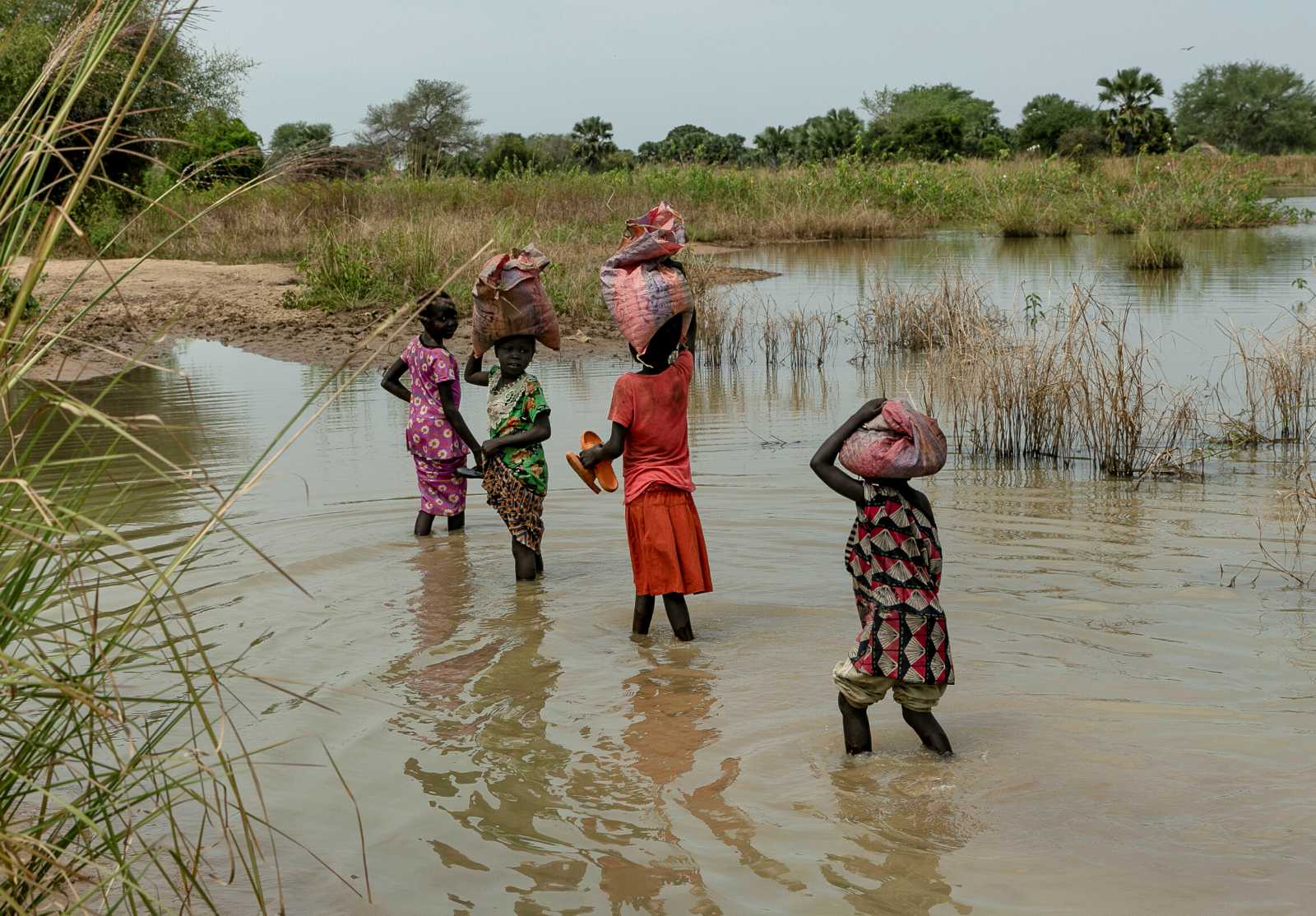
The consequences of climate change are rapidly becoming more severe, and adaptation is the highest priority for all poor countries. This is extremely timely given the current “Super El Niño”, which could result in a temperature increase of 1.8 °C above pre-industrial levels in 2027. But funding for adaptation is still much lower than funding for mitigation. In order to change that, financial institutions and the private sector in particular must become more involved – but they lack clear metrics. Mitigation can be measured well now, because there is broad consensus on the relevant indicators. If Antalya manages to make progress towards the operationalisation of the adaptation indicators, that would help mobilise more public financing. For example, internationally recognised indicators would help states apply for loans or grants for adaptation measures from development banks and climate funds. The ideal outcome would be to create an international institution, a global adaptation think tank, that would take over coordination and work on creating transparency without pursuing its own agenda.
At last year’s COP, over 80 countries endorsed a road map to transition away from fossil fuels, but it failed because of resistance from large fossil fuel producers in particular. At a conference this spring in Santa Marta, Colombia, just under 60 countries wanted to advance the issue anyway. Is the process making headway?
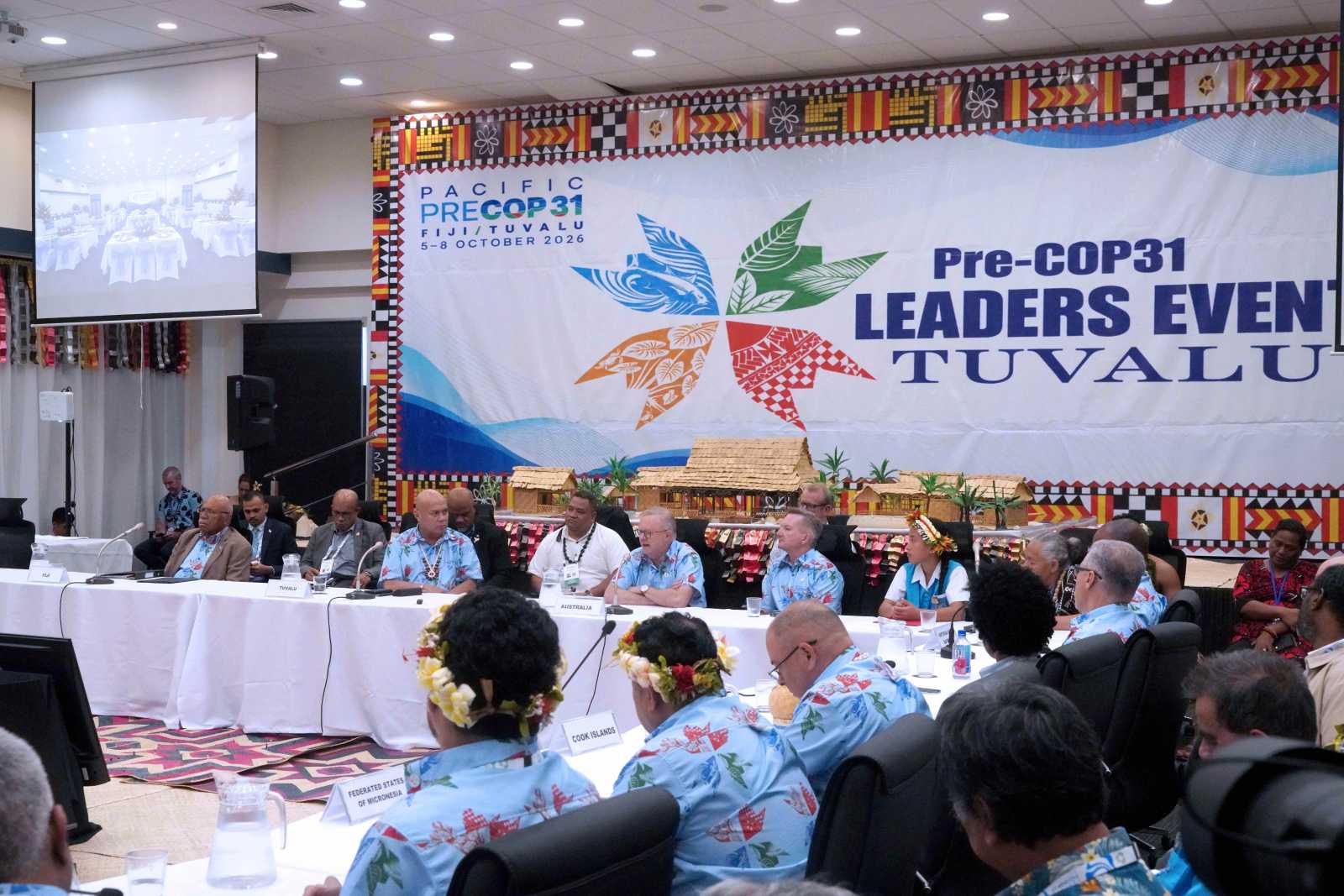
The process has come to a complete standstill. There is supposed to be a follow-up conference in Tuvalu in 2027, but with the election of the right-wing hard-liner Abelardo de la Espriella as President of Colombia – and the resulting end of the prior left-wing government – the Santa Marta initiative lost an important initiator. At the COP, the same forces that rejected the road map to transition completely away from fossil fuels last year will reject it again this year. More promising is the “35 by 35” electrification goal, which has broad support.
The goal says that by 2035, electricity should cover 35 % of global final energy consumption. Why is that so promising?
The topic is not even on the official negotiation agenda, but was introduced by the presidency. Nevertheless, it could become the milestone of this COP. Almost everyone can endorse this goal, because it does not set any fixed quotas for energy sources – renewable or fossil. Even the nuclear and AI lobbies have an interest in more electricity production.
Things are also happening now in the area of international carbon markets. The Turkish COP31 presidency announced that it wants to mobilise an additional $ 50 billion for greenhouse gas emission credits in the coming years. The UN-led carbon market under Article 6.4 of the Paris Agreement has made significant progress this year, for example with regard to credits for projects for clean cookstoves. Is more progress being made here than in other areas?
This area has been very resilient so far. It is amazing that it continues to be possible to advance more stringent regulations here while negotiations on most other topics are hampered by arguments over the financing question. Of course, there is lobbying pressure, which is also increasing. But the mood in this “negotiator family” is significantly better than in other negotiation tracks. A decision by the EU has also injected a lot of dynamism into the debate: as of this year, the European Climate Law stipulates that in the future, international emission credits can also contribute to the EU climate goal for 2040: reducing greenhouse gas emissions by 90 % compared to 1990. Up until 2010, the EU was a pioneer in the international carbon credit market, but then turned completely away from it.
What other relevant developments do you see?
I was very excited when it was recently informally announced that China would be prepared to organise the COP in 2028. That year will mark the end of the second Global Stocktake, and the implementation of the Paris Agreement will be evaluated – in other words, there will be a global review of progress towards mitigation and adaptation. The expectation would be that China, as the host country, would want to achieve results that it could showcase. But in order to do that, it would have to start those developments now, which could be a real game changer: we would then have a real chance at a usable two-year work programme leading up to 2028. We will have to wait and see what happens.
It would also have a big impact if China were to publicly and seriously announce in the run-up to the 2028 conference that it supports phasing out fossil fuels – which is highly controversial in the country itself. There, we can observe both the highest number of new coal-fired power plants commissioned in a decade as well as the ongoing record-breaking development of renewable energies. I very much hope that the fight among the various interests within the Chinese government comes out in favour of renewable energies and not coal.
What is the top concern right now of the most vulnerable countries in the Global South?
The preservation of the climate regime. They see that international cooperation is steadily declining and that the world’s powerful actually do not care about anything. Small, poorer countries are particularly affected. Support for the multilateral process by important actors, including the EU, is essential for these countries to feel represented.
Axel Michaelowa is an economist who works at the University of Zurich and at Perspectives, the think tank and consultancy company that he also founded. He has taken part in UN climate negotiations since the first Conference of the Parties in 1995 and co-founded and serves on the board of the Research and Independent Non-Governmental Organisations (RINGOs) constituency, which is recognised by the UNFCCC. He advises countries and companies around the world on the design of climate policy instruments and especially on international carbon markets.
michaelowa@perspectives.cc
This story is part of The 89 Percent Project, an initiative of the global journalism collaboration Covering Climate Now.