Protein sources
Why aid systems shouldn’t ignore grasshoppers


Approximately 7.4 million people throughout the Lake Chad Basin – which encompasses parts of Chad, Niger, Nigeria, Cameroon, the Central African Republic, Sudan, Libya and Algeria – are affected by acute food insecurity. As of April 2026, only 22 % of the region’s humanitarian funding needs, totalling $ 548 million, had been met. In some areas, the funding gap is particularly severe; for example, in the Nigerian states of Borno, Adamawa and Yobe. An OCHA situation report from April 2026 estimated that only 1.3 % of the $ 224.4 million needed for the year had been received.
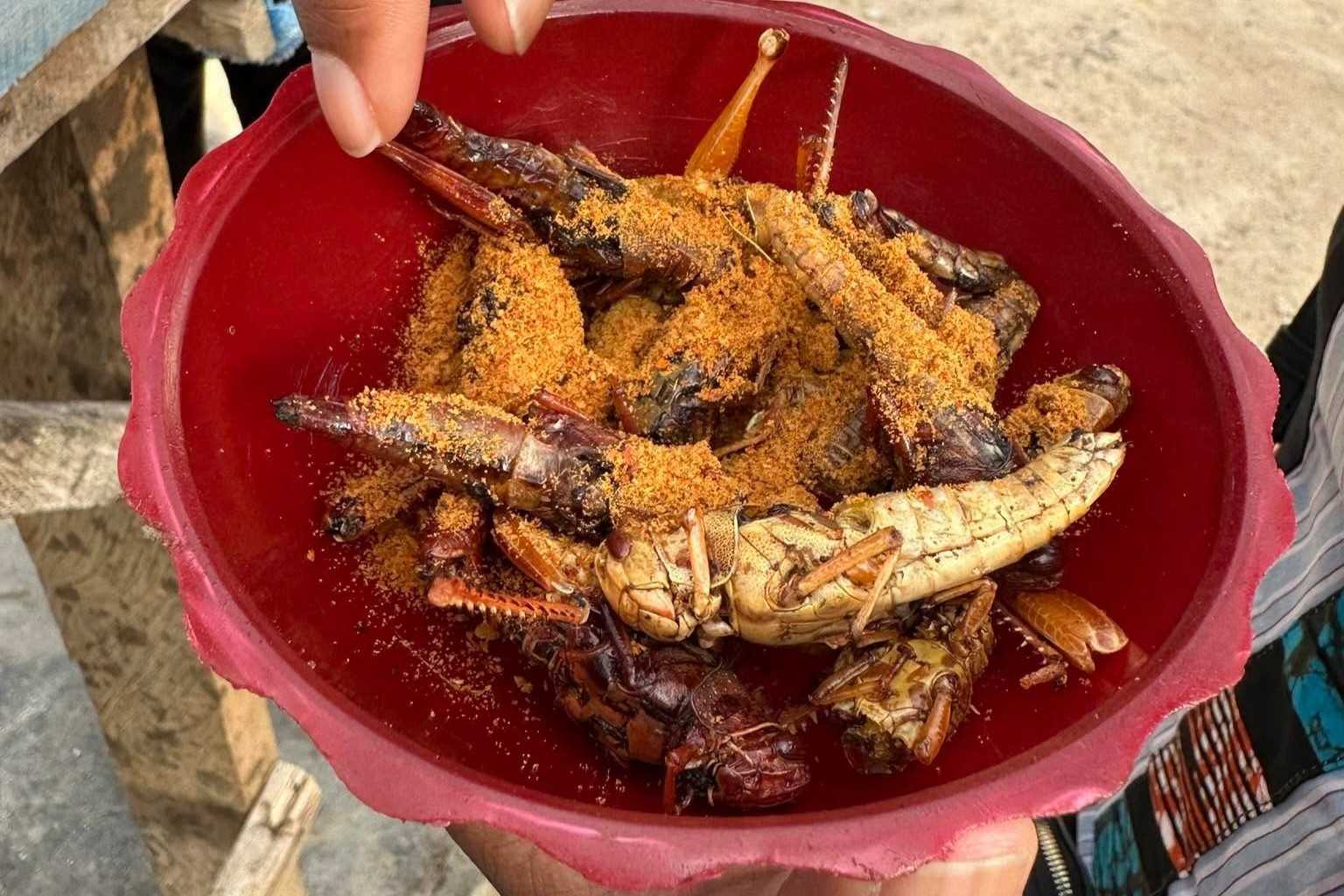
This gap could be partially filled by a food economy that costs donors nothing, appears in no response plan and has sustained households in Borno State for generations: the trade in fara, or fried grasshoppers, centred in the markets of Maiduguri, the state capital. The reason this doesn’t appear in the data says a lot about the way hunger itself is measured.
A classification problem
“The grasshoppers are a popular and highly nutritious traditional snack consumed in Maiduguri and its environs,” says Kennedy Nanga, coordinator of the Food Security Sector in Nigeria, the UN-coordinated body co-led by the Food and Agriculture Organization (FAO) and the World Food Programme (WFP). This institution runs the Cadre Harmonisé, the primary tool used to classify hunger severity across the region. “While they are packed with proteins, we consider them as condiments in our regular food security assessments, as they are not consumed by all the people most of the time and cannot be consumed daily for seven straight days as a main meal,” Nanga explains.
He is referencing the “Food Consumption Score,” the WFP’s standard module used to determine whether a food item is considered part of a household’s basic diet. It records how many days in the past week a household ate foods from eight groups, weights each group by its nutritional importance and sorts households into poor, borderline or acceptable consumption.
“Condiments” carry a weight of zero, so a food logged as one adds nothing to a household’s score. Strictly speaking, insects such as grasshoppers should already be classified under the “Main Food Group” rather than “Condiments” if they are eaten even in quantities as small as a handful. However, the score is used more as a measure of eating patterns than of nutritional value – a food eaten as a snack or side dish, no matter how rich in protein, will not be reflected in the score in the same way as a staple grain.
The result is that a food that provides vital micronutrients and an economy that The Cable, a Nigerian media outlet, estimated at more than 5 million dollars a year in Borno State alone are invisible to the instruments meant to detect food insecurity in the first place – leading to inaccurate assessments of household food security. If grasshoppers are logged as condiments, households that rely on them can look worse off than they are on this indicator. In a tight funding environment, that could shift assistance away from households with greater need, though whether this has happened in Borno is unclear.
Unregulated trade
The trade is largely unregulated, says Nanga. Nevertheless, grasshoppers should be subject to the same strict hygiene and processing regulations as conventional meat or fish. At the same time, he emphasises the trade’s important social role. “The grasshoppers are an indispensable safety net for the food security of women and young people, providing jobs and essential income for young collectors and female vendors.”
Nanga further highlights a detail that is rarely mentioned in relief planning: collecting grasshoppers reduces the population of an insect that would otherwise damage crops. According to Nanga, the trade in grasshoppers therefore serves a dual purpose, benefiting both farmers and producers.
Production, he adds, however, remains largely dependent on seasonal wild collection, which limits scalability and commercialisation. This has kept the trade outside the realm of serious political efforts for decades.
Terrorists threaten the grasshopper trade
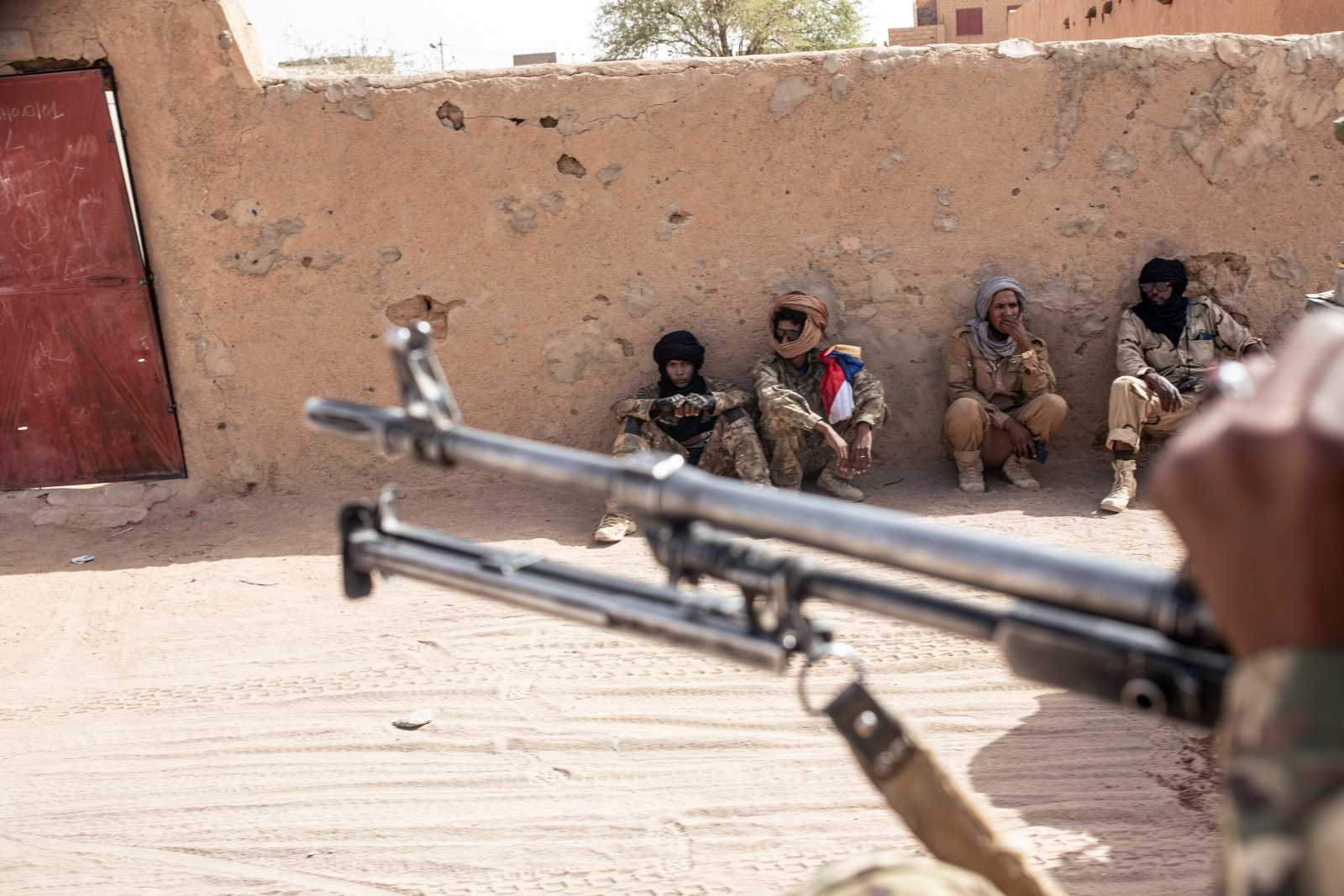
The trade in wild grasshoppers is now facing new challenges. The Islamist terrorist network Boko Haram and its offshoot, “Islamic State-West Africa Province” (ISWAP), control parts of the forests where grasshoppers have traditionally been harvested, and access to these areas has now become dangerous.
Khadija, a collector who works at dusk on the edges of the forest, describes how intimidation by the terrorists is exacerbating an already precarious economic situation: “Sometimes they demand that we share a portion of our earnings with them in order to continue this trade; otherwise, they threaten us.” Her husband does not work, so the household depends on her earnings. On nights when she cannot sell her catch, the family eats it instead. This provides some relief from April through June, when grasshoppers are most abundant.
Hauwa Naomi, who has processed and sold grasshoppers in Maiduguri for more than 20 years, represents another part of the supply chain – she buys the insects from harvesters and dealers each morning and cleans and fries them for sale. Her business has grown over the past two decades, reaching customers beyond the city as awareness of the food’s nutritional value spreads.
Demand is not the trade’s problem. Increasingly dangerous conditions are stifling the supply chain, and a food security system focused on packaged relief supplies and staple foods fails to recognise its value.
What needs to change
The nutritional case for taking the trade seriously is well established. A 2026 review of grasshopper production in Nigeria, published in the International Journal of Science and Research Archive, documents crude protein content of 40 to 70 % alongside meaningful iron and zinc – nutrients of direct relevance in a region with widespread micronutrient deficiency. What the research also makes clear is that Nigeria has no standardised protocol for rearing grasshoppers in captivity, and no serious domestication research to speak of – meaning the entire trade remains dependent on wild harvesting, with no fallback if access to forest grounds is lost for good.

Arnold van Huis, an emeritus entomologist at Wageningen University in the Netherlands who has documented insect-eating traditions across sub-Saharan Africa for decades, sees the trajectory clearly, even if he is cautious about commenting on Borno’s conflict specifically. “I think at a certain moment you have to rear them,” he says, citing early cricket-farming efforts in Kenya and Tanzania as a template. The process is not without difficulty, but it is a genuine alternative to depending entirely on the bush. “If there are rearing possibilities, then you can eat them the whole year round and not only during the collecting season.”
To harness grasshoppers for food security, the Cadre Harmonisé and its equivalents must include a category for a food that, while nutritionally significant, is consumed only irregularly – and this requires donor interest in a form of climate-resilient protein production that Nigerian communities have already practised over generations. Currently, however, this expertise lies entirely outside the system that should actually be designed to make use of it.
Rishabh Jain is a freelance journalist and documentary filmmaker covering topics such as climate change, health, human rights and migration.
rish.jain8899@gmail.com