Civil society engagement
Mexico under the influence of drugs


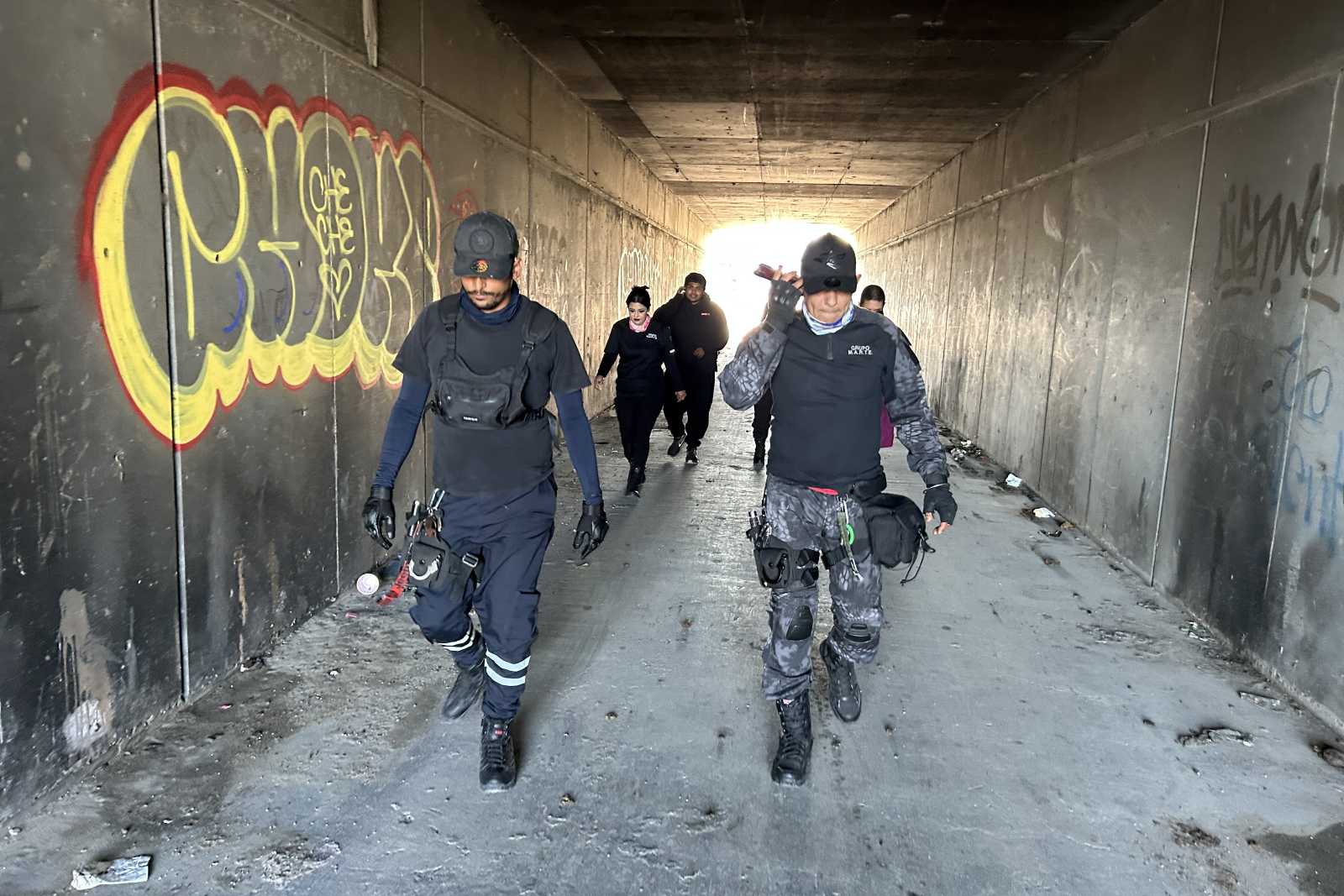
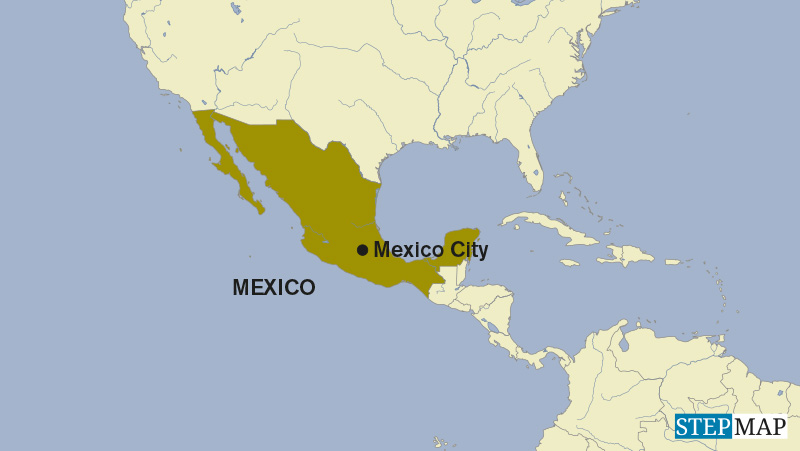
A camouflage cloth hides the lower part of Marck Rivera’s face as he squints and lets his gaze glide over the parched canal of the river in the Mexican border city of Tijuana, where a dark sludge has collected. Rivera and other members of the “Grupo Marte”, a volunteer initiative, patrol the canal in black clothes and heavy boots. This is one of Tijuana’s drug hotspots. The volunteers enter tunnels where unhoused people live and visit a street camp. They tend to wounds and distribute medication along with clean needles to people who inject drugs. If someone is lying too quietly and not moving, they check whether the person is only sleeping. “There are people who die of an overdose on the street here,” Rivera says. “They don’t know what they’re taking any more.”
Rivera came to Tijuana years ago from Culiacán, located in the Mexican state of Sinaloa, the cradle of the well-known Sinaloa Cartel. He had hoped to cross the border into the USA to experience the American dream. Instead, he found himself in the canal – homeless and addicted to heroin and crystal meth. He wound up in prison.
Nowadays Rivera helps other people in crisis. “Drug use in Tijuana is severe. This is where all the drugs and flows of migration come together,” he says. “Everyone who has been deported from the USA, is released from prison or comes from other cities or countries, washes up here.” Many had taken drugs in the past, he continues, but the difficulty of everyday life in the border city speeds up their downward spiral. The people who are stranded here need support for addiction, psychological problems or life-threatening injuries, Rivera says, but instead they are often simply harassed by the police or military.
Mexico’s cartels as global players
Mexico’s large, transnationally active criminal networks, the Jalisco Cartel and the Sinaloa Cartel, are active in over 40 countries worldwide. They control large portions of the trade in drugs like cocaine, crystal meth or fentanyl, and the border city of Tijuana is one of the most important drug corridors to the USA. According to the UNODC World Drug Report 2026, the growing volume and availability of synthetic substances could permanently change the global drug market – and bring about overdoses and violence. Experts worry that powerful synthetic drugs are flooding the global market, including fentanyl, nitazenes or orphines like brorphine or cychlorphine.

According to the Mexican crime expert Óscar Balderas, the new “super drug” of the Mexican cartels is the synthetic opioid fentanyl. It is the “most financially lucrative drug for the cartels,” he says. Fentanyl is up to 50 times stronger than heroin.
Fentanyl is highly potent even in small doses, costs relatively little to produce and can be cut with other drugs to increase their effectiveness. All of these factors make it more attractive to drug producers than the half-synthetic heroin, which is chemically extracted from the seed pod resin of poppies. In addition, the price of heroin has fallen steeply in recent years. Compared to cocaine, which is made from coca plants, fentanyl has the advantage that it does not need to be imported from cultivating countries in South America.
In recent years, Mexico has increasingly transformed from a drug corridor to a production site. Hundreds of labs producing fentanyl, as well as crystal meth, have been raided. In March 2026, security forces discovered during a raid in the western state of Colima around 270 kilos of a fentanyl-like substance in powder and pill form, enough for about 14 million doses.
Shipments from Asia
Mexican cartels obtain the chemicals to manufacture synthetic drugs like fentanyl primarily from China, India or other Asian countries. The most important liaison between China’s chemical factories and the Sinaloa Cartel is currently standing trial in the USA. Zhi Dong Zhang, alias “Brother Wang”, allegedly trafficked chemical substances for fentanyl production by the tonne to drug labs in Mexico. The cartels press these into tablets or cut other drugs, even medications sold in pharmacies, with fentanyl. Drug cooks are always working to perfect their formulas.
Cartels also fly their drug cooks to African countries like Nigeria to establish labs there, especially to produce crystal meth. They then ship the synthetic drugs from Africa on to Europe and all the way to Australia and New Zealand.
Mexican cartel members are increasingly present in Europe too. Members of the Jalisco Cartel were recently arrested in Spain, where they had coordinated the trade in cocaine and methamphetamines. Vanda Felbab-Brown, a crime expert at the US think tank Brookings, warns that crystal meth is a potential gateway drug to fentanyl. “My biggest concern is that Mexican cartels will adopt the same tactics elsewhere as they have in the US – namely, mixing fentanyl and other synthetic opioids, such as nitazene, into meth shipments,” she says.
The risk of overdose
The cartels are trying to manufacture stronger and stronger products. They are mixing together more and more potent and therefore riskier combinations, partly because consumers want a stronger high – despite the high risk of overdosing. Even a tiny amount of fentanyl can cause respiratory arrest. “I never know how much fentanyl is in there,” says Luis, who lives in a street encampment in Tijuana and injects a heroin-crystal meth blend about six times a day in order “to not feel bad”. He has already survived an overdose, he says. Now he takes drugs only when someone else is near who could help him.
In 2024, paramedics with the Red Cross tried to revive over 800 people experiencing overdoses in Tijuana. According to the Forensic Medical Service (SEMEFO) of Baja California, almost 17 % of all the bodies it received in the cities of Mexicali and Tijuana had fentanyl in their systems – though it was unclear whether that was what killed them. Since there are no official, nationwide statistics, many victims remain invisible.
“You have only 10 or 15 minutes to react to an overdose, and then it’s too late,” Marck Rivera from Grupo Marte explains. Naloxone, available as a nasal spray or injection, works as an antagonist in case of an opioid overdose by reversing life-threatening respiratory paralysis. But naloxone is only available by prescription in Mexico and too expensive for people living on the street. Even organisations that support people with substance use disorders have trouble maintaining their naloxone supply.
Civil society engagement for people with substance use disorders
One organisation that distributes naloxone is Prevencasa. In the NGO’s courtyard in Tijuana, graffiti exhorting visitors to “Help, not punish” is emblazoned on a wall, and colourful chairs await people needing medical exams or psychological counselling. Prevencasa is a laboratory for an alternative, health-oriented drug policy. Helpers distribute medication, condoms or injection kits. A plastic box is available to dispose of used needles. There is even a safe space for women to consume drugs.
At Prevencasa, people who use drugs can also test their substances for fentanyl with adulterant detection strips. Nowadays, almost all these tests come back positive. Drug quality and composition change constantly. Dramatic changes to the fentanyl content can lead to a wave of overdoses – until users adjust to the new blend.
A different drug policy
In the past, organisations from the USA delivered naloxone to Mexico to support organisations there that had limited resources. In the USA, naloxone has been available in pharmacies without a prescription since 2023, and as a result, the number of fatal overdoses has declined in the USA for the first time since 2018. “Since the start of the opioid epidemic, the US approach to drug use has undoubtedly changed dramatically,” observes Brookings expert Vanda Felbab-Brown. “In particular, during the transition from the Obama administration to the first Trump administration and finally to the Biden administration, we observed a significantly greater acceptance of certain forms of harm reduction, such as the widespread availability of naloxone and improved access to medication-assisted treatment.”
However, after some progress towards a more sustainable drug policy, the global trend now seems to be going back to heavy-handed policies. Budgets are primarily prioritising arms build-ups, surveillance and prison instead of better social and health policies, which could interrupt the cycle of poverty, hopelessness and violence.
“We believe that cross-border harm reduction work is crucial, but it is a terribly difficult time now as the Trump administration is against harm reduction strategies and gutting funding for anything other than naloxone,” Gretchen Bergman says. She founded the organisation “A New Path” in San Diego, which supports people with substance use disorders and also works with Mexican organisations. She still has a steady supply of naloxone in California, but says that there have been delays recently in procuring fentanyl test strips.
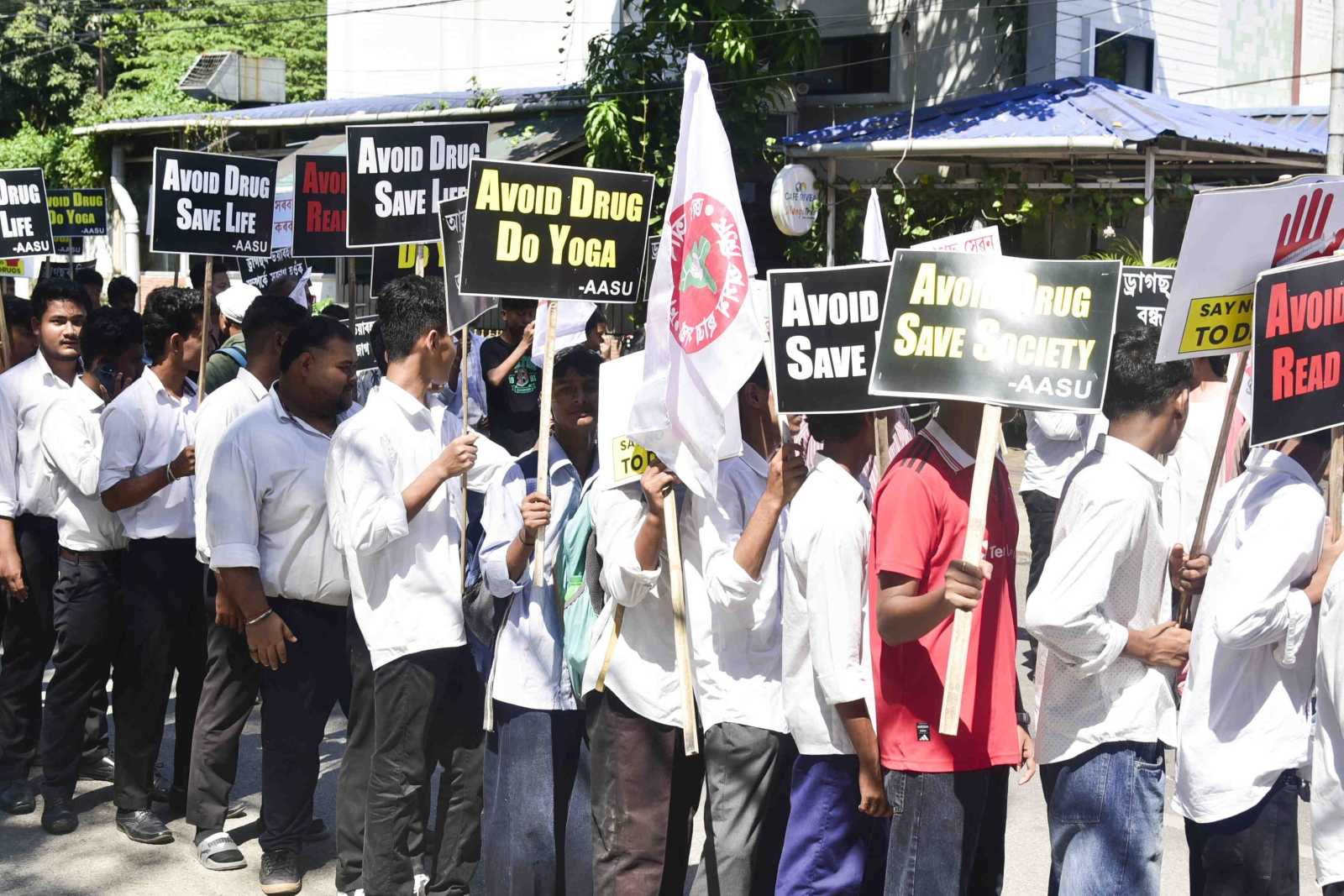
In many Latin American countries, right-wing to far-right politicians have also used the “drug war” to attain the presidency, promising to take tough military action against criminal groups. The era of Latin America’s turn to the left seems to have ended. Committed initiatives like Grupo Marte, Prevencasa or A New Path are trying to cushion the social impact of the billion-dollar criminal drug business, but their funds are shrinking. Mexico’s President Claudia Sheinbaum is taking military action against drug labs, but there is no comprehensive, health-focused drug policy with long-term state financing for support structures.
“Here in Tijuana, it’s not politics, but rather drugs and migration flows that influence what happens,” Marck Rivera believes. In order to document the operations of his army of volunteers and the crisis of people on the streets of Tijuana, he operates the TikTok channel @grupo.m.a.r.t.e. He also uses the platform to attract donations because money is always tight. He often won’t know until the last minute if he’s raised enough through crowdfunding to carry out an operation. It’s not possible right now to deliver naloxone to drug users. The most Rivera can do is transport people to clinics and hope that he can get them there on time. But at the moment the group doesn’t even have money for gas.
Source
UN Office on Drugs and Crime: World Drug Report 2026.
Sonja Peteranderl is a journalist and founder of BuzzingCities Lab, a think tank that focuses on digital innovation, security and organised crime.
euz.editor@dandc.eu