Renewable energy
Indigenous protest against projects on Indonesia’s “geothermal island”


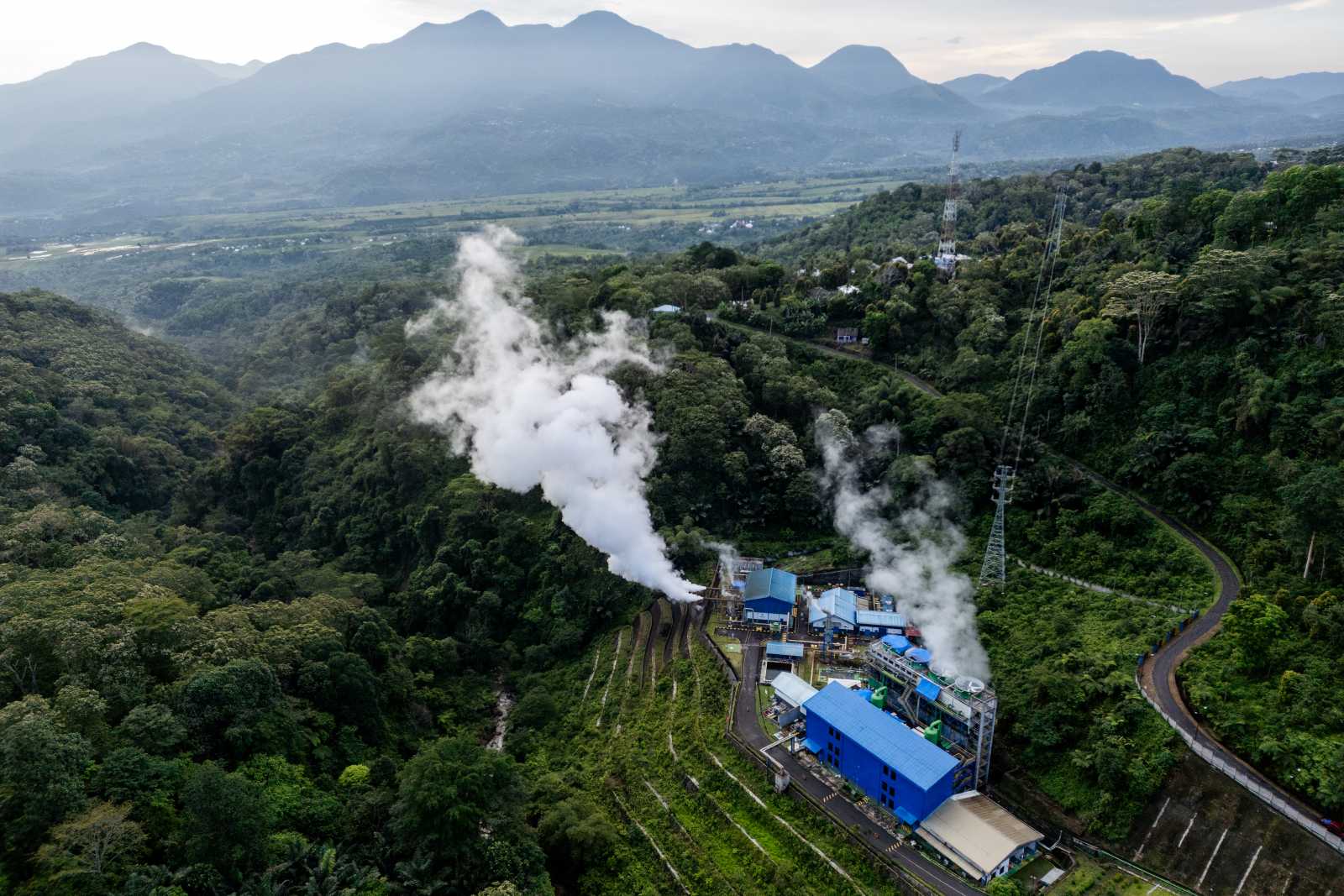
Thin smoke seeps from cracks in the ground in Mataloko, a village on the Indonesian island of Flores in the province East Nusa Tenggara. The sharp, rotten-egg stench of hydrogen sulfide catches in the throat. Underneath the tree canopy and the remains of old plantations, villagers look out over land that has become increasingly unlivable.
The Indonesian government has envisioned the volcanic island of Flores as the powerhouse of its green energy future and officially dubbed it the “Geothermal Island” in 2017. But for the Indigenous communities living here – including the Mataloko, the Wae Sano and the Poco Leok – the transition to renewable energy marks the beginning of a profound loss of their way of life.
The unease surrounding geothermal power on Flores is not new. Thirty years ago, the first plant was built in Mataloko, but it failed and operated only briefly. Today, a remnant of that plant remains: an abandoned borehole surrounded by a fence and a skull-and-crossbones warning sign. Despite being sealed, toxic steam still escapes.
The local environment has irrevocably changed. The stream that once flowed here has vanished, replaced by boiling mud bubbling up from the earth. Nearby fields lie barren; nothing grows. The corrugated iron roofs of local houses, which should last two decades, rust through in mere months – a decay residents blame on the constant hydrogen sulfide emissions. Villagers also report chronic skin irritation and breathing difficulties, well-known side effects of the gas.
“The land used to be fertile, the harvest good,” says villager Augustina Kigo sitting in front of her hut. “But since the drilling started here, that’s no longer the case.”
The green transition and the Ring of Fire
Geothermal energy is widely championed as a sustainable, always-on alternative to fossil fuels. Given its location on the Pacific Ring of Fire, Indonesia is uniquely suited for it, since it boasts an estimated potential of more than 23 gigawatts. As the country is committed to achieving carbon neutrality by 2060 or sooner, Flores plays a vital role. The government is heavily investing in the island. Yet experts warn that developing geothermal energy on small, highly active volcanic islands like Flores carries unique, severe risks.
Surya Darma, head of the Indonesia Center for Renewable Energy Studies (ICRES), notes that Flores’ geography already makes it highly vulnerable to seismic activity. “Geothermal utilisation should avoid areas with high disaster risk because geothermal activity increases the risk of earthquakes, particularly through the reinjection of fluids into the Earth’s crust,” he says, stressing the need for comprehensive geological risk assessments and safe injection technologies.
Resistance in the villages
In the village of Lungar, in the shadow of the Poco Leok volcano, local women are spearheading resistance to energy expansion. The nearby Ulumbu Geothermal Power Plant, owned by the state-owned electricity company PLN and inaugurated in 2011, plans to increase its output from 10 to 40 megawatts, targeting 60 new drilling sites spread across 13 hamlets.
Elisabeth Lahus, a coffee and clove farmer, is one of those leading the fight. “Tana hitu ende dami,” she says in Manggarai, her traditional language – “the land is our mother”. Her community believes it is their ancestors’ inheritance.
“The damage doesn’t just happen where the drill is,” Lahus says. “It can affect places 500 metres away. There’s smoke. The sound of bubbling, boiling water fills the area. The negative impacts of geothermal energy will endanger us all.”
Residents, many of whom live in simple wooden huts and rely on subsistence farming, say the plant’s expansion is moving at breakneck speed. They report a lack of proper consultation, claiming the project violates the UN principle that requires the free, prior and informed consent of Indigenous peoples.

The Church steps in
The growing unrest recently gained a powerful ally. In January 2025, Catholic Church authorities on Flores, led by Archbishop Paulus Budi Kleden, publicly rejected the geothermal projects. Flores is a predominantly Catholic region, and the Church’s stance has sparked local protests and prompted critics who had previously remained silent to speak out.
Archbishop Kleden stated that the Church’s decision came after hearing first-hand testimony from affected communities. “Geothermal energy can be a very good thing, as has been demonstrated elsewhere. But it is not an option for Flores,” he said, citing the island’s steep, disaster-prone topography and the threat to vital agricultural land and water sources. He added that the communities’ culture and identity are at risk because both are closely tied to their land and agriculture.
The civil society organisation Coalition for Human Rights in Development has criticised the role of Germany’s development bank KfW in the matter. It claims that by signing a loan agreement to fund the expansion of the Ulumbu geothermal power plant in 2018, KfW backed a project in the course of which, for example, community members have been attacked and beaten for opposing the occupation of their land. The Coalition stated that the land acquisition process is failing to ensure the participation of local communities and to respect their collective rights.
In a statement issued in December 2025, KfW says it commissioned an independent expert review on the matter, which found that the requirements of the relevant FPIC standards (free, prior and informed consent) have not been sufficiently respected. KfW says it has recommended measures to improve the information and consent processes with the affected communities and has suspended financing for planned infrastructure measures in the Ulumbu project since the end of 2024.
Despite the suspension, the drilling rigs still loom, and the future for the Indigenous communities of Poco Leok, Wae Sano and Mataloko remains in limbo. The promise of a clean energy transition has, for now, stalled their lives. It is a bitter irony for the villagers: they are being asked to sacrifice their land, their health and their heritage so that distant cities can keep the lights on in a “sustainable” way.
Garry Lotulung is a freelance photojournalist and documentary photographer based in Jakarta, Indonesia. He has specialised in stories about the human condition, social change and environmental crises.
garrylotulung@gmail.com