Recycling
How India aims to secure rare earth supply through e-waste


Historically, India has extracted and exported raw rare earth concentrates while relying heavily on imports of processed rare earths. In the 2024–25 fiscal year, it brought in over 53,000 metric tonnes of rare earth element (REE) magnets, primarily neodymium-iron-boron (NdFeB) and mainly from China. These magnets are essential for manufacturing electric vehicles (EVs), wind turbines and electronics and for defence applications.
Now, the country is aiming to achieve self-reliance. In 2025, under the National Critical Minerals Mission (NCMM), the government approved a massive $ 4 billion incentive package, which will be invested over seven years. The mission envisions 1200 domestic exploration projects by 2031, the acquisition of 50 overseas assets and self-sufficiency in processing at least five key REEs. This move aims to cut import reliance and build a domestic supply chain for defence, EVs and electronics.
A main component of this push is an $ 800 million incentive scheme specifically designed to establish a domestic ecosystem for rare earth permanent magnets (REPM). Under this policy, the Ministry of Heavy Industries recently invited global bids to set up manufacturing units with the goal of creating a complete domestic value chain to meet domestic demand, which is expected to double within five years. Raw-material security is also being strengthened by the fact that IREL, a public-sector company, can provide a dependable supply of oxides that are needed by the industry. Oxides serve as fundamental building blocks for high-tech components.
The urgency is a direct consequence of the uncertain geopolitical situation facing the world. In April 2025, for example, China imposed export restrictions on rare earth magnets, sending shockwaves through global manufacturing supply chains. The move was part of a broader retaliation to steep US tariffs, with Beijing using its commanding position in the sector – it accounts for around 70 % of global mining and 90 % of the processing of rare earth magnets – as an economic pressure lever. For India, the exposure was stark: the country sources 80–90 % of its REEs, magnets and related materials from China, with official figures placing imports at approximately $ 221 million in 2025.
Challenges to harnessing domestic reserves
India holds about eight percent of the world’s rare earth reserves, which are primarily found in monazite sands along the coastlines of the states of Odisha, Kerala, Tamil Nadu, Andhra Pradesh, Gujarat and Maharashtra. However, domestic mining currently accounts for less than one percent of global production.
The primary hurdle is the country’s historical regulatory framework, which favoured state-owned dominance and discouraged private investment, thereby constraining refining capacity. India also faces a compositional imbalance: it has a surplus of “light” rare earths but lacks extractable quantities of “heavy” elements like dysprosium and terbium, which are critical for high-performance magnets. This problem is compounded by a massive technological gap: India lacks the commercial-scale industrial expertise held by nations like Japan or Germany.
Urban mining
Amid the ecological and technological challenges of traditional mining, India is pivoting towards “urban mining”, the recovery of rare earths from electronic waste (e-waste). As the world’s third-largest producer and importer of e-waste, India generates approximately 1.75 million metric tonnes annually, a figure that grew by around 75 % over the last five years.

Experts say India could meet up to 70 % of its rare earth demand through scaled-up e-waste recycling. Leading firms like Attero Recycling have already developed patented homegrown technology to extract neodymium and cobalt from discarded magnets and batteries.
In July 2025, a landmark development in this sector was the partnering of India’s BatX Energies with Germany’s Rocklink GmbH to establish the country’s first fully integrated rare earth magnet recycling facility. This project uses patented reverse logistics platforms to collect end-of-life magnets from motors and industrial equipment. The magnets are then refined in a zero-liquid-discharge (ZLD) plant, an advanced process in which industrial wastewater is fully treated, recycled and reused so that no wastewater is discharged into the environment. Such initiatives align with the EU-India Trade and Technology Council (TTC) vision for circular supply chains and provide India with a foothold in a non-Chinese REE ecosystem.
The roadmap to self-reliance
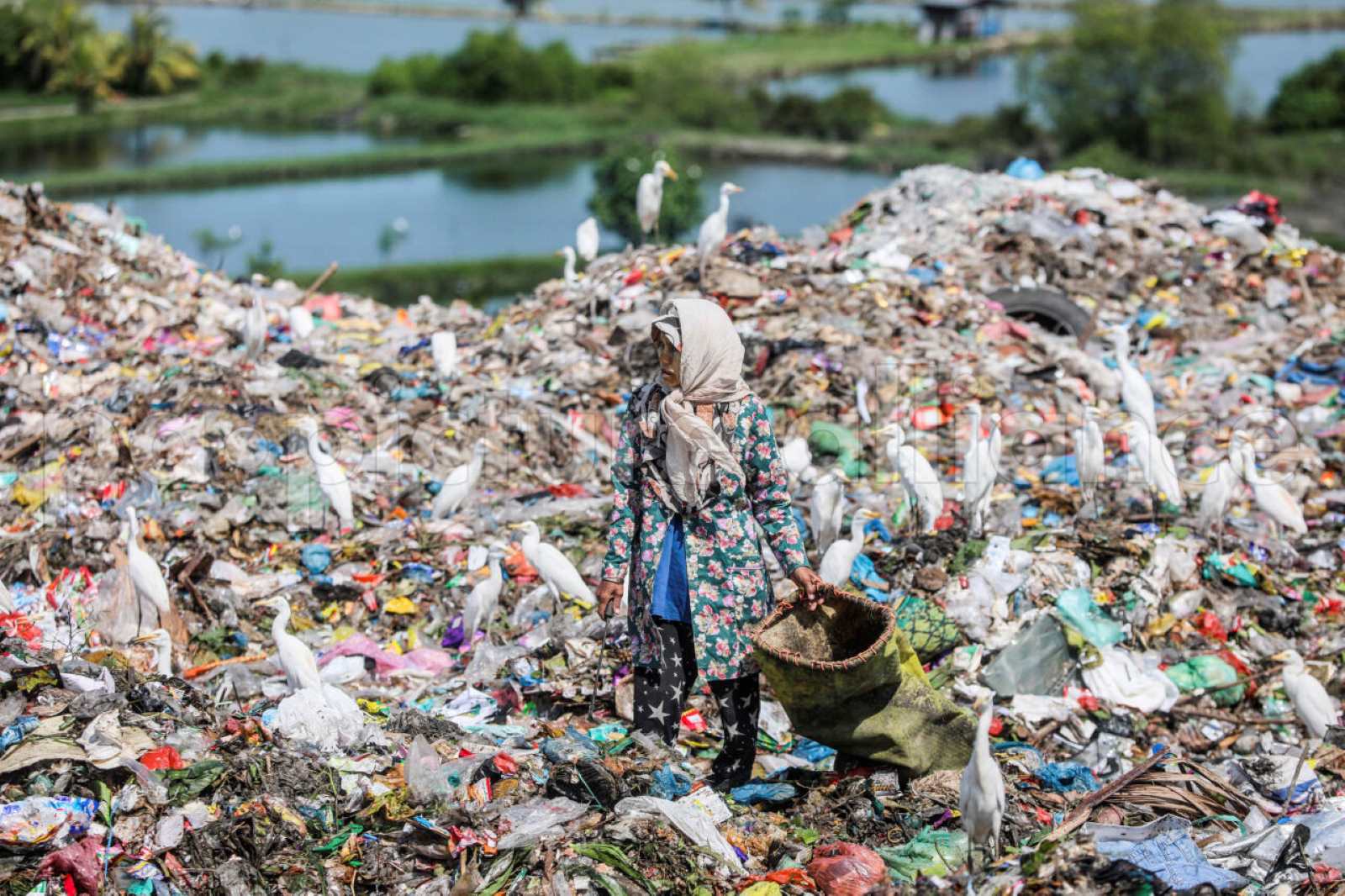
Despite this momentum, the lack of formalisation remains a major obstacle. While formal recycling jumped 240 % between 2019 and 2024, nearly 95 % of e-waste workers remain in the informal sector, often working without protective gear in “toxic sinks” like New Delhi’s 70-acre Ghazipur landfill. Bridging the gap between these informal scrap yards and high-tech formal facilities like Recyclekaro, an e-waste and lithium-ion battery recycling company in Mumbai, is essential for securing a sustainable supply.
Furthermore, Indian-made magnets must be priced competitively to avoid being undercut by cheap Chinese imports. Success will require strategic international partnerships to import technology and upskill the workforce, such as the Minerals Security Partnership, a 15-member coalition – including the EU, Japan, Korea and Canada – aimed at accelerating the development of sustainable critical energy mineral supply chains.
India’s journey towards rare earth self-sufficiency is a race against time and international competition. By combining aggressive fiscal incentives for magnet manufacturing with a pioneering focus on e-waste recycling and regional diplomacy, New Delhi is attempting to move up the value chain from a raw material exporter to a high-tech manufacturer. While the road is fraught with technological gaps and environmental concerns, the transition to a circular economy model offers a path to strategic autonomy that does not sacrifice the country’s ecological future.
Roli Mahajan is a journalist based in Lucknow, India.
roli.mahajan@gmail.com