Climate change
How a new carbon trading system could benefit Zimbabwean communities


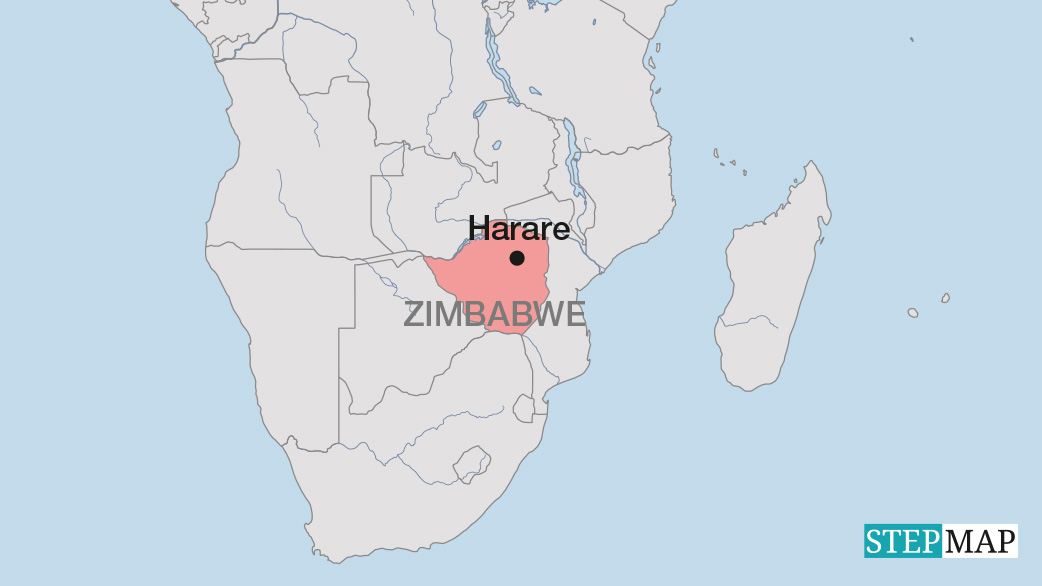
It was just a small ceremony when environmental activist Never Bonde began to plant 10 new trees at Ross Camp Police Station in Bulawayo, Zimbabwe’s second-largest city. Five of the young trees were given the names of local officials and supporters. But the small ceremony in September 2025 indeed marked the beginning of a much bigger ambition: it’s the first visible step, Bonde says, towards his target of planting 500,000 trees across Bulawayo by 2030.
For Bonde, planting trees is hardly new. For years, he has taken seedlings to schools, public institutions and neighbourhoods with his organisation Isandla Esihle/Ruoko Rwakanaka. His environmental work has also earned him the title of Zimbabwe’s National Tree Ambassador.
For Bonde, however, the latest campaign is meant not only to add new trees to Bulawayo or to replace old or hazardous ones in parks, schools and public institutions. His ambitions are part of Zimbabwe’s much bigger plan to turn projects like tree planting into part of a regulated carbon economy. Since May 2025, new Carbon Trading Regulations have required carbon projects to register with the Zimbabwe Carbon Markets Authority, ZiCMA. If initiatives such as Bonde’s eventually want to generate and sell carbon credits, they will have to operate within that system. It enables them to attract money from companies or countries elsewhere seeking to offset emissions.
“The system gives our project credibility,” Bonde says. “It’s no longer just about planting trees; it’s about being part of Zimbabwe’s broader climate strategy. But for people to feel the real benefits, they need to understand how carbon markets work.”
Putting a price on carbon
A carbon credit represents one tonne of carbon dioxide or its equivalent removed from the atmosphere or prevented from entering it. Governments, companies and other buyers can use credits to offset emissions, while projects generating them can receive financial compensation in return.
Zimbabwe already had carbon projects before the new rules, but authorities argued that the country lacked sufficient oversight over the sector and was not benefiting enough from the credits it generated. The new regulations from 2025 instead set rules for registration, monitoring and the authorisation of carbon projects.
A new national carbon registry also records projects and credits using blockchain technology, which allows data to be securely and transparently shared. ZiCMA says the system is designed to improve traceability and help prevent the same emission reduction from being counted more than once. “Before, anyone could register a project anywhere, which risked double issuance,” says Tirivanhu Muhwati from the Ministry of Environment. The registry, he argues, gives governments a clearer picture of what is being traded and where.
For projects such as Bonde’s, the new system could eventually provide a way to trace carbon credits generated through tree planting from their creation to their sale.
Promise still to be tested
Yet regulation alone doesn’t guarantee that carbon markets will bring about substantial income for communities. Zimbabwe’s new system is still at an early stage. By June 2026, only four projects had completed the registration process, while 19 others were at different stages of registration. Neither the government nor communities had yet seen substantial financial returns from the new framework by then.
That makes initiatives such as Bonde’s part of a bigger experiment: Will the market for carbon credits actually translate environmental work on the ground into income that reaches the people doing it? Either way, for now, Bonde’s measure of progress is much simpler. His campaign, he says, will depend not only on planting hundreds of thousands more trees but also on people looking after the little trees that go into the ground. “We invite everyone to join us by planting and nurturing at least one tree this season,” he said during the launch of the campaign.
Source
Zimbabwe Carbon Markets Authority
Lungelo Ndhlovu is a freelance journalist based in Bulawayo, Zimbabwe.
ndlovu.lungelo@gmail.com
This story is part of The 89 Percent Project, an initiative of the global journalism collaboration Covering Climate Now.