UN Sustainable Development Goals
Four future scenarios for the 2030 Agenda


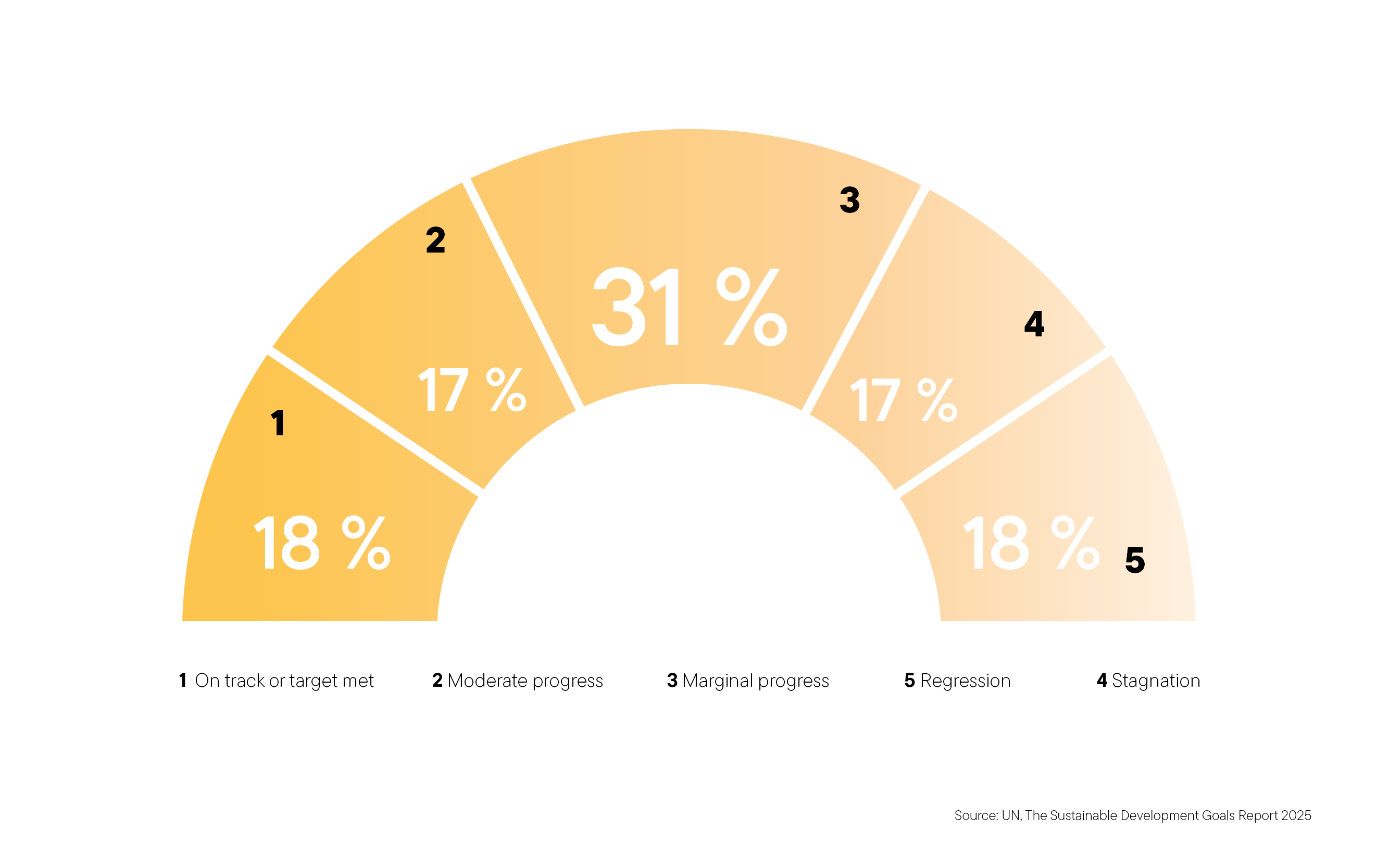
It’s a mixed picture as far as the achievements of the 2030 Agenda so far are concerned. Most of the UN’s 17 Sustainable Development Goals are very unlikely to be achieved by 2030. Nonetheless, many countries have embarked on a path to more sustainable development since the goals entered into force at the beginning of 2016. The closer the Agenda’s end date looms, the more and more development actors are asking themselves what might come next. According to the Pact for the Future, published after the Summit of the Future in September 2024, talks on possible future scenarios should begin at the SDG Summit in New York in September 2027.
Research carried out by Germany’s bilateral cooperation agency GIZ highlights essentially four plausible scenarios for what might follow the 2030 Agenda. The authors conducted interviews with scientists from Japan, Mexico and South Africa and surveyed a number of experts – including from the German Institute of Development and Sustainability (IDOS), the German Institute for International and Security Affairs (SWP) and Beyond Lab, a UN think tank. They also engaged in numerous discussions with people within GIZ who focus on the 2030 Agenda and a possible follow-up to it.
- No new agenda: Geopolitical tensions and declining interest in sustainable development make it impossible for the international community to agree on any follow-up agenda. Negotiations are abandoned.
- Several new agendas: Two or more rival agendas are adopted. One, for instance, by countries wishing to pursue more ambitious climate action and another by “climate laggards” that would rather stick with fossil energies long-term. Two agendas – one shaped by the EU and the other by China – are also conceivable.
- Extension of the existing agenda: The international community decides to continue the 2030 Agenda in order to at least preserve the consensus reached in 2015. It’s conceivable that marginal amendments would be made to certain targets and indicators.
- A single new agenda: Following intensive negotiations, the international community approves a single new agenda. This might involve focusing more on basic needs again, as was the case with the Millennium Development Goals (MDGs), or might see global public goods take centre stage. It could take a more transformative and holistic approach than the 2030 Agenda – or indeed be influenced to a much greater extent by anti-liberal and autocratic states.
It’s unclear which period a new agenda might cover. For the most part, timelines of 10, 15 or 20 years have been proposed. The possibility of setting milestones is also being discussed. Though a new agenda might be adopted, there is a real risk that the majority of countries could pay virtually no attention to its implementation due to a lack of support among their populations.
However, it’s also conceivable that a new system of incentives could be created to encourage implementation. In this context, considerable hopes are already being pinned – to some extent unrealistically – on the private sector stepping in to pay for a post-2030 agenda to be implemented.
Key contentious issues for a post-2030 agenda
The whole subject of environmental conservation and climate action could turn out to be one of the main bones of contention during negotiations of a post-2030 agenda. Ever more states see it as an obstacle to growth or dismiss efforts to protect the environment and climate as an ideological scam. This is already leading, among other things, to declining climate ambitions worldwide.

Environmental and climate action could enjoy greater acceptance again if the international debate on global public goods gained further momentum. Furthermore, new narratives – ideas such as human and planetary well-being, regenerative sustainability and intergenerational equity – could lend renewed buoyancy to environmental policy. Often rooted in local traditions, these concepts can provide a framework for sustainable ecological development. However, a post-2030 agenda also needs to reconcile many states’ interests in the areas of energy security, growth and infrastructural development with the imperatives of climate action.
We are also seeing growing global resistance to issues such as human rights, gender equality and good governance. Numerous countries categorically reject such concepts, claiming they have been forced upon them by others. If even a watered-down interpretation of these issues could be adopted in negotiations, this would mark a significant success.
Digital sovereignty and transformation could be enshrined in a post-2030 agenda as goals in their own right, building on the 2024 Global Digital Compact – the UN’s comprehensive global framework for digital cooperation. On the other hand, digitisation could also remain more of a cross-cutting issue in future given the rapid advances in artificial intelligence (AI), not to mention possible setbacks such as dwindling investments.
Key actors in the negotiations
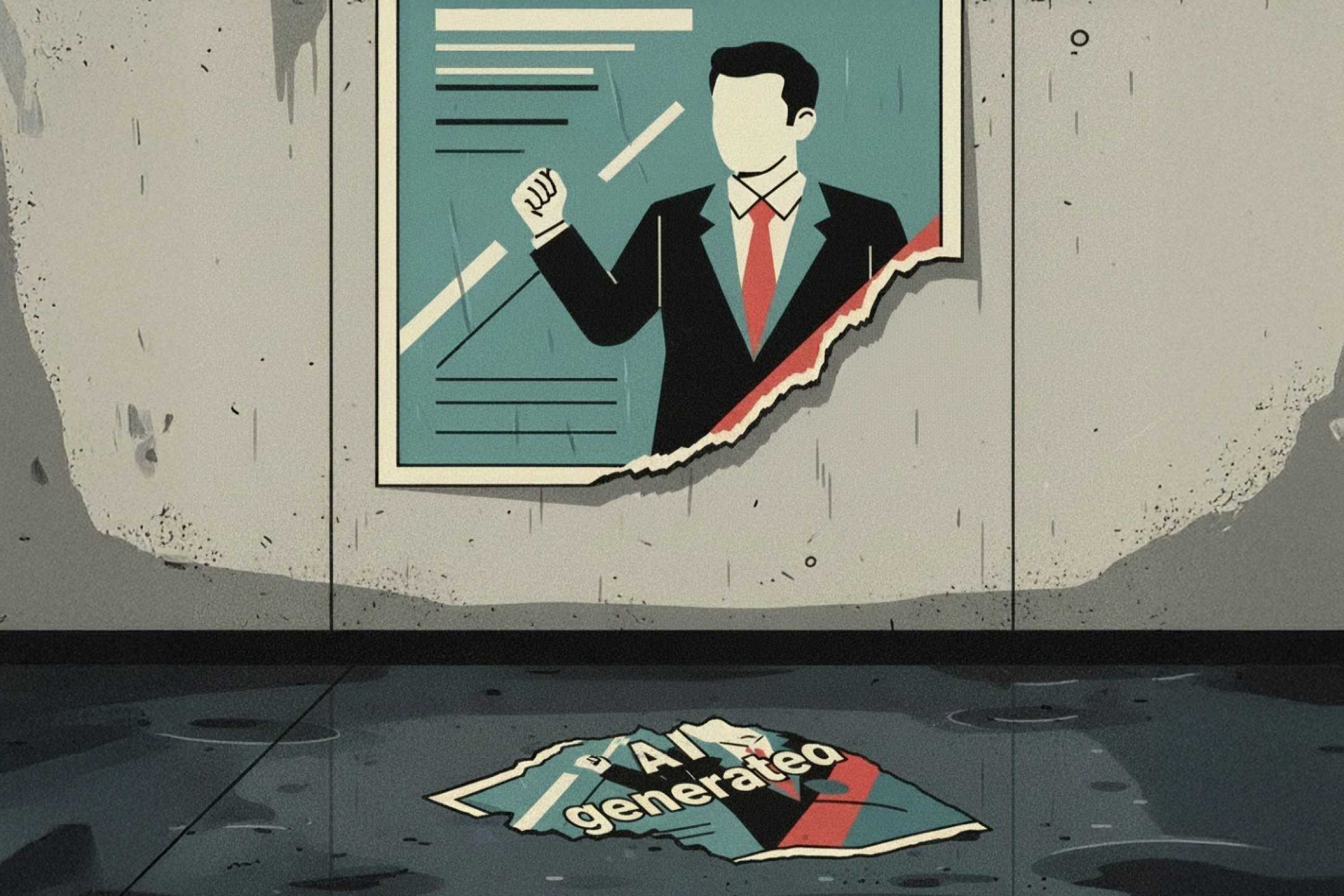
The geopolitical rivalry between the US and China will play a crucial role in determining the orientation of any post-2030 agenda. Given the views of the current US administration, it would already be a step in the right direction if it decided to take a passive stance by opting out of the negotiations rather than obstructing them. However, since the US is so unequivocally opposed to multilateral institutions and the 2030 Agenda at present, it is also perfectly possible that Washington would seek to thwart any efforts to reach agreement. Though the outcome of the 2028 US presidential elections could result in a more positive attitude towards the United Nations, it is highly unlikely that the politics of the Trump years would be reversed entirely before 2030.
China is already taking advantage of the power vacuum left behind by the US. It is using initiatives such as the Global Development Initiative (GDI) and the Global Civilisation Initiative (GCI) to lay the foundations for shaping the post-2030 agenda in line with Chinese interests and values. Whether China manages to get the BRICS+ states to back it will determine to some extent whether it can achieve this. As things currently stand, the group – which comprises Brazil, Russia, India, China, South Africa and a number of other countries – lacks a common vision.
Russia, at least, has already made reference to China’s GDI in its first remarks about the post-2030 agenda. At the same time, Moscow will continue its efforts to increase its influence on the G77 with a view to bringing about an anti-liberal and fossil fuel-based future.
Alliance between the EU and the Global South?
The European Union may find it hard to agree on a common line in negotiations on the post-2030 agenda. The possibility that the EU could become politically paralysed by internal rifts and see its role diminished as a result cannot be excluded either. However, it is also conceivable that an alliance of the EU and countries of the Global South might succeed in coming up with an alternative to the Chinese and US narratives – one based on mutual interests and respect, as well as on a clear vision for a socially just and green transformation.
It’s well known that nothing happens in the UN without the G77. Since they all have their own individual interests, however, the countries in this group shouldn’t be viewed as a homogeneous bloc. On the one hand, some emerging economies in particular equate a strong political will to bring about change with a serious desire to pursue an ambitious agenda for the future. And even some of the least developed countries (LDCs) are staunch supporters of a follow-up agenda with objectives no less lofty than the 2030 Agenda. On the other hand, many autocratic countries and oil states within the G77 criticise the progressive goals enshrined in the current Agenda and are more likely to obstruct the post-2030 agenda negotiations.
Quite apart from the nation-states themselves, regions and cities are playing a growing role in implementing the SDGs. Nonetheless, their influence will remain curbed by the worldwide surge in nationalism and their lack of representation at official UN negotiations.
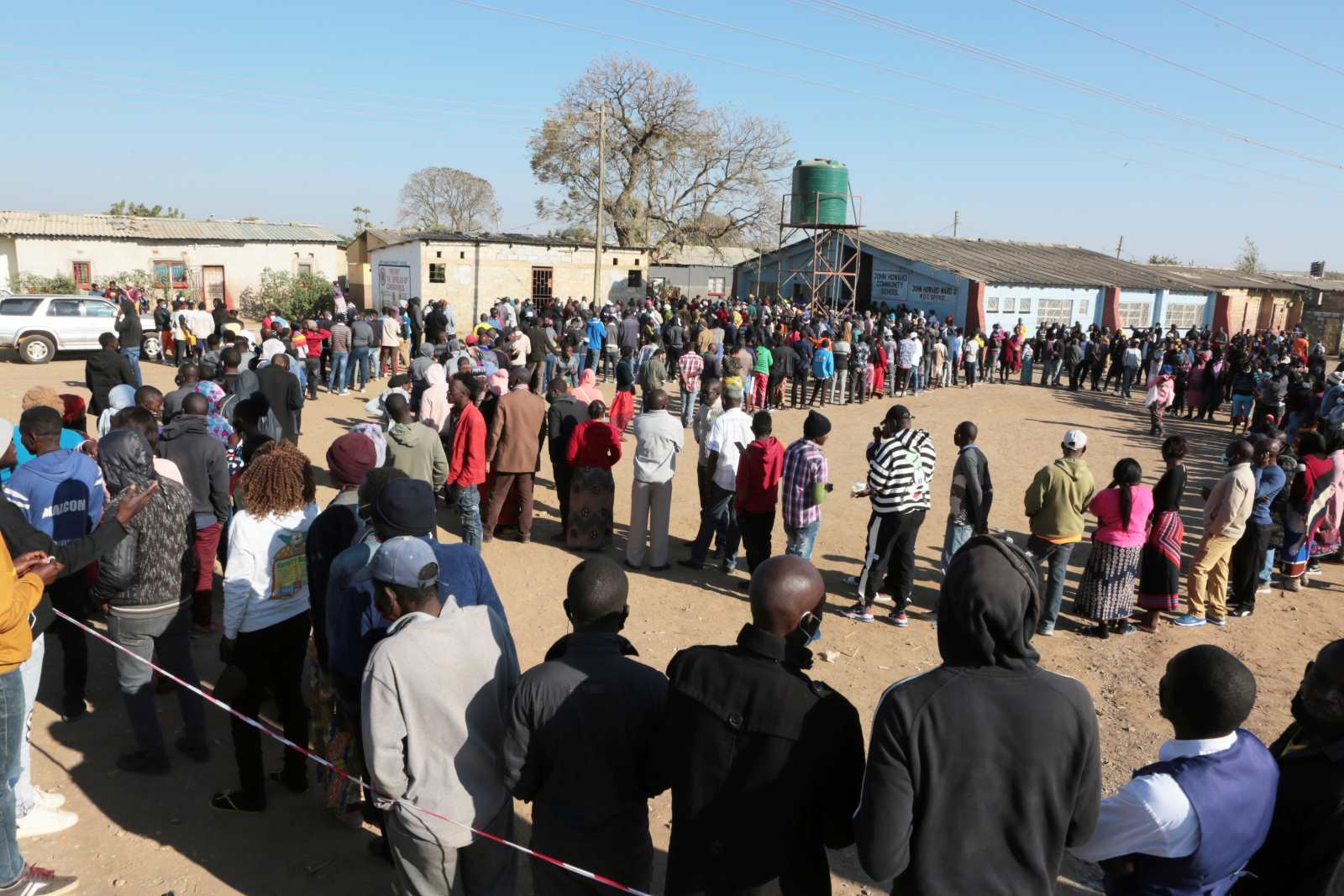
Civil society, being a non-state actor, will make an important contribution when it comes to mobilisation and agenda setting ahead of talks. However, its ability to actually sway the official negotiations tends to be limited. To make matters worse, civil society’s scope for action is severely restricted in many states, and many NGOs in the Global South have been plunged into financial crisis following the withdrawal of USAID. In some cases, state-affiliated think tanks that reflect their respective governments’ position are taking their place.
Implications for international cooperation and Germany’s role
In its Third Voluntary National Review 2025 and its coalition treaty, the German government has announced that it is firmly in favour of supporting an ambitious post-2030 agenda framework. International expectations of Germany as a champion of sustainable development and multilateral action have increased once again following the (partial) withdrawal of the US.
The authors believe that Germany and the EU need to develop their own narratives and objectives for the negotiations. Otherwise, the vacuum risks being filled with other actors’ competing and less ambitious narratives. With political and public interest in sustainable development on the decline, global well-being and sustainable development should be linked to the current priorities of the German government, the EU and our partners in the Global South. These include, in particular, promoting economic development, infrastructure and security.
The success of negotiations at the UN will hinge on whether countries can agree on a common stance in support of an ambitious post-2030 agenda. Germany has the means, capacity and extensive international network necessary to build bridges with the Global South and other partners. Dialogue with China and emerging powers such as Indonesia, Brazil, South Africa and India is essential to better understand each other’s positions and identify possible areas of common ground.
Dialogue on the post-2030 agenda
To reflect the 2030 Agenda’s whole-of-society approach, as many voices as possible should also be heard in the post-2030 process. Existing and new multi-actor platforms are an obvious way to facilitate exchange not only with civil society but also with other stakeholders such as the private sector and academia, international donors and municipal actors. Major international conferences should be used for the post-2030 dialogue process and to set the agenda; meanwhile, the North-South Commission established by the German government could also generate impetus for developing narratives jointly with the Global South.
The future of the global agenda remains extremely uncertain. This makes it all the more important for the German government and all countries interested in promoting the global common good to forge strategic alliances with a view to achieving a good outcome in the post-2030 negotiations – one that will benefit everyone, not to mention the planet.
Johannes Kummerow is an advisor for strategic foresight in the corporate development unit of the German development agency GIZ (Deutsche Gesellschaft für Internationale Zusammenarbeit).
johannes.kummerow@giz.de
Jörn Geißelmann is a senior advisor for strategic foresight in the GIZ corporate development unit.
joern.geisselmann@giz.de
This story is part of The 89 Percent Project, an initiative of the global journalism collaboration Covering Climate Now.