Women in conflicts
Women’s daily lives in a refugee camp: attacks, shortages and queues


Hawayaya Souleyman reports that she, her husband and their six children spent eight days fleeing Sudan in September 2023. Their home village in the Sudanese state of Gharb Darfur is located 30 kilometres from the Chadian border town of Adré. The family fled on foot. Three of their children did not survive that week. They were killed by a bomb.
For three years now, Souleyman has lived with her husband and their surviving children in Aboutengue, one of the largest refugee camps in the Chadian border region of Wadai. As of the end of January, it was home to 43,200 people. The 33-year-old Souleyman says that she feels more or less safe there, though collecting firewood in the surrounding bush is dangerous. Attacks are frequent, she explains, so women only go in groups. She herself once had to flee from men who were approaching her group.
During their escape from Darfur, Souleyman reports, fighters with the RSF militia in Sudan repeatedly abducted women and girls from the group that she and her family were travelling with. Some came back, others did not. Souleyman was spared.To avoid having to expose themselves to such dangers again, it would be better if women no longer had to go out and collect firewood at all, but were instead provided with it by the aid organisations in the camp, says Souleyman. But their aid supplies are usually inadequate and often come too late, she adds. There is a serious shortage of basic necessities on the ground: water, medication, food and cash.
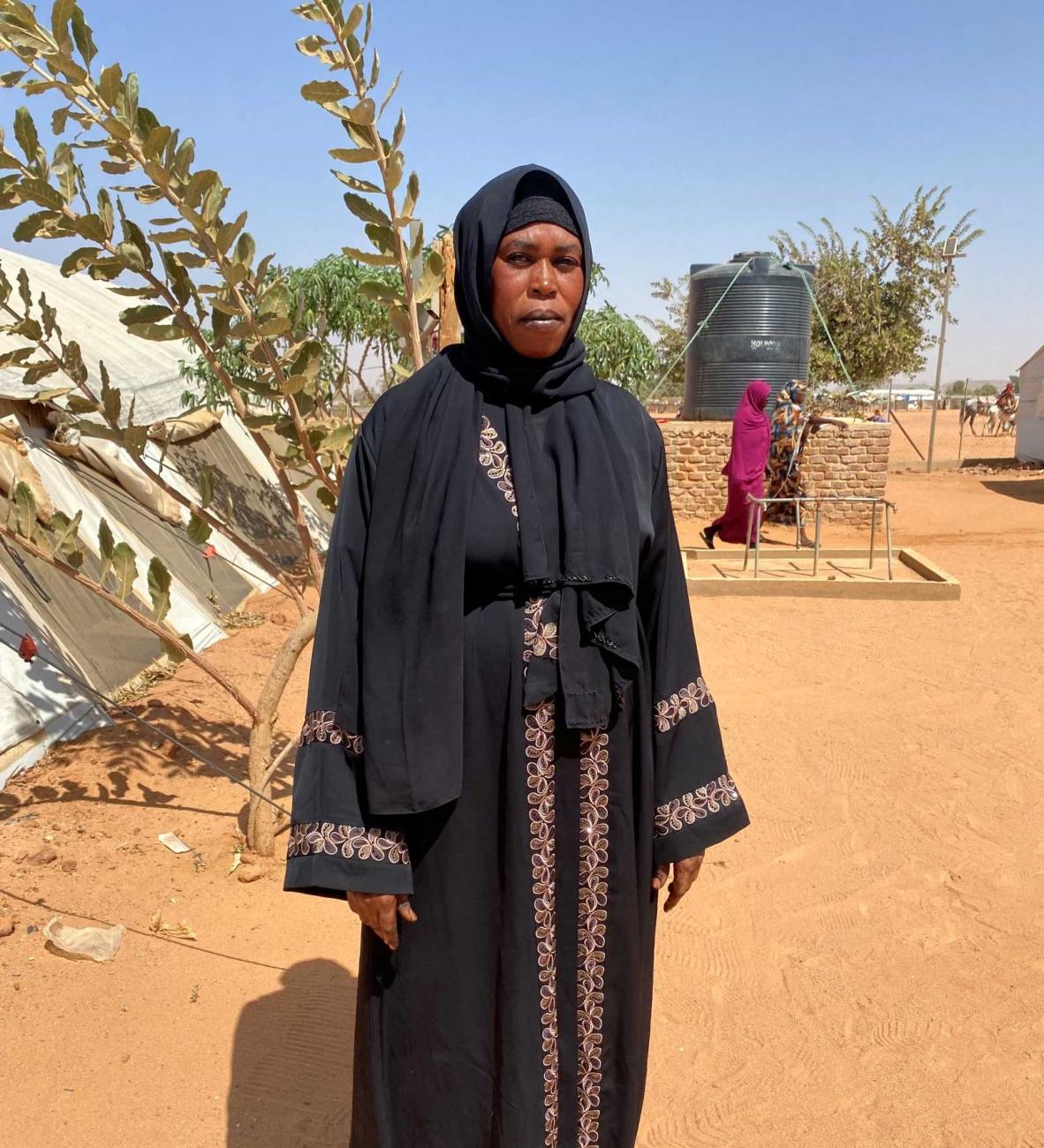
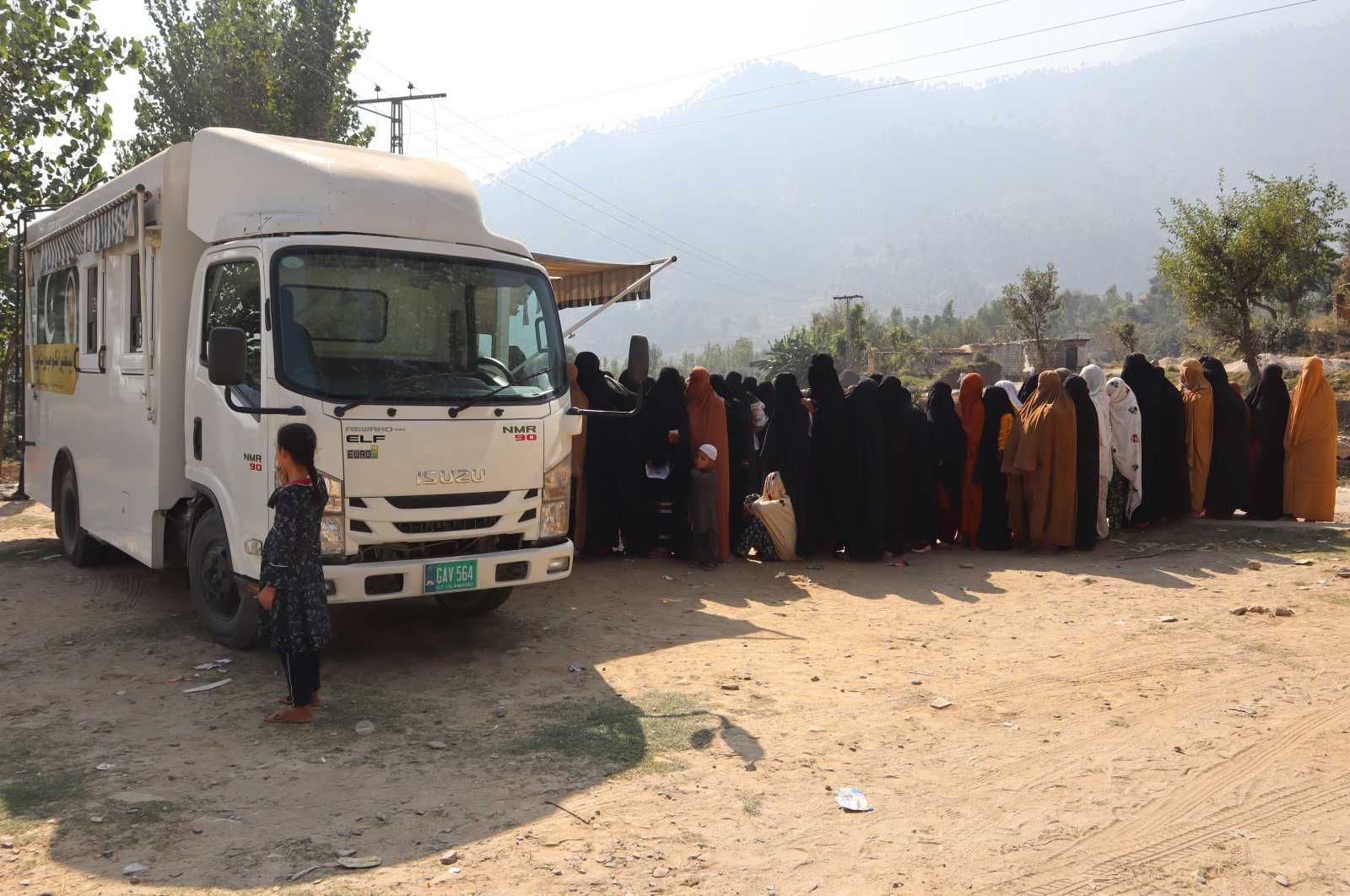
As a result, Souleyman spends her days looking for things. The first half of her day is usually spent queuing for water at wells. It is often 1 pm by the time she gets home, sometimes without water, if there wasn’t enough for everyone. In the afternoon, she frequently goes into the forest to look for firewood, or she walks through the camp to places where she’s heard that aid organisations are distributing soap, food or cash.
Souleyman’s three remaining children sometimes attend the camp school, but nowhere near regularly. Her husband doesn’t have a job, but he doesn’t help out at home, either. Like almost everyone in the camp, Souleyman is a Zaghawa. The Zaghawa are an ethnic group that primarily earns its living through livestock farming and maintains a patriarchal structure. It is above all the Zaghawa and Masalit who are being targeted by the RSF militia in the Darfur region. Amnesty International and other human rights organisations are using the term ethnic cleansing; the UN is warning of genocide.
Souleyman hopes either to return to her home in Sudan one day or at least find work in Chad, like a field she can cultivate.
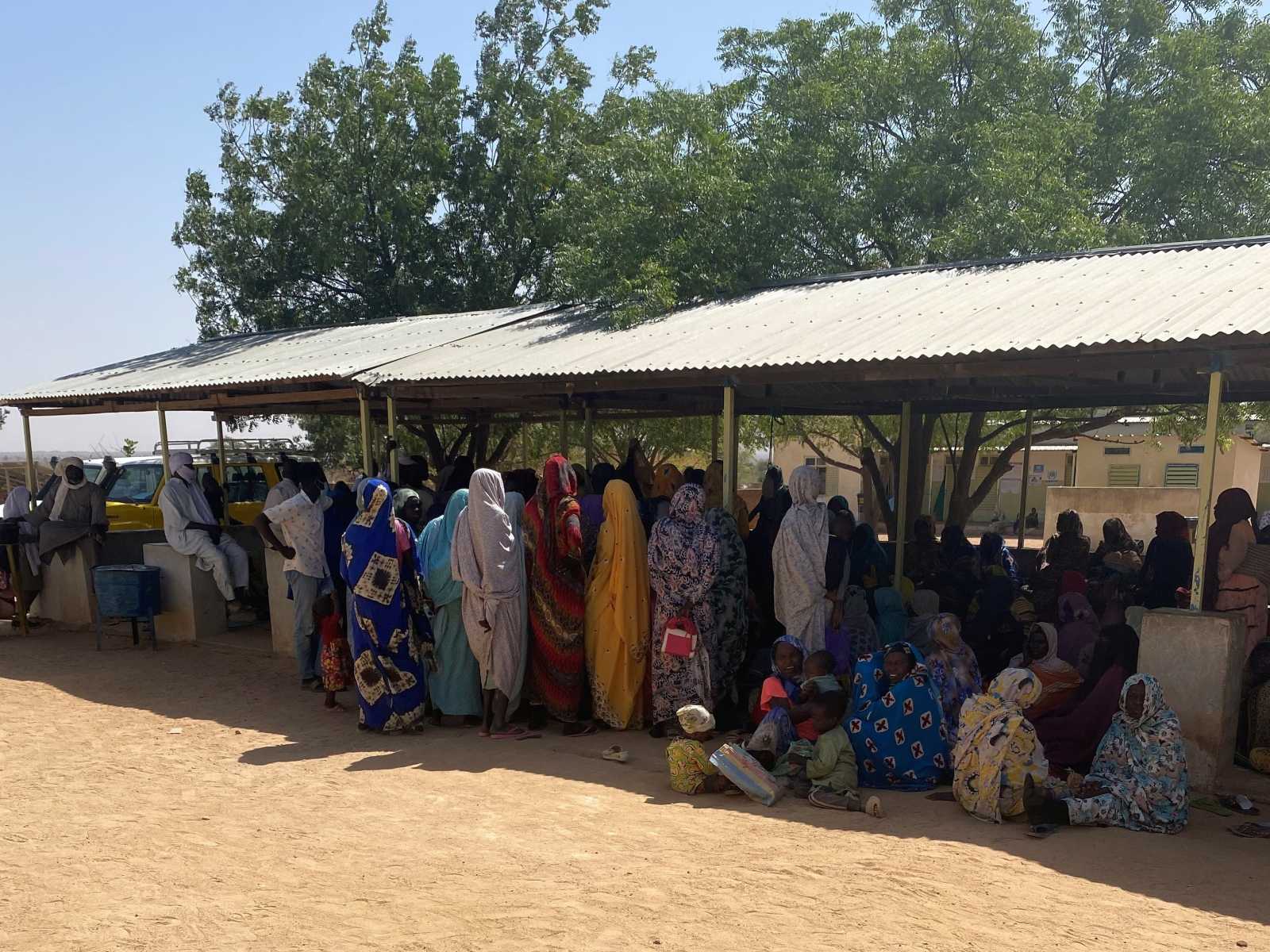
The dangers of gathering firewood
Manaïl Youssouf lives a few tents away. The 25-year-old comes from the same village as Souleyman and fled a few months before her. Youssouf’s husband does not live in the Aboutengue camp. Some time ago he went to northern Chad with other men to work in gold mines in the hope of supporting his family. The Youssouf family’s children are five and two years old. The youngest, who was born in the camp, is malnourished and receives outpatient care in one of the camp’s clinics.
The care of the family members remaining in the camp now falls to her. Manaïl Youssouf’s brother and mother also live in Aboutengue. Both were partially paralysed by a bomb attack on their house in Sudan and have, in Youssouf’s words, “lost their memory”. They are receiving psychological treatment in the camp.
Youssouf herself was shot in the leg whilst fleeing; the scar will remain visible. She reports that her arrival at the camp was in no way the start of a safe life. For example, she was once chased by two men while collecting firewood, though she was able to get away.
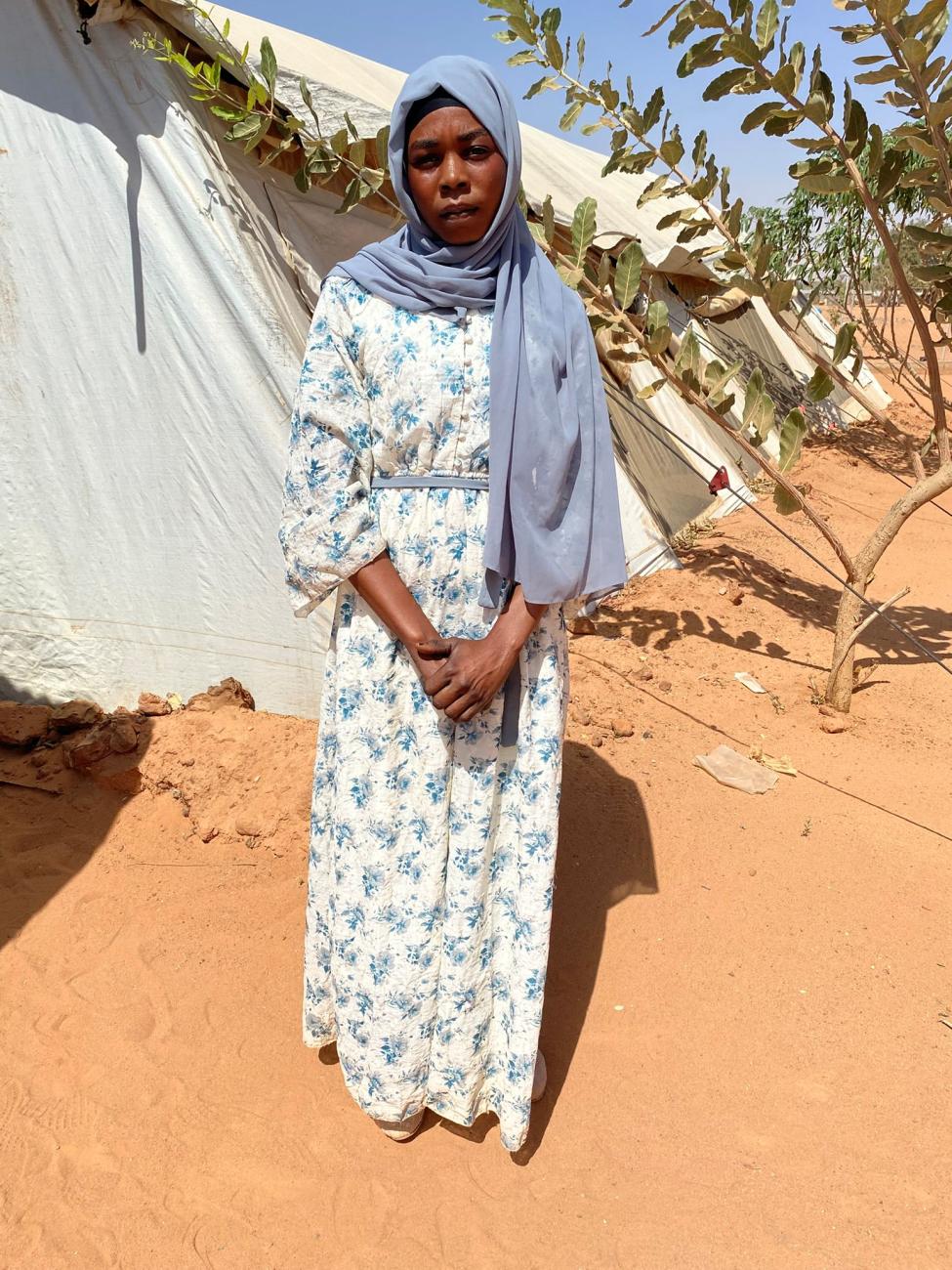
Youssouf herself was shot in the leg whilst fleeing; the scar will remain visible. She reports that her arrival at the camp was in no way the start of a safe life. For example, she was once chased by two men while collecting firewood, though she was able to get away.
Youssouf sells the wood she collects; it is her only source of income. Life in the camp is expensive, she says. She reports that strangers keep turning up at the tents and theft is rampant. The money that families receive at the end of the month is nowhere near enough, she continues. At the time of the conversation in January, it amounted to around $ 85 per household. Depending on the funding situation, families may only receive this money every two months.
Youssouf’s greatest wish is to resume her studies one day. Before the war broke out, she had begun studying law. Until then, she’s hoping to find work in Chad in order to support her family.
Sexual violence remains the greatest risk
Ndjepa Dinga Toloun works as a midwife in Aboutengue. Pregnancy rates in the camp are high, even though aid organisations like the International Rescue Committee (IRC), which she works for, provide family planning counselling. “Nevertheless, only one in two men accompanies his wife here, which is a problem,” Toloun says.
It is stiflingly hot under the tarps of the makeshift women’s clinic in Aboutengue. The beds are planted in sand and flies buzz around. Raick Bell, who works as the lead physician for the IRC in Aboutengue, considers the lack of medical infrastructure one of the largest problems for women and girls in eastern Chad. Especially since Western donor countries made massive cuts to their development budgets, there has been a shortage of medication, beds, midwives and delivery wards.
Bell and Toloun agree, however, that sexual violence is the greatest risk to women and girls in the refugee camps. According to Toloun, five or six cases of rape are reported every week on average in the IRC women’s clinic. She also reports that women often find themselves in dangerous situations especially when they are collecting firewood.
But men also rape refugee women within the camp. Zara Fadoul Moussa brought her 16-year-old sister to the clinic. The perpetrator was a tent neighbour, 18 or 19 years old. The 31-year-old and her younger sister knew him. The younger sister is now pregnant. In such cases, IRC also offers psychological care. Zara Fadoul Moussa says it was simply fate.
Revenge through sons
Just yesterday, Denise Remadji Madjimbaye reports, she helped deliver a child whose mother was raped by a soldier in Sudan. Madjimbaye directs the IRC’s women’s and maternity units in Aboutengue and in the small town of Farchana, another refugee camp location.
However, the high birth rates in the camps in Chad cannot be attributed solely to rape, she says. “We lack staff to provide education about sensible family planning.” What’s more, she continues, many families have lost a lot of their members. The survivors see it as their duty, to some extent, to make up for the losses by having more children in order to have more support and wage earners in the household over the long term.
Camp staff also report that many are hoping for newborn sons – so that they can one day take revenge for the injustices done to the Zaghawa.
Hawayaya Souleyman is once again two months pregnant. She says she actually didn’t want another child while she is still unable to properly care for her remaining three. The pregnancy was her husband’s decision. Nevertheless, he has agreed to use permanent contraception after this baby.
Katharina Wilhelm Otieno belongs to the editorial team of D+C and works partly in Nairobi.
euz.editor@dandc.eu