Democracy Index
The path to autocracy is reversible


In its Freedom in the World report, US-based Freedom House warns of a “Growing Shadow of Autocracy”, while the Gothenburg democracy research project V-Dem concludes that 74 % of the world’s population now live in autocratic systems. Only a minority of around 7 % still live in liberal democracies.
Military coups in Burkina Faso and Niger, authoritarian restructuring in Georgia and El Salvador and a collapse in democratic values in the US since Donald Trump was re-elected for a second term are all contributing to this development. India, too, has long ceased to be regarded as the world’s biggest democracy; the V-Dem report classifies the country as an “electoral autocracy”.
According to the Bertelsmann Transformation Index (BTI 2026), 52 states now rank among the “hard-line autocracies” in which basic rights are systematically restricted.
Autocracies are on the rise, yet resistance is growing
Though new autocracies are emerging and consolidating their hold on power, more and more autocratic governments are facing sweeping resistance from their own populations. Recent years have seen new political movements form, especially in the Global South and Eastern Europe.
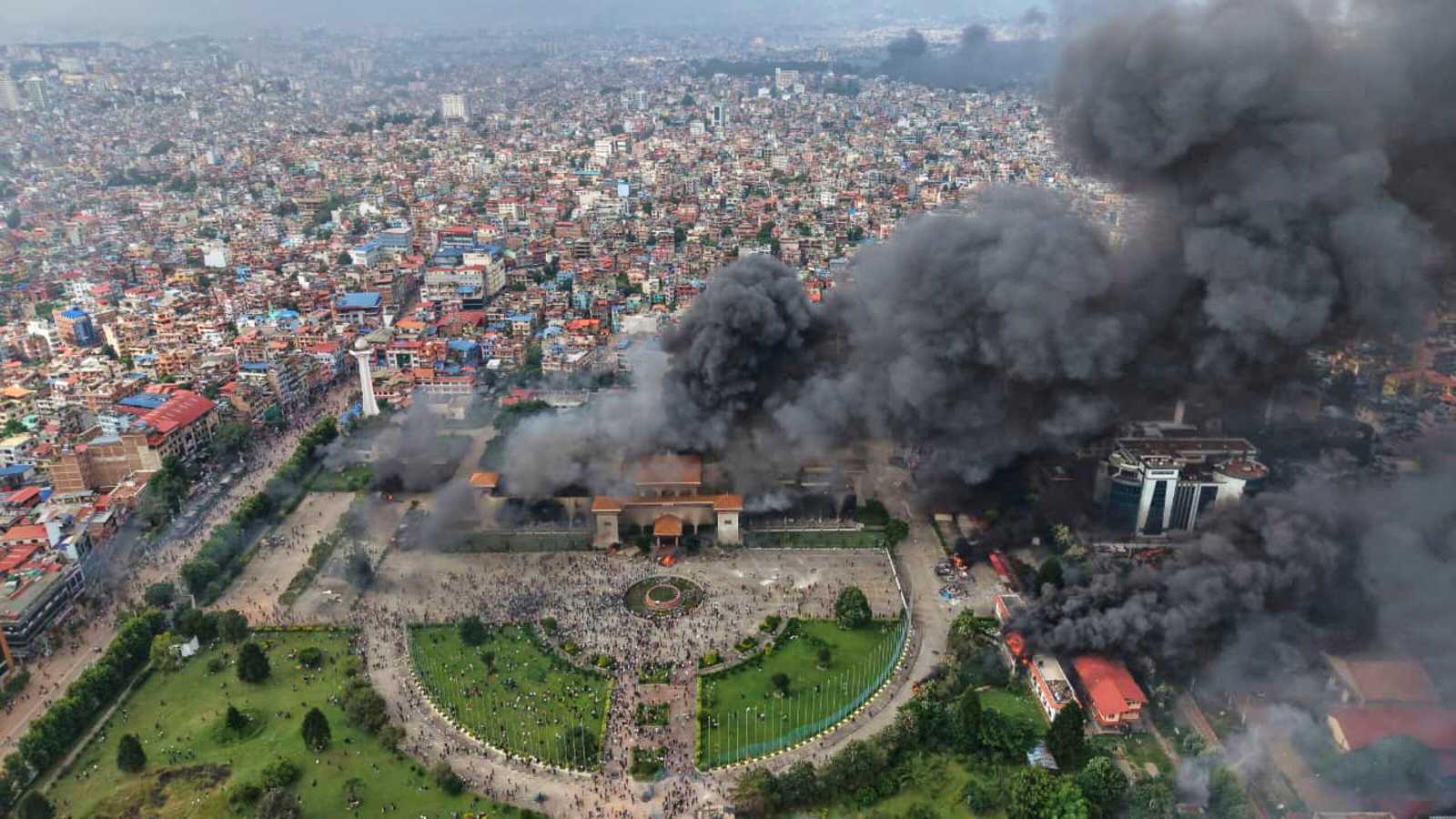
In Sri Lanka, mass protests against mismanagement and corruption eventually led to new elections and a democratic transition of power. Despite massive repression, student protests in Bangladesh in 2024 brought about a change of government and new elections in 2026. In Nepal and Mongolia, too, young protest movements against corruption and authoritarian tendencies achieved far-reaching political change. These movements have come to be known internationally as “Gen Z protests”.
Recently, a broad-based political movement in Hungary triggered a change of government that just a few years ago seemed unthinkable in Viktor Orban’s “electoral autocracy” – as V-Dem categorised the country.
Busting the efficient autocracy myth
The protests are directed against corruption, poor governance, the arbitrary exercise of state power, inequality and the wasteful use of resources. Though autocracies may appear and present themselves as efficient and strong, the BTI 2026 says that many of those who live under these systems have the opposite experience, prompting them to clearly express their discontent.
In Serbia, the roof of the Novi Sad railway station collapsed in November 2024, killing 15 people. The station had only reopened four months earlier following renovation work. More than 100,000 people subsequently took to the streets to campaign for democracy and protest against the authoritarian government’s abuse of power and corrupt practices. The anti-government demonstrations are still ongoing and are seen as part of the Gen Z protests.
The rise of China has prompted some to claim that autocracies are able to govern more efficiently than democracies. The BTI 2026 busts this myth: China lags behind the great majority of democracies in terms of steering capability and resource efficiency. Among the states of the Global South and Eastern Europe, China ranks 25th (steering capability) and 29th (resource efficiency), putting it behind the Republic of Moldova, Botswana and Ukraine. In Europe, only Bosnia, Belarus and Russia score less well than Serbia. Singapore, the United Arab Emirates and Qatar are the only autocracies in the BTI 2026 that can hold their own with most democracies on the aforementioned criteria.
In autocracies, it is loyalty that is rewarded in patronage networks – not the efficiency and effectiveness of political action, explains the BTI. This leads to corruption, inequality and rampant mismanagement, with, in some cases, catastrophic consequences for society. The Gen Z protests are the population’s way of demanding change and a transition of power.
Mass movements despite massive repression
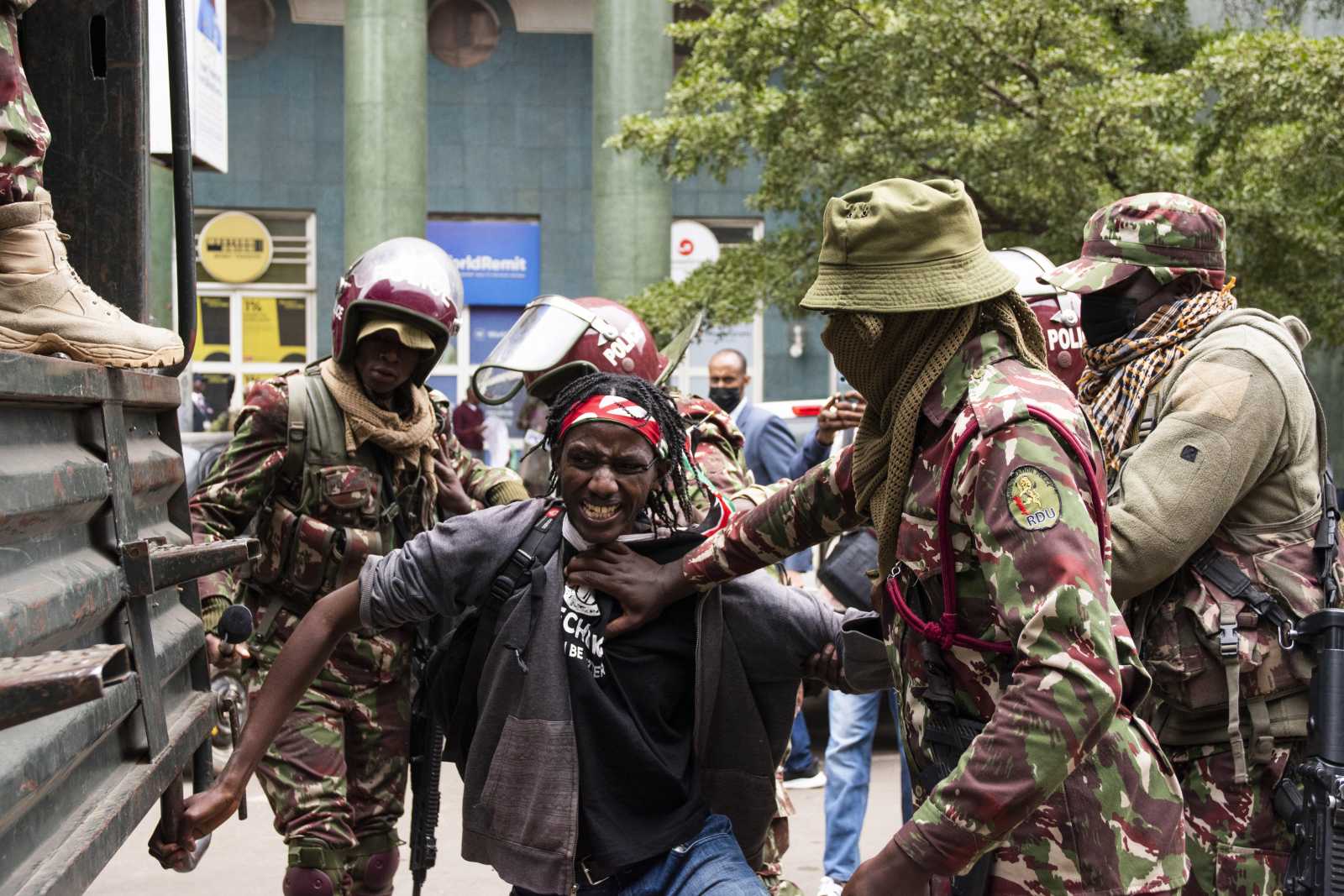
Many autocratic governments respond harshly to opposition. Employing everything from social media bans and force – including the use of firearms – to clamp down on protesters, no small number of such states have been successful in quashing demonstrations. The most violent repression was meted out to the anti-government movement in Iran in January 2026. Within just a few days, tens of thousands of people are estimated to have been killed and tens of thousands more arrested. This repression resulted in the world’s highest death toll since the Rabaa massacre of Muslim Brotherhood supporters in Egypt in 2013 and the suppression of the Arab Spring by the army and intelligence agencies in Syria in 2011/2012.
By contrast, the anti-autocracy protests in Nepal, Sri Lanka and Bangladesh – despite repressions that entailed several hundred deaths in total – led to transitional governments that were able to stage democratic elections. In Hungary and Poland, an alliance of political opposition and broad-based mass movements resulted in the sitting government being defeated in elections even though the freedom of the press and of the judiciary had been curtailed for years.
These examples make it clear that even entrenched processes of autocratisation that have been underway for years do not make resistance impossible. In countries such as Serbia, Georgia, Kenya, Peru and Indonesia, protests continue even as their systems of governance become increasingly autocratic.

International attention is currently focused on autocratic actors like Trump, Putin and Xi Jinping. Less notice is paid to the fact that mass movements against autocratic rule are simultaneously celebrating a revival worldwide, as the BTI 2026 highlights. In the shadow of autocracy, resistance is emerging in many parts of the world.
Marius Moniak is a political scientist and medical student. He specialises in global political trends, conflicts and autocratisation and is active in local humanitarian healthcare services in Frankfurt, Germany.
euz.editor@dandc.eu