Clothing
Traditional dress

Serving as Ghana’s president, John Agyekum Kuffour announced an unusual initiative in 2004. He suggested that all Ghanaians put on local garments each Friday and called the campaign “National Friday Wear”. The idea was to stem the flood of western clothing and to promote Ghanaian products. In the long run, however, the initiative hasn’t changed Ghanaians’ choice of clothes much.
Osu is a busy bustling suburb of Accra, the capital city. Countless shops have colourful African waxprint fabrics on display. However, Denis Boateng, a shop owner, admits that “the business is not moving; people come and ask, but they turn away after you tell them the price.” Priscilla Adom who sells roles of fabric adds: “In a whole day, I don’t sell more than three cloths.”
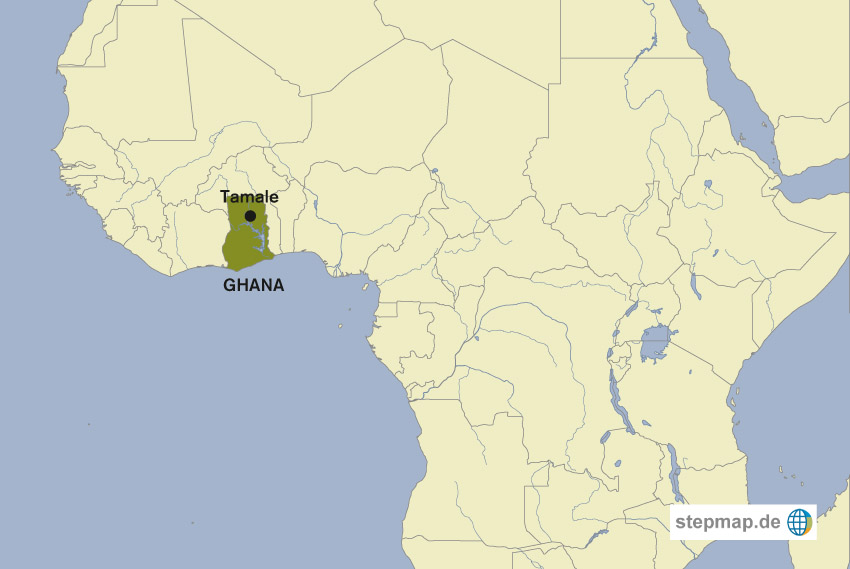
In northern Ghana, people don’t care much about National Friday Wear either. Only a handful of people dress in Ghanaian prints each Friday. Most shops only stock imported ready-made dresses and clothes for sale. Rabi Tijani, a 45-year-old trader in Tamale, says she goes with what her customers demand. “When I stocked my shop with Ghanaian prints two years ago, I didn’t get buyers so I incurred a huge debt,” she reports.
Next door, dressmaker Iddrisu Mahama is sewing. He has several orders on his desk, but “only one is a Ghanaian print,” Mahama points out.
“African style is not fashionable,” claims Regina Enyonam, a student. “I prefer imported fabrics, especially ready-made clothes. Most of them are good quality and the colour doesn’t fade when you wash them.”
Due to high demand, clothing boutiques are a booming business in the north. Some traders travel as far as to the USA, China and Germany to import clothes. Imports, of course, depress textiles production in Ghana. National Friday Wear was supposed to support this industry. It is struggling to cope with tough international competition, especially from Asia.
Joseph Annan works for Akosombo Textile, a company based in Tamale. He says he liked National Friday Wear. “It was a good call,” he says. “As a Ghanaian you need to wear our garments; it shows your identity.” He personally appreciated going to the office on Fridays and seeing people wearing colourful Ghanaian prints. “It was really nice.”
Maxwell Suuk is a journalist and lives in northern Ghana.
suuk.max@gmail.com