Our view
We are living in a disaster movie


It’s a day in early March in Nairobi. A storm is brewing. Within half an hour, the sky has turned dark as night and I can’t see even as far as the building next door. Lightning flashes incessantly, the accompanying claps of thunder seem unable to keep up.
And then the rain begins. Water cascades down from the sky. Within 10 minutes, it is seeping in under the front door, dripping from the ceiling and forcing its way through the window panes. An hour later, it’s all over. The building has survived pretty well; only one window needs replacing. The puddles of water can be mopped up.
A friend shows me pictures taken in a neighbourhood close to the Nairobi River. While I was sitting out the storm at home, the small stream was being transformed into a raging torrent, sweeping away shacks close to the banks and trapping people in their cars.
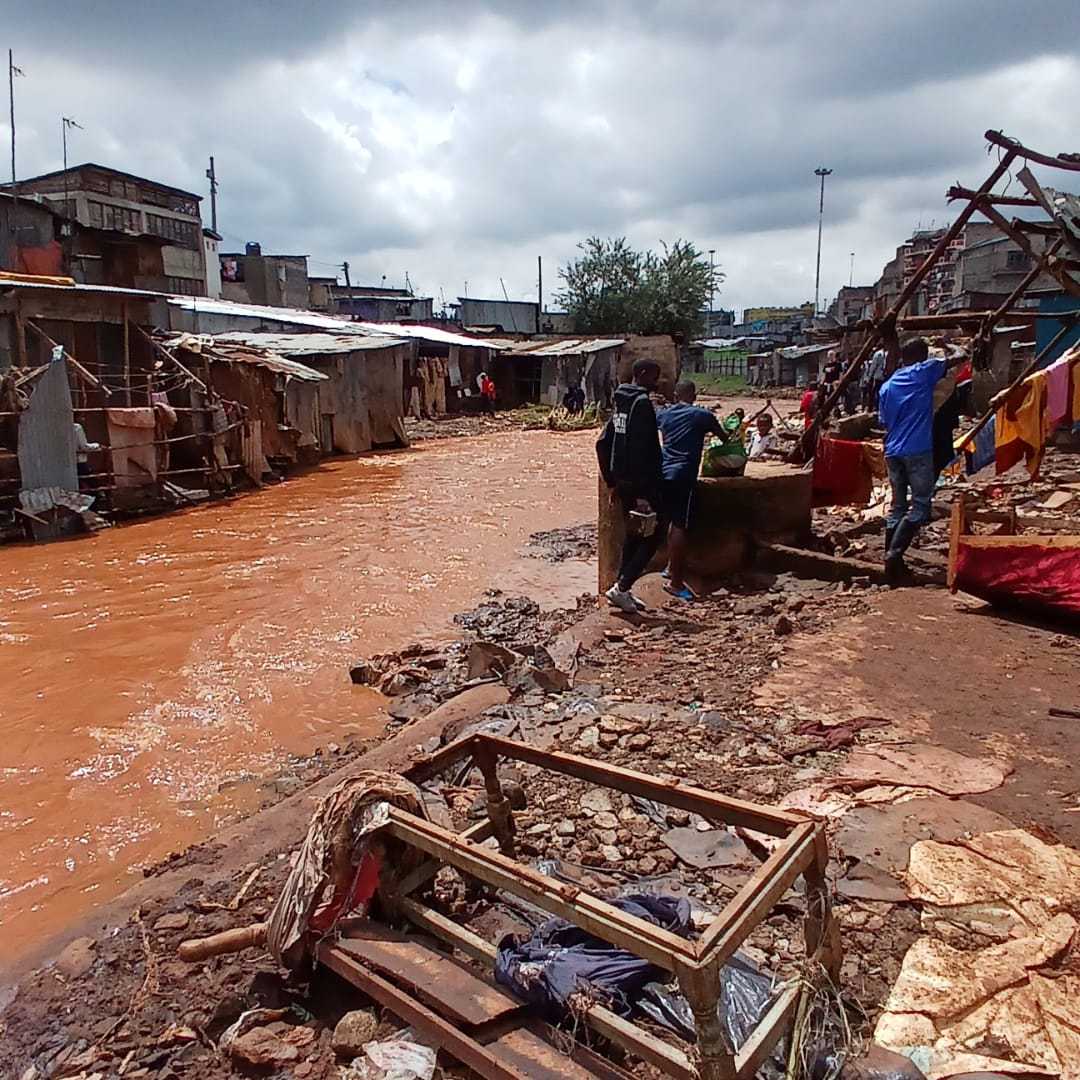
At least 108 people lost their lives that night and in the days of flooding that followed. Two years earlier, when Kenya was hit by similar storms that lasted nearly three weeks, the death toll was estimated at 294.
If you feel as if you’re constantly reading reports of disastrous flooding across the world, you’re not mistaken: in 2022, an estimated 1.8 billion people around the world already faced a significant flood risk.
An area the size of South Africa is ravaged by fire
It’s a day in mid-August. I’m back in my German home region of the Palatinate Forest. In the afternoon, the air starts getting hazier and there’s a pervasive smell of burning. A little while later, a fire engine appears through a wall of smoke, instructing local residents through a loudhailer to keep their doors and windows closed. Soon afterwards, the local mayor gives the all-clear on Instagram and asks people to stop alerting the fire brigade – explaining that it’s not our forest that’s burning; the smoke is coming from the wildfires in Belgium and the neighbouring federal states of North Rhine-Westphalia and Saarland.
Between the beginning of this year and the first of August, 112.3 million hectares of land – an area roughly the size of South Africa – had been ravaged by fire globally. Europe’s summer holidays were dominated by images of Spanish and French holiday regions in which exhausted firefighters could be seen battling against walls of fire in forests.
We can still rewrite the screenplay
This summer, 12,500 people have died from heat-related causes in Germany alone. Water levels on the rivers Rhine and Danube were so low that companies scaled back their production due to increased shipping costs. Increasingly, people across the world are now calling for crisis summits. But who is calling for an admission that things need not have come to this if climate action had been taken in a timely and consistent manner?
Humanity has turned our planet into the backdrop for a disaster movie. It’s too late to stop this film from playing, but we can still rewrite the screenplay. Contributors to this edition report on people on the coasts of Bangladesh, in the wetlands of Zimbabwe and in the dunes of the Sahara who have already found ways of continuing to live safely in an increasingly hot world. They should be on the guest list – along with the many others who have been living on the front line of the climate crisis for years – when the crisis summits are convened.
Katharina Wilhelm Otieno belongs to the editorial team at D+C and is based partly in Nairobi.
euz.editor@dandc.eu
This story is part of The 89 Percent Project, an initiative of the global journalism collaboration Covering Climate Now.