
Plutocracy
Another step towards Muskism


How Musk became a super-rich, well-networked plutocrat is the topic of “Muskism”, a book by Quinn Slobodian, a historian, and Ben Tarnoff, a technology expert. They warn that he may leave his mark on the 21st century in a similar way as Henry Ford shaped the 20th century. Ford’s assembly lines changed industrial production around the world and became the basis of what is now called “Fordism”.
The co-authors are not sure Musk will prove similarly influential, but they believe such a dystopian scenario may indeed come true. Musk’s big promise, they explain, is autarky thanks to technology even in times of a fragmenting world order. He safeguards the sovereignty of states in important fields, but in doing so makes them depend on him and his companies. His overarching idea is the automation, purging human activity from production to the extent possible. Muskism is completed, according to Slobodian and Tarnoff, once an elitist white minority becomes unassailable and indeed indistinguishable from the use of technology.
SpaceX launches half of all rockets
What may feel like science fiction is actually coming true bit by bit. Indeed, governments depend on SpaceX because the company launches satellites into orbit, and its satellite network Starlink provides internet access in many places.

Last year, SpaceX accounted for about 85 % of orbital rocket launches in the USA and 50 % internationally. Ukraine’s military belongs to the parties that depend on Starlink. Musk, moreover, has made SpaceX the parent company of xAI, his artificial intelligence venture, and X (formerly Twitter), his social media platform. Both lose large sums of money, but have received a huge capital injection thanks to the IPO.
In contrast to normal capital market conventions, Musk has retained full control of SpaceX. The shares he has kept have more voting rights than the ones he has sold, so other shareholders cannot hold him accountable.
Like a pyramid scheme
The IPO made Musk much richer on 12 June – to the detriment of smallholder investors. As Nobel laureate Paul Krugman argued on his Substack, the event was designed like a “Ponzi scheme”, which is another term for pyramid scheme. That was the case because major stock market indices changed their rules – to Musk’s benefit and as he had demanded.
In the past, indices only included new shares several months after an IPO, when the share price had stabilised so its future development had become more easily assessable. By contrast, the NASDAQ 100 and the FTSE Russell included SpaceX soon, giving the share a strong boost. After all, major financial companies which run index-tracking funds need SpaceX shares, and that drives up the price. That, in turn, attracted retail investors who feard they might miss out on a historic opportunity. That fear was delusional, as Krugman warned as early as 17 June, and by 22 June, the share was indeed trading below the initial price it had had only 10 days before.
Those who believed in Musk’s unfailing business talent thus lost money. At the same time, risk-averse investors who prefer index trackers to specific shares were ripped off too. Their portfolios now include SpaceX as part of their index funds. The plutocrat benefited considerably from long-standing rules having been abandoned, even though, at the time of writing, his fortune is now worth a little less than $ 1 trillion due to the lower share price. As other tech share prices dropped too, other Silicon Valley plutocrats saw small declines in their fortunes as well.

Krugman, the celebrity economist, spelled out many good reasons for his expectation of the share price dropping soon. For example, he considered it disproportionate that, in terms of market capitalisation, SpaceX rose above Amazon even though it had recorded a loss of almost $ 5 billion in 2025, while its turnover of $ 19 billion did not even amount to one quarter of Amazon’s $ 78 billion net income.
Visions failing
Krugman appreciated Musk’s hyping skills, acknowledging that the short-time trillionaire is prone to selling fantastic dreams. His promises typically fail, however:
- His boring company has never built an alternative transport system (“Hyperloop”) or even a single commercial tunnel.
- There are no fully self-driving Tesla taxis.
- Neuralink, the Musk enterprise that is supposed to use brain implants to hook up persons with computers, is still experimenting and does not have a viable product.
Some consider Musk to be a genius because he has opened space to private enterprises. What they miss is the role of the US government. The high price the US government pays for Musk’s supposedly cheap rocket launches is its dependence on the plutocrat.
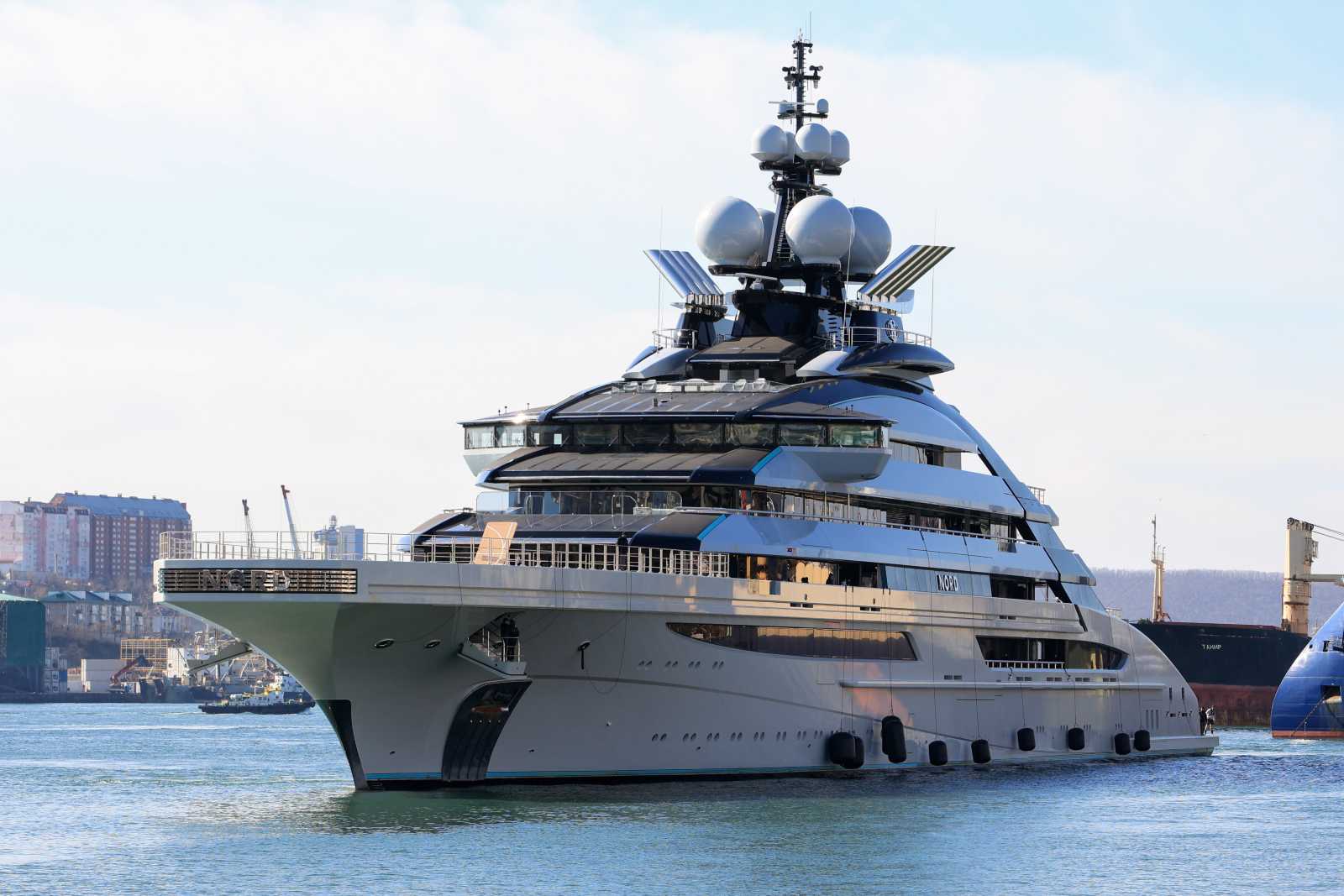
The trend started in 2001 when the Department of Defense under President George W. Bush decided to reduce defense spending by outsourcing more generously to the private sector. Slobodian and Tarnoff tell the tale of how Musk grabbed that opportunity to establish a monopoly on space-related services. According to the two co-authors, Musk’s mindset has been shaped by science fiction as well as the fortress mentality that prevailed among the white minority as he was growing up in apartheid South Africa.
No concern for sustainability
In Musk’s eyes, humankind is facing a dramatic end game, in which he will either prevail or perish. Sustainability is not a concern of his. He offers options for individual persons or states to cope with global environmental disaster, but nothing that would make the planet safe for all of humankind.
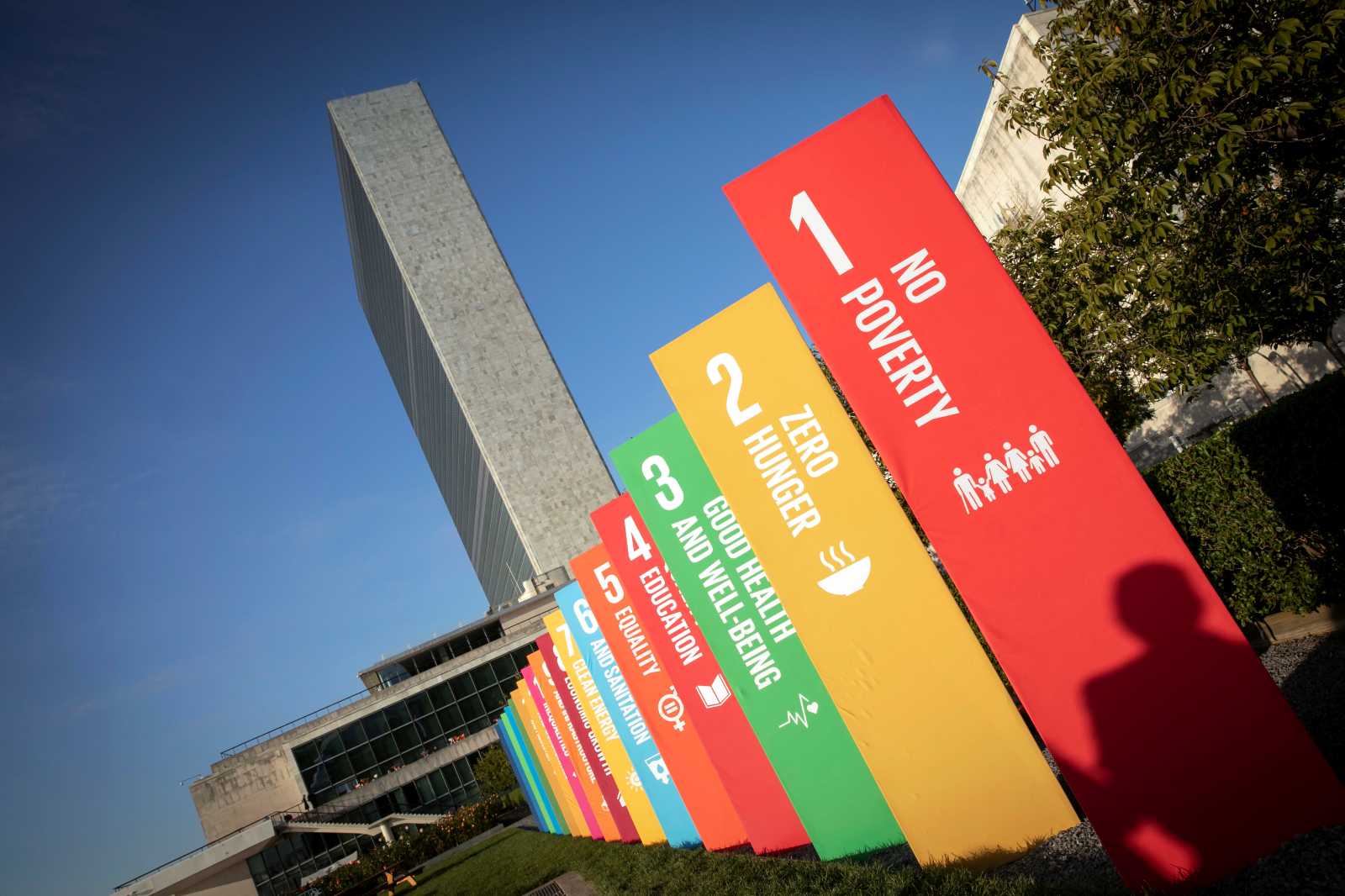
It fits the picture that, on behalf of Donald Trump, he dismantled USAID, the aid agency, immediately after the right-wing populist returned to the White House in 2025. Healthcare for all, education for all or merely food for all are global ambitions that were spelled out in the UN Sustainable Development Goals in 2015. In Musk’s perspective, they are woke nonsense. Muskism is the economic equivalent of Donald Trump’s authoritarian idea of superpowers being entitled to share the planet among themselves – and then exploiting it without regard for anyone else.
Sources
Slobodian, Q. and Tarnoff, B., 2026: Muskism – A guide for the perplexed. Harper, New York.
Krugman, P., 2026: Substack posts from 12 and 17 June 2026.
paulkrugman.substack.com
Hans Dembowski was D+C’s editor-in-chief from 2004 to 2024.
dembowski@posteo.de